The Handle: Everything You Need to Know About Grip Feel and Balance
1
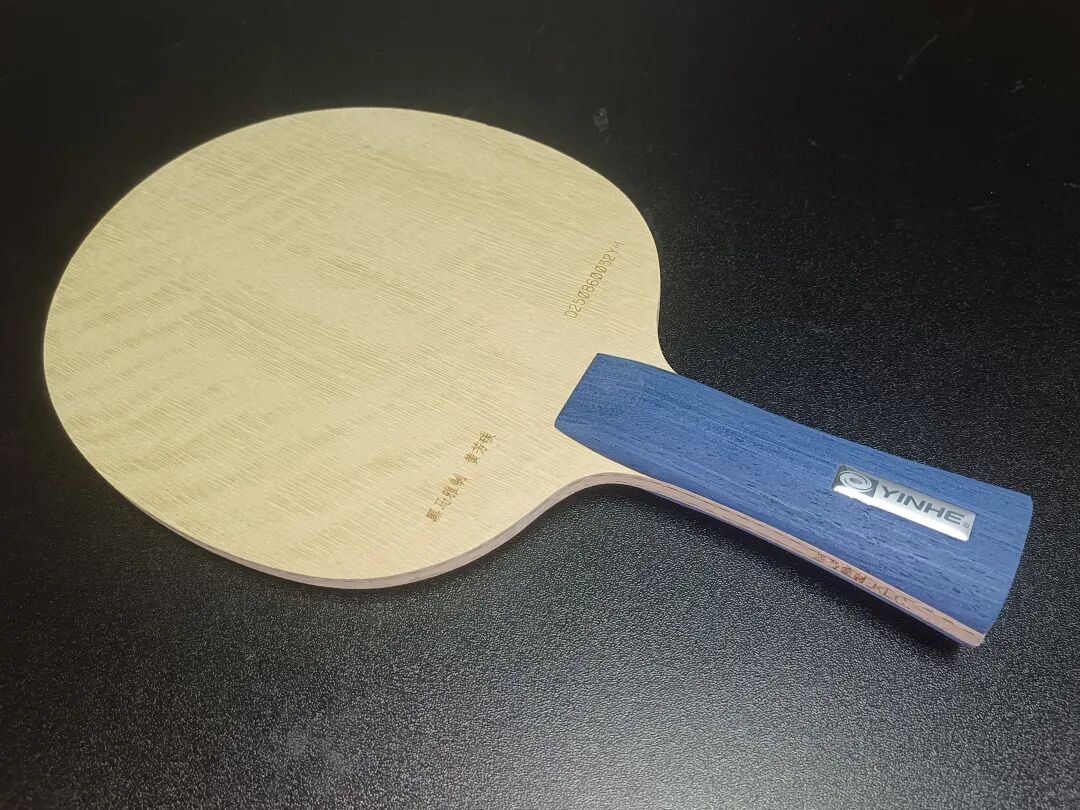
Handle curvature and grip feel are extremely personal things. Most players, for example, find the FL handle on the 968 feels a bit thin — a little hollow when switching between forehand and backhand. But if you asked Wang Chuqin, he’d tell you that handle is more comfortable than the Viscaria’s, and makes forehand-backhand transitions easier. See? That alone turns conventional wisdom on its head.
The general consensus is that the Viscaria’s handle feels better to grip, especially with a more secure, settled feel during forehand-backhand transitions. Back in the day, I gave up on the 968 specifically because of the handle. Last year I passed on the 520X for the same reason.
So when I was involved in designing the Hema Yazhi series, I pushed hard to Viscaria-ize the handle. But before we finalized that decision, the Yinhe team warned me that using that handle would likely change the blade’s performance significantly.
2
When a handle is on the thinner side, the blade’s balance point gets pushed further toward the head. When the balance is head-heavy, the attacking power feels stronger — though the blade also feels heavier.
This is true of both the FL-handled 968 and Xu Xin’s blue-label penhold (compared to the retail penhold version of the same blue-label). The same sensation shows up with both.
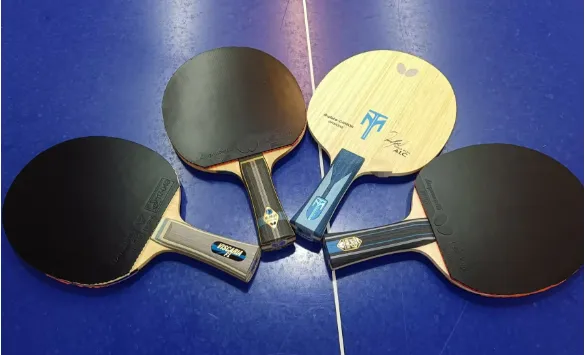
When the handle is a normal size or thicker — like the Viscaria — you feel the blade’s balance sitting more in the middle, or even closer to the handle. Generally, this makes backhand control more comfortable. And because the balance is more centered, you’ll find short-game shots easier to manage with greater composure.
3
Handle preferences are also personal in another way: the common belief is that FL handles favor the forehand while ST handles favor the backhand.
But some national team-level players feel the ST forehand actually gives more power — Mizutani Jun, for example. Others feel the FL backhand gives a more stable, settled sensation. These are minority views, though.
The simplest approach is just to go with whichever grip feels most comfortable. Also consider whether an ST handle tends to fly out of your grip.
4
Why might two people have different opinions about the balance point of the same blade model?
Because quality control variation is real. First, the blade’s flatness can vary — thickness can differ at different points across the face. Second, there are manufacturer-level decisions. For instance, my longstanding understanding was that Boll ALC has a hollow handle and Viscaria has a solid handle. But starting from the S-code run, I’ve seen many Boll ALC units with solid handles. That alone shifts the balance compared to previous versions.
On top of that, when your forehand rubber is significantly heavier than your backhand rubber, you’ll naturally feel more head-heavy during your forehand swing. Since everyone is using different rubbers, it’s no surprise that people feel differently about the same blade’s balance once rubber is applied.
5
Even within the same production batch, handle thickness will vary slightly from unit to unit — a bit more full here, just a touch thinner there. Wood is wood; variation is baked in.
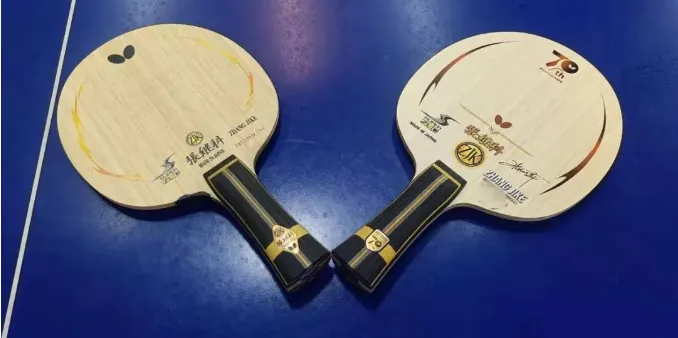
Although handles are mostly machine-cut, there’s still a final hand-sanding step. So you might notice that this year’s Zhang A handles feel a tiny bit thicker than last year’s.
Originally, Butterfly intended Fan A’s handle to match Zhang A’s dimensions exactly. In practice, differences crept in — which is completely normal. Don’t get too hung up on these small details. As long as the performance isn’t affected, you’re fine.