Notable Green Fiber Carbon Blades: Outer Layer Edition
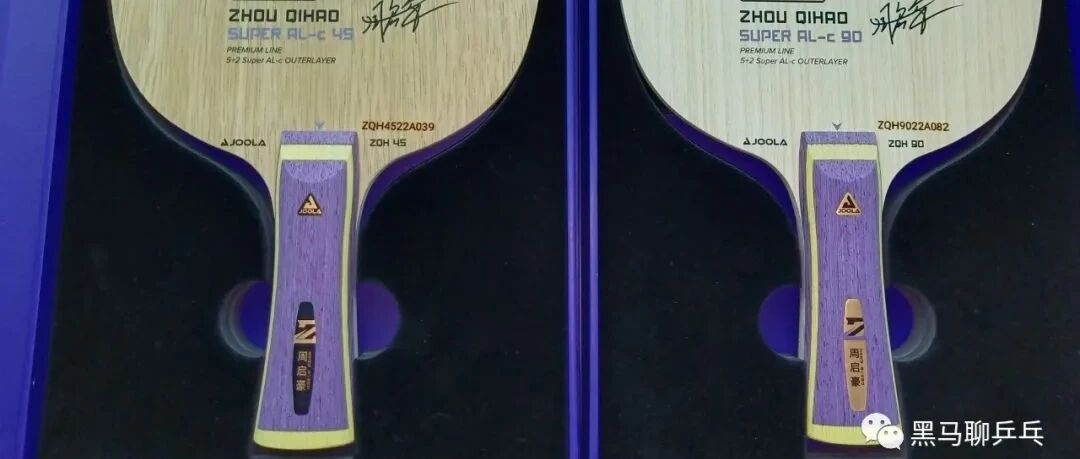
Galaxy is set to release the PRO-01G outer green fiber carbon on April 18. Before you know it, green fiber carbon blades have become a major camp alongside ALC, KLC, and ZLC. What was once a niche material — this mixed fiber that sits in hardness between ALC and ZLC, with some flex and built-in looping character — has now produced many standout names in the blade world.
1. JOOLA Vyzariz Freeze HRD
Notable players: Some European women’s players (I’ve forgotten their names). This was the first imported-brand green fiber carbon blade available domestically. On the domestic side, there were already options before this. It was Sword that first sourced Japanese green fiber and used it in blade production here in China. We also put out a green fiber carbon version of our Yayang quite early on. Later came green fiber versions of the Yaomo and Moyu.
This HRD’s construction is similar to a Viscaria, but with the ALC blue fiber carbon swapped out for green fiber carbon. The defining characteristic: this is a blade you can really rip loops with, and the forehand dwell feel is very strong. For players transitioning from inner to outer carbon, it’s relatively easy to adapt to.
The backhand rebound is not as lively as the Vis. For more details:
2. Zhou Qihao Super ALC 90
The Zhou Qihao series has a 45 and a 90. But their development trajectories have diverged — the 90 is excellent, while the 45 is merely stable without enough punch. The 90’s current notable users: Zhou Qihao, Pitchford.
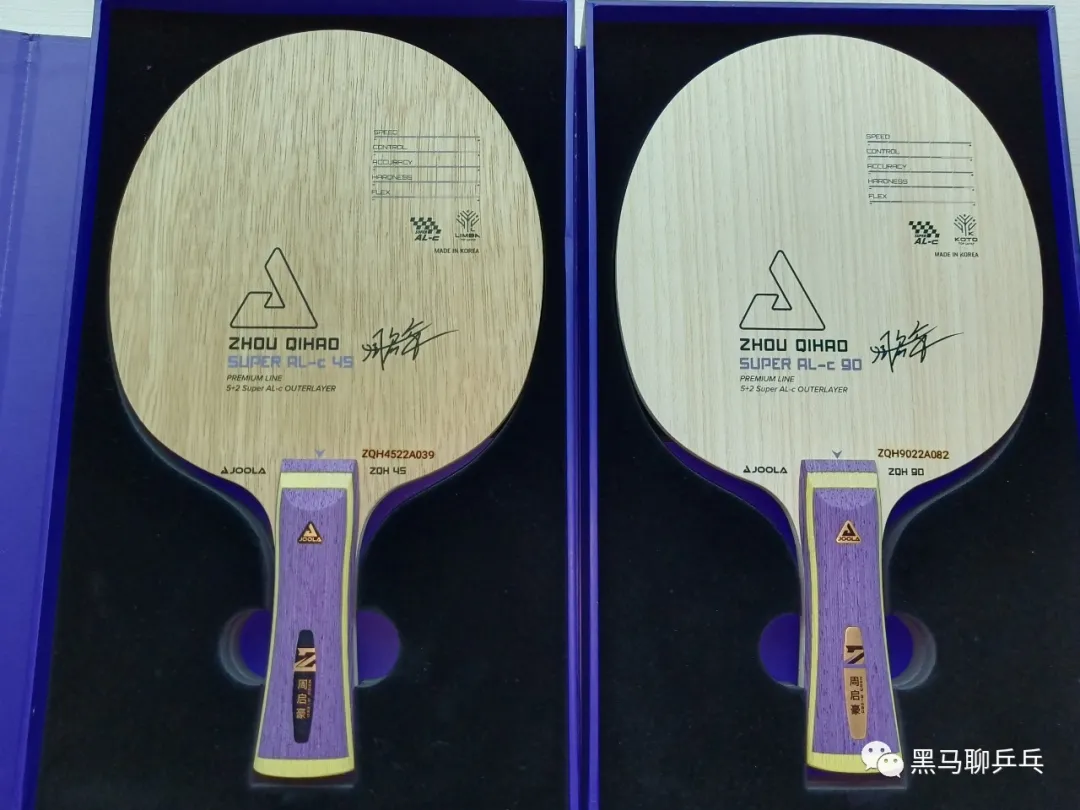
Compared to the HRD, both being outer green fiber carbon — you can visually see that the 90’s fiber is noticeably thicker, hence the S-ALC designation. In terms of overall dwell and arc ability, it’s still very good. It still has that hard-outside-soft-inside feel. The backhand rebound has improved over the HRD.
When you compare the Vis and Super Vis, the HRD and the Zhou Qihao 90, you notice: the one with thicker fiber really does rebound better at medium force, and requires less effort.
3. Stiga Inspira Hybrid Carbon
Notable players: Yuan Licen, Oikawa Mizuki. Same Korean-made origin as the two above. The common thread: good rebound, excellent looping performance. But in feel, the Inspira Hybrid Carbon comes across as harder and crunchier. At medium force it’s springier, and with full power the bottom-end punch exceeds the Zhou Qihao 90.
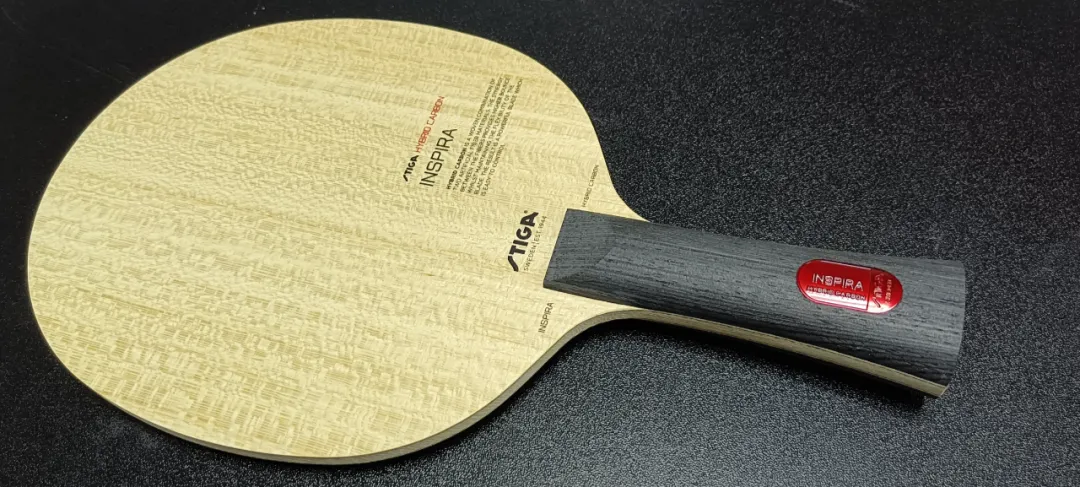
Because of that harder, crunchier feel, some people love it and some can’t adapt to it. It’s like a hybrid between a Viscaria and Ahn Jaehyun TMX — imagine the original Inspira Carbon with some hard, crisp, springy Korean seasoning added.
This is also a blade you can rip loops with. But the feel is indeed a touch harder. Personal preference.
4. Tibhar Alexis
Notable player: Alexis. This one is faster than the HRD and Inspira Hybrid Carbon, even though the construction and fiber are similar, and it comes from the same factory.
I wonder if the fiber and bonding formula are similar, but there are quality control differences. That said, there are some detail differences too. For example, the Inspira Hybrid Carbon has a narrower shoulder, while the Alexis has a relatively wider shoulder, making forehand-to-backhand transitions more comfortable and stable.
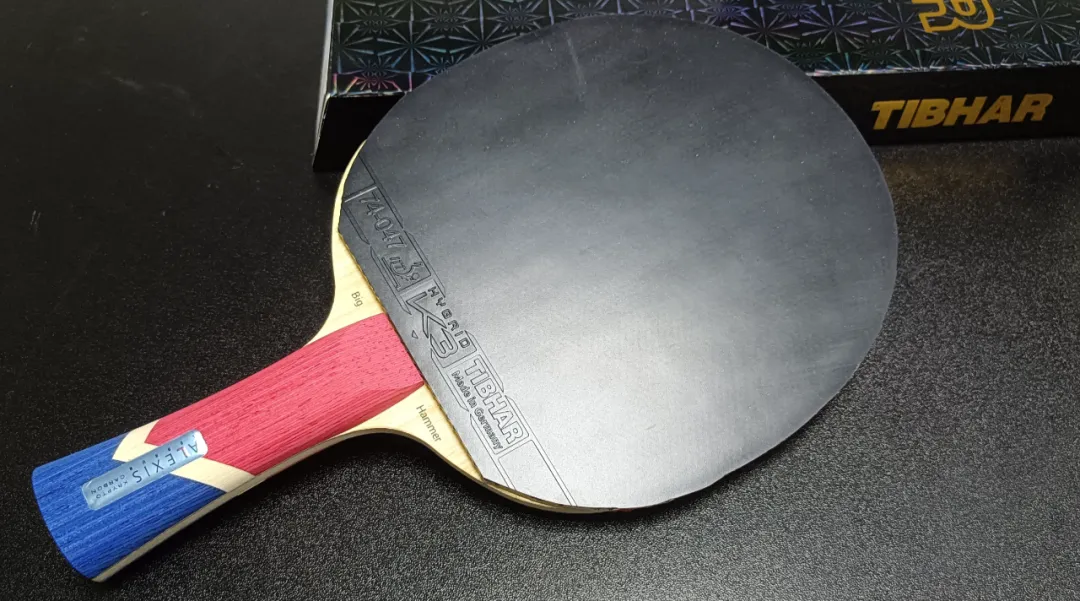
Overall, this one is slightly harder and a bit faster. Whether you prefer softer or firmer is up to you.
Also worth mentioning: Tibhar’s Mattias Falck Carbon is also outer green fiber carbon. And Andro’s VCO uses the same construction — notable users include Ko Seung-min and India’s Manav Thakkar, among others.
Since almost all these imported-brand green fiber carbon blades are manufactured in Korean factories, the feel will inevitably share a lot of common ground. As more and more stars endorse and use them, what started as a sapling has grown into a towering tree.