The Shortcomings of These Flagship Inner Carbon Blades
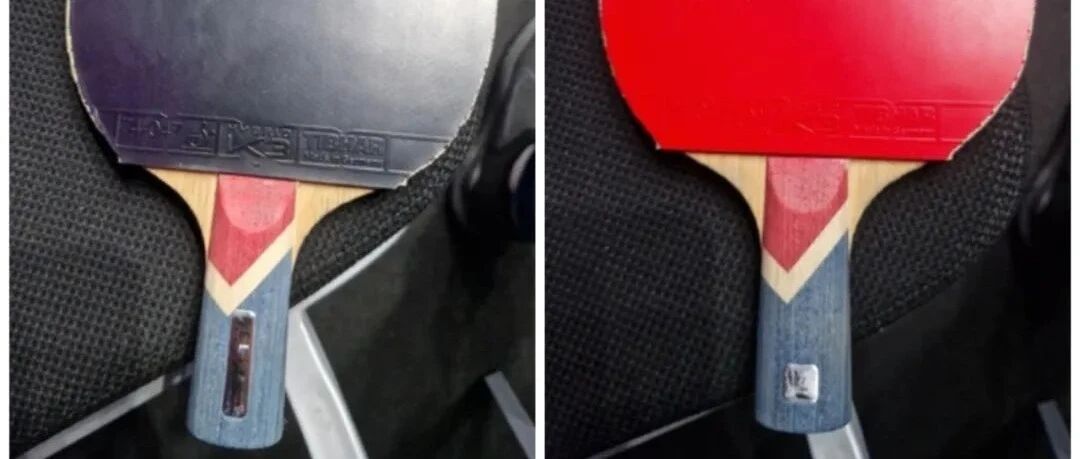
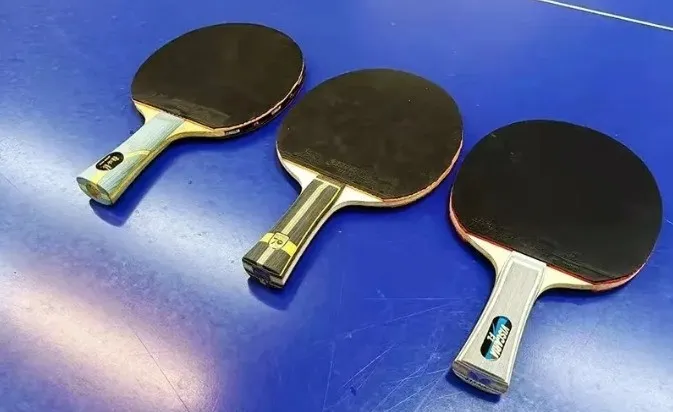
To be fair, these are truly the best inner-fiber blades from their respective brands. But none of them are perfect. And it’s precisely those imperfections that might make us pass on them.
Sometimes choosing equipment by elimination is a perfectly valid strategy.
1 — W968
Once, a W968 with a Viscaria-style handle was placed in front of me and I let it go. I regretted it bitterly afterward. If the universe gave me another chance, I would definitely… buy it immediately and sell it at a premium.
I had no choice. The official digital-version 968 handle feels wonderful for topspin looping, there’s no denying that. But the thing is, you’re not a young athlete anymore. You can’t always get your footwork right, can’t always swing it freely. That slim handle pushes the balance point further toward the head, and on top of that, your grip isn’t solid — after a long session your forehand and backhand both get tired. And the blade face that scratches easily unless you apply protective solution isn’t helping.
As for the W968 handle being widened in recent batches — it turned out that was just normal production variance, not a deliberate design change. But since the 968 sells so well, the brand has no real incentive to change it.
2 — Harimoto Tomokazu SUPER ALC
Among 2024’s new blades, this was probably the most anticipated. But it turned out different from most people’s expectations. Everyone thought: inner Super ALC plus ayous core, overflowing with deep power, the Butterfly version of W968, better quality control, more comfortable handle, completely outclassing the 968.
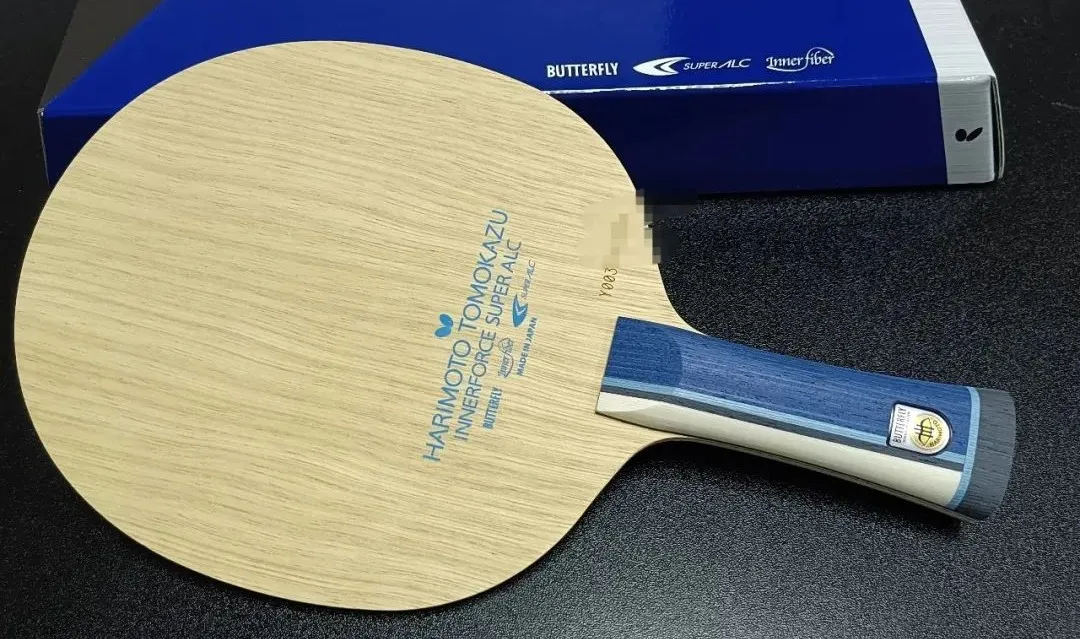
In reality: great continuity, high error tolerance, transparent feel, smooth steady attacking, very fluid backhand too. But the moment you want to deliver a single decisive crushing stroke, it says in plain terms: not quite there, not powerful enough. Although it’s transparent, the forehand’s deep power is underwhelming and the support is a bit lacking.
That determines its character: multi-ball rallying and consistency are fine, but if you retreat mid-table and drive with maximum force to finish a point, it doesn’t suit you.
3 — Harimoto Tomokazu SUPER ZLC
Over the past two years, more pros have started using this blade. Borrowing power and redirecting is comfortable and stable. Quick loops and quick flicks at low force, full topspin drives at high force — both have speed and quality. Compared to the SUPER ALC, the SUPER ZLC is stiffer and springier, with less concern about ball quality.
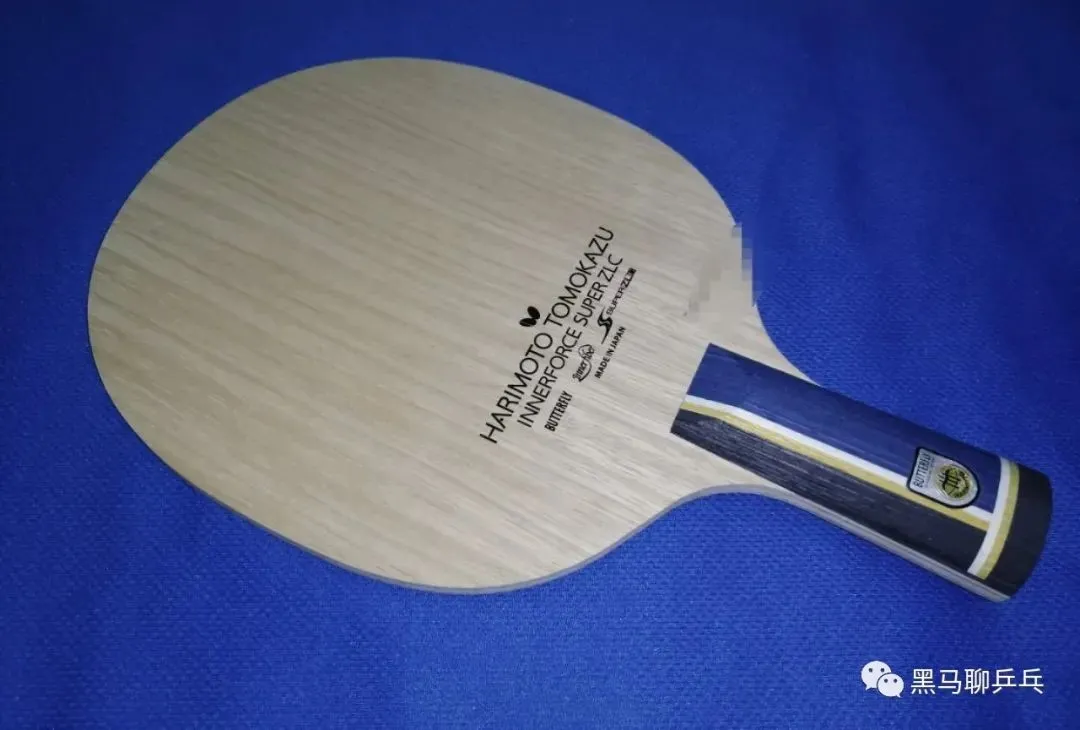
For shakehand players with a compact swing, this can still work well. But if you’re accustomed to a soft, transparent feel, this blade will seem a bit stiff and heavy.
4 — Tibhar Felix
This blade earned flagship status mostly because of Felix, who won the Olympic men’s singles bronze medal. It’s a well-rounded, versatile blade with no glaring weak point. Near-table and mid-table speed and rapid transitions are all very consistent.
But that’s about it.
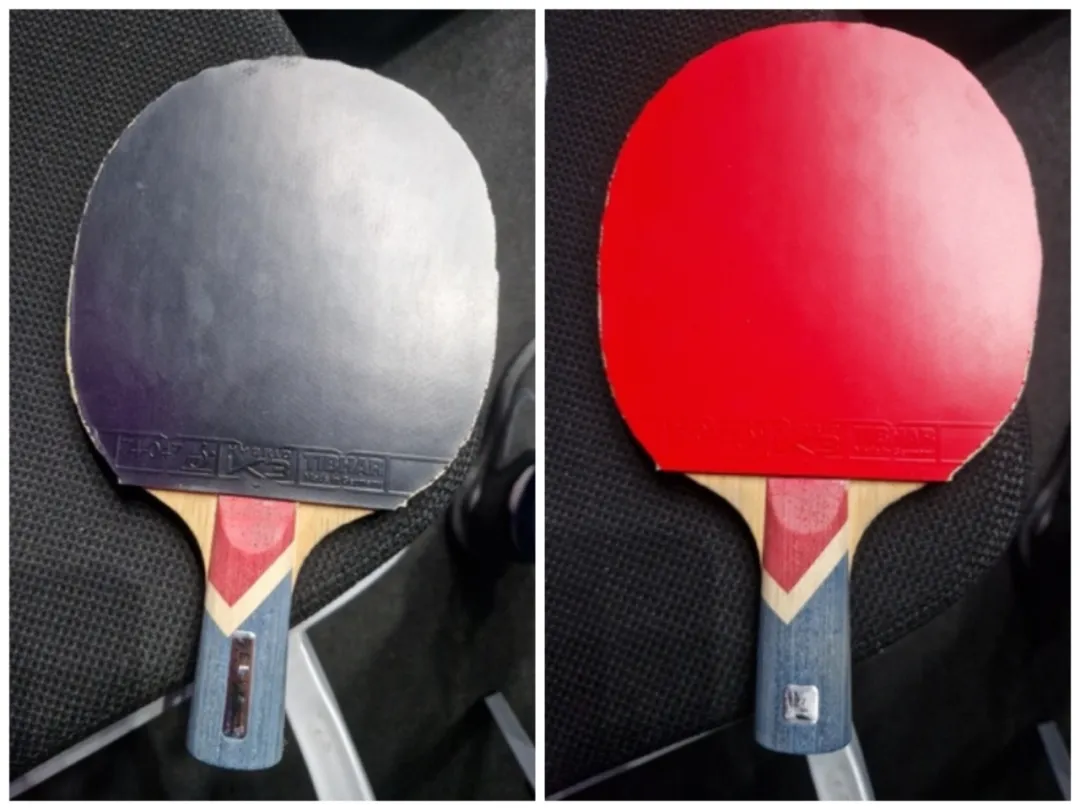
Compared to similarly structured inner-fiber blades, the deep power of this one is genuinely average — so average that you might think: aside from a slightly cleaner feel and higher error margin, it’s not that much better than an inner fiber blade in the 200-yuan range. Spin output and deep power are still some distance from a true flagship. It can’t bring out the strengths of a power player either.
5 — Stiga Shangkun AC
With its oversized face this blade is actually excellent. Structure similar to the Long 5, with a limba power layer, very good dwell with solid deep power. Speed rivals outer ALC. In those areas it’s nearly perfect. But the 159 x 151 mm face is tiring to swing, and the backhand side also feels heavy in the hand.
A smaller-face version came out later — unfortunately it plays stiff and unresponsive, not as good as the original at all.
6 — Cyber 6
With the right topsheet on the forehand, especially a non-tacky rubber, this thing is incredibly powerful. And it accelerates very suddenly. It takes time to get used to the balance point and feel of the face, but once you adapt it’s fine.
The catch: if you exclusively use this blade as your main setup, no problem. But the moment you play other blades too, you’ll find the contact weight and feel are so different from everything else that it ruins your feel and enjoyment on those other blades.