Stiga Helix Platinum Review: Truls Möregårdh's Championship Rubber Tested
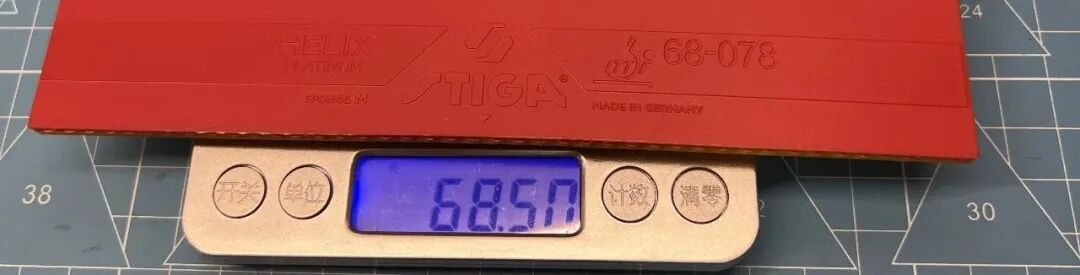
This Issue: Stiga Helix Platinum M and H
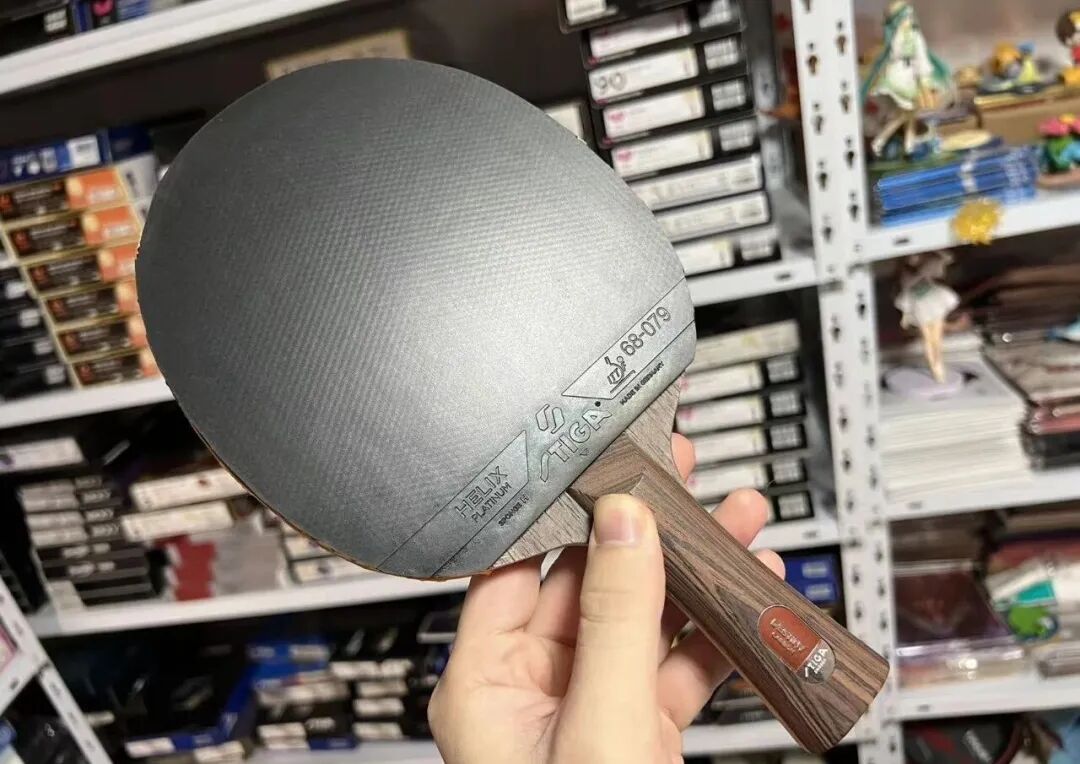
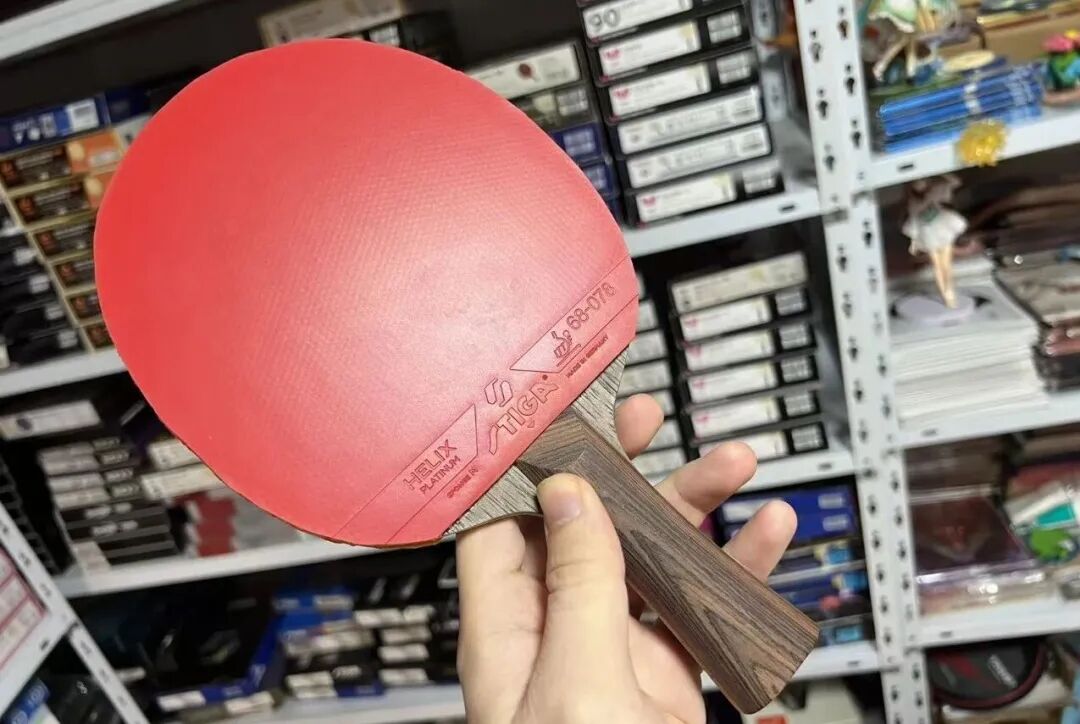
Test setup: Destiny Carbon, Dragon Grip, Zhang Jike ALC — three blades, primarily testing backhand
Quick Notes
- In 2026, Truls Möregårdh climbed to world No. 2. After switching from Platinum DNA to the Helix Platinum, he kept his competitive performance razor-sharp and won two titles back-to-back. That alone speaks to the rubber’s real-world performance.
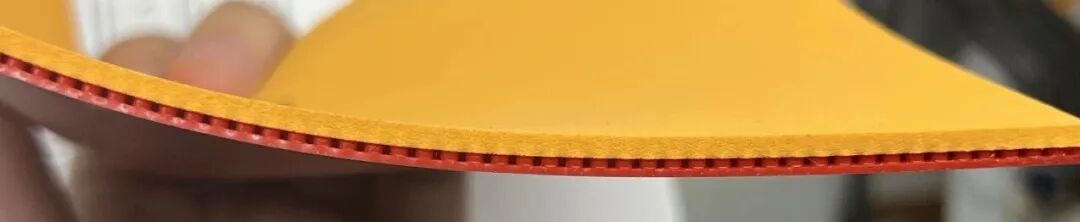
- The Helix Platinum comes in four hardness options: M (47.5), H (50), XH (52.5), and 55. The M sheet weighs 68.5 g uncut, 2.2 mm thick, and should come in around 46.5–48 g after trimming — fairly light.
Forehand (H Hardness — Quick Test)
- Forehand drive: Good ball output, but not particularly crisp or transparent-feeling. Solid, normal performance.
- Forehand topspin: Grabs the ball well. Close-to-table quality is decent. That said, H at 50 degrees is a little soft for the forehand — roughly equivalent to Hurricane 3 at around 38 degrees. I’d suggest going XH or 55 for the forehand.
- Forehand topspin off backspin: Clear ball-grabbing sensation. Lifting off a backspin ball feels comfortable.
- Forehand summary: The main weakness is insufficient crispness. The strengths are good ball-gripping, resilience, and arc consistency. In XH or 55, the forehand would be downright brutal.
Backhand (Primary Focus)
- Backhand feel: The Helix has a thinner topsheet over a thicker sponge, which makes the feel quite different from conventional European rubbers. The closest comparison I can think of is Butterfly T80 Hard — balanced, well-rounded, not extreme.
- Backhand with light contact: Ball speed is brisk. The thicker sponge feels more solid than standard European rubbers — it doesn’t hollow out under load and has slightly elevated elasticity. However, the thin topsheet reduces directional precision at low swing speeds; the integration between topsheet and sponge is a bit weaker for fine touches.
- Backhand with power: Under full swing, the sponge is noticeably more dense than a 2.1 mm European rubber — acceleration is clear. Even the M hardness provides strong support. The H on the backhand produces higher quality and more explosive results. Excellent.
- Backhand defense: Nothing special, but perfectly functional.
- Helix Platinum M: Roughly equivalent to Hurricane 3 at about 37 degrees. Good control. Compared to Platinum DNA M, it requires a bit more power to drive through. The Helix is slightly better in control, with more resilience and a higher ceiling. Its sponge grabs the ball deeper. The Platinum M fires a bit quicker and has a more transparent feel with a grippier topsheet. Overall they’re at a similar level.
- Helix Platinum H: The 50-degree version steps up one to one-and-a-half tiers over M in both speed and quality — very impressive. The firmer sponge reduces control compared to M, but paradoxically lowers the threshold needed to feel it “click through.” The H gets to quality faster than M, though stable mastery still requires better technique and a more structured swing.
Final Verdict
As Stiga’s newest flagship rubber, the Helix Platinum is priced at 275 yuan.
When I first received the test sample before it launched, my feedback to the company was: “A fair price for this performance would be 250–300 yuan.” They landed exactly there.
Strong points: ball-holding, shot quality, arc consistency.
Weak points: directional precision, topsheet-sponge integration.
The Helix series uses a thick sponge plus thin topsheet design — an unconventional approach that produces a feel unlike anything else. It’s hard to sum up in one sentence:
It can do everything! Everything has some quality to it! But nothing stands out! No wow factor!
Extremely “balanced and middle-of-the-road” — like a more powerful version of the Butterfly T80. Genuinely good, but you can’t quite articulate why. I thought about this piece for a long time; this rubber is the one that’s most stumped me as a writer.
- M version: 7–7.5 out of 10 (recommended for players rated 1300–1500)
- H version: 7.5–8 out of 10 (recommended for players rated 1500–1800) — mid-to-high-end rubber quality, worth trying