How Pro Players Think About Rubber Hardness (Part 2)
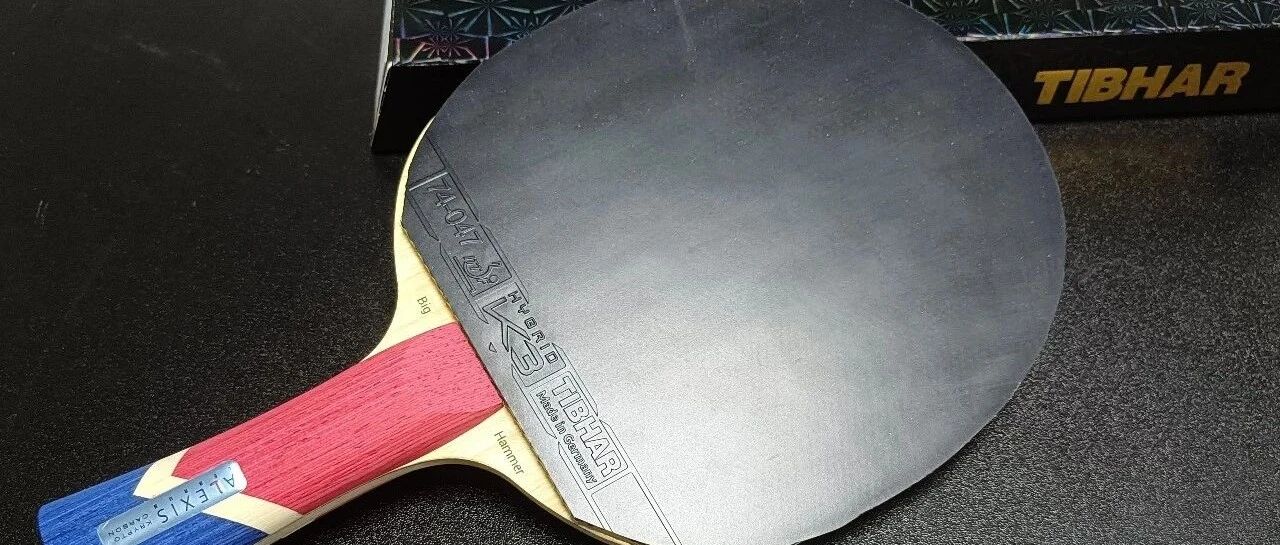
Matsudaira Kenta: Tailoring to the Individual — Soft Forehand, Hard Backhand
Setup at interview: Matsudaira Kenta Carbon, MK on forehand, K3 on backhand. Later setup: Matsudaira Kenta Carbon, MK PRO on forehand, K3 PRO on backhand.
Blackhorse has written before about Matsudaira Kenta switching from Zhang Jike ALC to the Tibhar Matsudaira Kenta Carbon. Aside from the fiber — one uses blue aramid carbon, the other green aramid carbon — the rest of the blade structure is identical. The feel is essentially preserved. I’ve also mentioned that late in his Butterfly career he was on D09C for the backhand and T05 for the forehand. That’s a setup I’ve personally considered, since my game leans on backhand serves and backhand spin, while my forehand focuses on penetration. In the end I decided D09C was too taxing on the backhand and gave it up.
The backhand-hard, forehand-soft pairing of D09C backhand and T05 forehand is something Matsudaira has stuck with to this day. After signing with Tibhar he moved to K3 on the backhand and MK on the forehand. We know MK has larger sponge pores than K3, making it a bit softer.
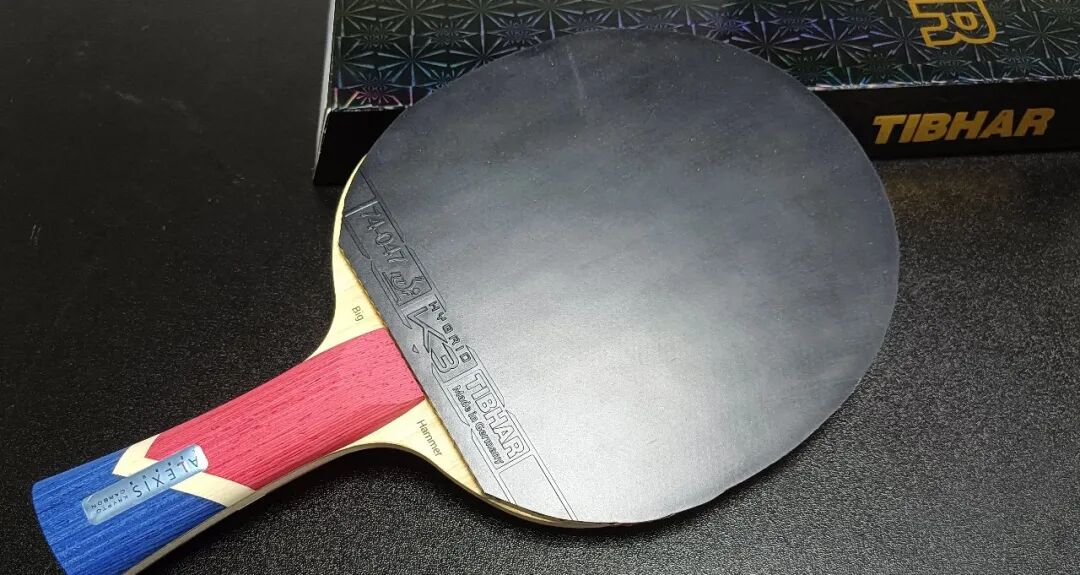
Here is how he described his thinking in his own words.
When he was with Butterfly he started on T05 on both sides. After D09C came out he tried it on the backhand — it was a bit stiff, not normally his preference — but after testing it he found, to his surprise, that it worked well. So he settled into D09C backhand, T05 forehand. Blackhorse’s note: This player has always had an exceptionally strong backhand while his forehand is comparatively less flashy. Running a harder rubber on the backhand makes sense.
Then after signing with Tibhar last year, he naturally tried K3 on the backhand. Understandable — Tibhar K3 is directly positioned as the counterpart to Butterfly D09C. Matsudaira feels that because his backhand is his strength, a harder rubber there produces better quality. The choice between harder and softer rubber is ultimately a personal preference issue. If your forehand is your strength, it’s equally reasonable to put the harder rubber there.
On the forehand side he chose MK, which is inherently softer than K3. His reasoning: if you’re a pure power attacker you can go hard on the forehand without issue. The reason he chose the softer MK is that his forehand game revolves around spin rather than brute force. When the rubber is too stiff, he can’t generate enough speed.
Kayama Yu: Devoted to Both-Sides Chinese Rubber
Setup: Hayata Hina H2 blade, NEO Blue Sponge National Hurricane on forehand, NEO Orange National Hurricane on backhand.
He originally played with Nittaku G-1 on both sides, then switched the forehand to the blue-sponge National Hurricane. While he personally likes harder rubbers, the Hurricane’s weight and the force it demands strained his shoulder. But over time with training he gradually adapted. He finds that Hurricane’s tight sponge pores make it feel compact and solid, and it offers the greatest range of spin variation.
Blackhorse’s note: In a previous article I mentioned Kimura Kasumi, another Butterfly-sponsored player. She started with T05 on both sides, then played in the T League and found herself outmatched against high-level opponents, forcing her to switch to D05 on both sides. At first it didn’t feel as gripping as T05 — it also took her a month or two to fully adapt.
Whether it’s a blade or a rubber, if you’re seriously considering a switch you need to budget time for adaptation. This is especially true for higher-hardness rubbers — they demand more training before you settle in.