Liang Jingkun's Crushing Defeat, China vs. Romania: A Technical and Equipment Breakdown

At the men’s team round of 16 in London, China beat Romania 3-1. The overall score doesn’t suggest a close call, but there was genuine danger.
Behind this battle were plenty of things worth examining, both technical and equipment-related. In fact all four matches pitted inner-fiber blades against outer-fiber blades.
Liang Jingkun 0-3 Eduard Ionescu
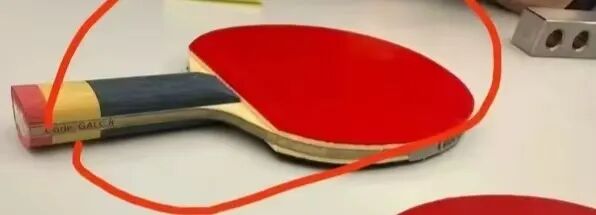
Liang Jingkun previously used W968; he now plays the LOKI Liang Jingkun inner carbon special edition with Hurricane on both sides.
Eduard Ionescu uses an outer green aramid carbon blade — likely a new release this year — with custom K3 on both sides.
Liang Jingkun averaged around six points per game. “Crushing defeat” is the only phrase for it. The overall impression: he was a full step behind his opponent in every phase — from initiating to transition.
Injury was certainly a factor. Yet the coaching staff clearly believed it wouldn’t affect the result too badly, otherwise they wouldn’t have entrusted him with so much responsibility. Building a World Team Championship lineup around him and leaving the last two spots to internal trials means they trusted Liang Jingkun to hold things together. Even through the past six months, when Fan Zhendong’s form had revealed plenty of “dark horse” names, on April 1st at the World Cup when he lost 2-3 to Ovtcharov in the group stage and missed the knockout round, then stood for a long time waving to the crowd — maybe we all should have already understood: the hero is no longer what he once was.
And yet, as the non-Chinese players kept improving, we still asked him to tough it out a little longer.
But losing back-to-back to Wu Jeoncheng, Moregard, and now a 40-something-ranked Eduard Ionescu at this World Team Championship shows the situation is far less rosy than we imagined.
Most of us still don’t want to accept this. During commentary, Zhou Yu noted that equal-paced rallies are Liang Jingkun’s strength and that he’d have chances once rallies stretched past five balls. With all due respect to Zhou Yu, who I genuinely like as a former national player, I have to push back: was that really the case? No — Ionescu was actually winning the rallies. Ionescu’s topspin attacking was a level faster. You’re back there trying to generate topspin with full power and he’s already pressing forward countering. Many times it didn’t even take five balls — he let you initiate and then immediately countered and won the point.
For a long time the 968-plus-Hurricane-on-both-sides combination has been seen as the gold standard for ultimate control, heavy spin, explosive acceleration, and deep power. But achieving all that requires the rubber to be fully boosted and for you to keep your hips and legs engaged every single shot. Without that, the setup is just slow and generates insufficient pace. Ma Long can do it, Wang Chuqin can do it — can an injured Liang Jingkun still do it?
And we have to keep asking: when a setup demands maximum effort on every shot to produce quality, is it really suited to that many players?
When coach Liu Guozheng said that spin is Liang Jingkun’s advantage and using heavy spin should force errors from the opponent — that felt like when I’m playing against club juniors rated 1800-1900. I can’t keep up with their speed or swing tempo, I keep getting hammered, and I can’t out-rally them in topspin. My only hope is to mix them up with spin variation and deception.
That tells us: we’re getting out-attacked.
Does anyone watching matches today get that feeling? Non-Chinese youngsters are initiating faster and attacking more aggressively. When they’re pressing close to the table and attacking from the front, we’re still dreaming that mid-table rallying is our advantage. It’s not — we might even lose the mid-table rally now.
Wang Chuqin 3-0 Iulian Chirita
Wang Chuqin uses inner Q968. Chirita uses an outer super Viscaria.
Facing a player who once ranked as high as 60th in the world, Wang Chuqin played with a ferocity, intensity — even a trace of anger — that you rarely see. No choice: his teammate had just played terribly, and that’s the truth.
Chirita had only a brief window in the second game. That was Wang briefly over-pursuing perfection — too precise on control, too demanding on quality — and nothing more. Chirita’s weakness in the middle position and forehand defense was obvious.
Lin Shidong 3-0 Ovidiu Ionescu
Lin Shidong uses the outer Butterfly ALC special edition. Ovidiu Ionescu uses W968.
A long-time 968 supporter, though many Europeans genuinely can’t get along with Hurricane, so he prefers T05 Hard on both sides. This time it looks like he switched to Z03 on both sides.
His ball quality is always heavy and powerful. But this match Lin Shidong seemed to find himself again, throwing away whatever “technique changes” the rumors had been about — his backhand was lightning-fast once more. Crucially, he played with passion and no timidity. Tactics matter, but sometimes the spirit of the match shapes everything more.
Wang Chuqin 3-1 Eduard Ionescu
Wang Chuqin uses inner Q968. Eduard Ionescu uses outer green aramid carbon.
Conventional wisdom says that players using Hurricane on both sides should emphasize spin. But this match was nothing like that. Short-game exchanges, push-long, pushing the middle position — varying the tempo from the front of the table — then pouncing early on serves and pulling aggressively: that was Wang Chuqin’s blueprint here.
Sometimes I wonder whether non-Chinese teams have already fully adapted to our heavy-spin style. So they let us initiate and topspin first, then counter-attack. In today’s game, speed dominates — creating spin variation is harder than ever before.
Back to equipment: the outer green aramid carbon versus the outer blue aramid carbon has one additional characteristic worth noting. Green aramid carbon is described as having stronger rebound — essentially springier and more resilient than blue aramid carbon, which helps in retreating to mid-table defense and counter-attacking. The extra springiness means more ball output and less effort when driving from mid-to-long range. Watching Wendy Fang, Ionescu, and Alexis’s mid-table capability, you get a glimpse of the green aramid carbon’s strengths.