Five Kinds of Fun You Can Have with a Table Tennis Paddle
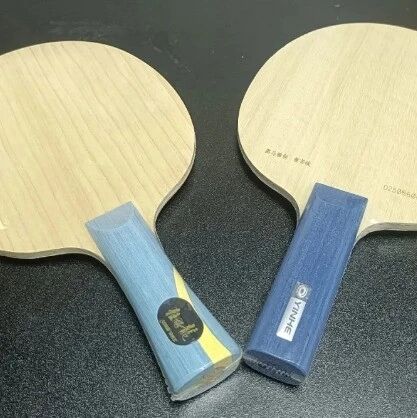
1. The Joy of Owning
It is just like playing with toys as a kid. Which toy did you love most? No — I want them all. It might seem like a shallow pleasure, but it is also one of the purest. Back then you could not pick your own toys. Now that you are earning your own money, can you really not buy the paddle you want? (If your spouse holds the purse strings, feel free to skip this part.)
Of course, ownership comes in many flavors. Some hobbyists have built up what can only be called a “museum,” while others treasure just one or two paddles as if they were priceless artifacts. Neither is superior — whatever makes you happy.
The one danger with owning things is comparison. Comparison only feeds vanity; quiet personal satisfaction is the real goal.
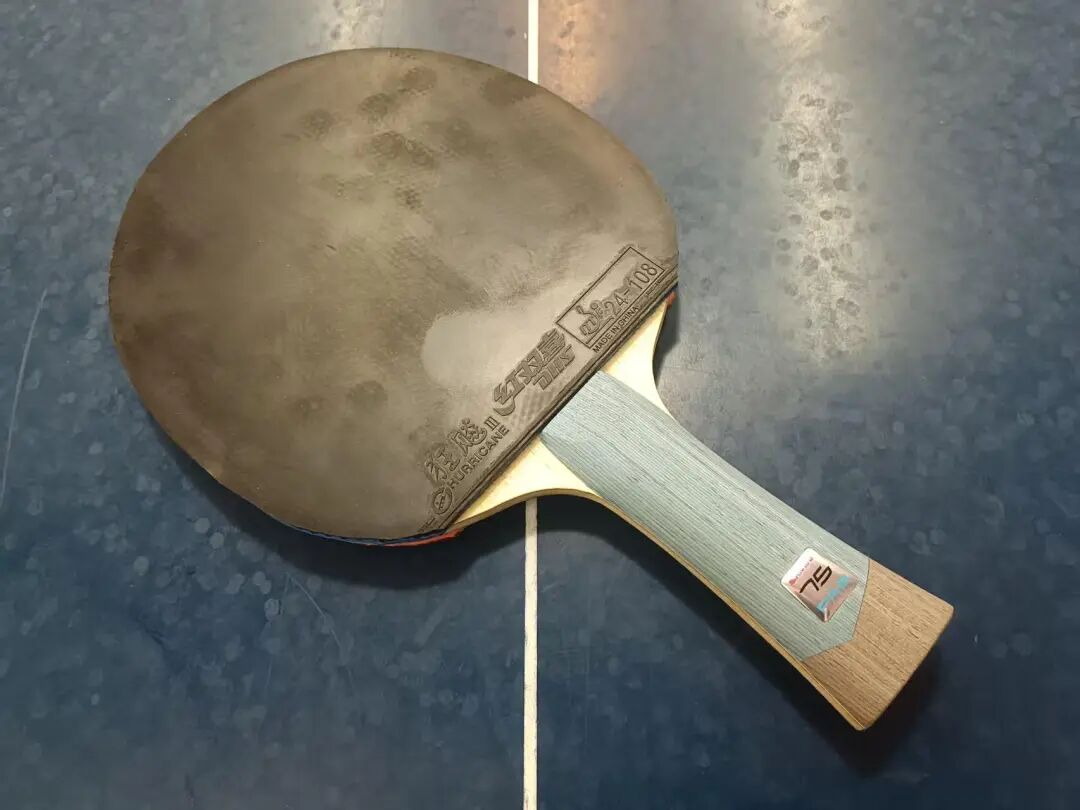
2. The Thrill of Something New
This is what we call the “audiophile” mindset. The true enthusiast may not care how much they own, but they absolutely must have “owned it once.” Buy a new paddle, share your impressions, discuss it with fellow players. That spirit was the very foundation that drove countless table tennis forums to flourish.
Forums may be fading now, but they live on in another form: WeChat groups. Noisy, spirited debates and arguments — that is a kind of joy too. The paddle is still the same toy it always was, just in a different form.
3. Understanding Differences, Feeling Differences
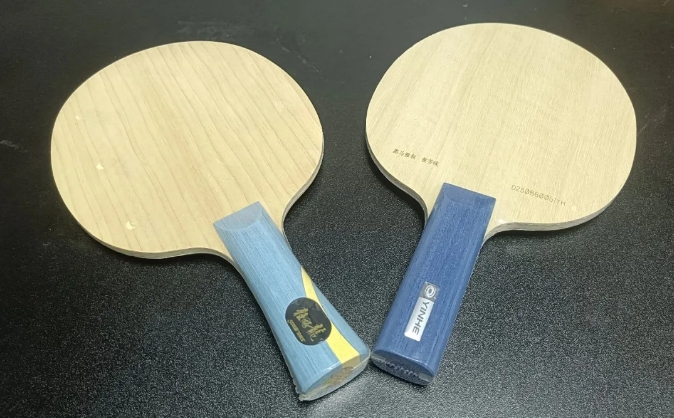
Blades genuinely differ from one another. The W968 still has plenty of depth when you retreat to the mid-to-back court; the Viscaria, once you back up, demands more from your own body — you have to generate the arc actively. The Carbon 45 has a naturally loopy arc, but its depth ceiling is about where it is.
Once you understand those differences, the game becomes adapting yourself to the paddle. With the arc-heavy W968 (or Hurricane Dragon 5 or the KLC-fiber dark-horse blade), consciously give yourself more room and flatten the arc a little. With the Viscaria, when lifting backspin, actively build the arc; when punching, remember to snap your forearm through quickly. All of that is its own pleasure.
4. The World of Rubber Pairings
At this point I have to admit: everything in this hobby costs money. Different rubber combinations really do get expensive. Some players enjoy experimenting with rubbers purely for the feel — that is a fairly high-level form of the hobby. It signals that wins and losses have begun to feel irrelevant; they are simply savoring the novelty and pleasure that different rubbers bring.
For most players, though, trying different rubbers is about improving competitive performance. There is a lot of accumulated wisdom here. For example, a blade with a springy, responsive feel tends to pair well with a rubber that is faithful, linear, and solid in feedback. For a blade that is slightly too lively and fast, a rubber with stronger ball-gripping quality works better — something like Hurricane 3, Jupiter 3, or other high-tack Chinese rubbers, or micro-tacky European sheets such as D09c or Rakza.
5. The Pleasure of Appreciation
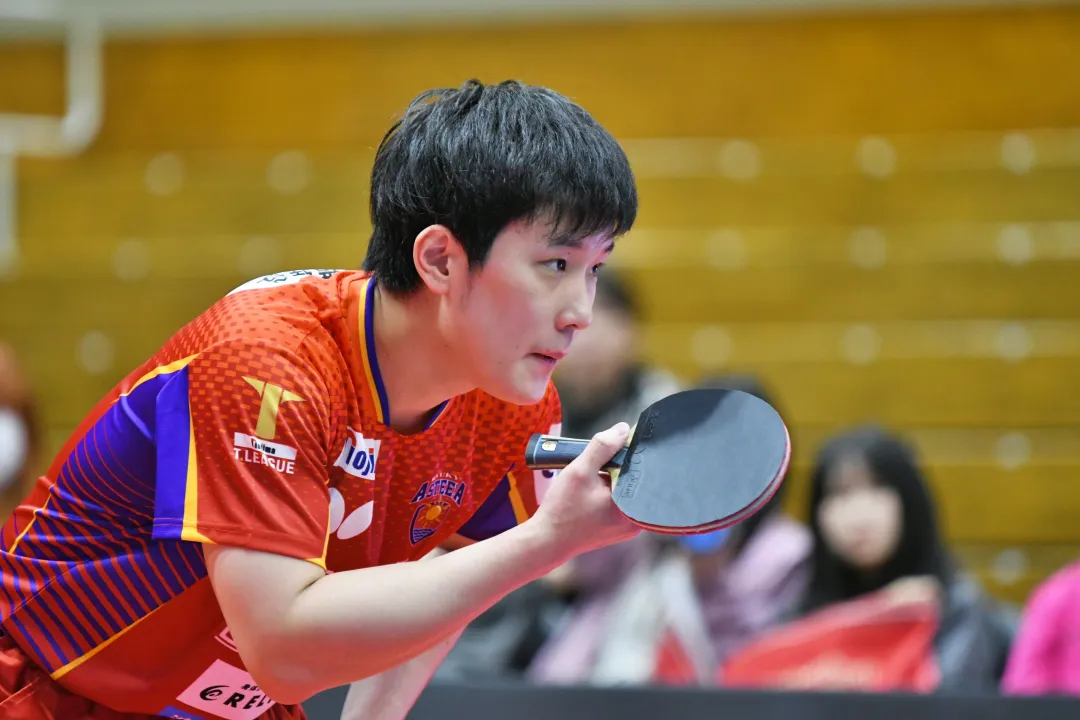
Watching pro players compete and figuring out what blade they are using is not just idle gossip. By watching matches you can appreciate the expression of technique, and by studying the equipment they choose you can understand the impact a blade has on actual match play.
Some blades are lively and springy; others are heavy and forceful; others feel like everything is perfectly under control. How do top players choose a particular blade and then develop a distinctive style around it? The player acts on the blade, but equally, the blade shapes the player’s technique. Someone who used an inner carbon blade might have had big, sweeping strokes. Then they switch to outer carbon and, without even realizing it, their motion becomes more compact — because the arc is shorter, ball exit speed is faster, and a loose, dragging swing either loses its threat or simply cannot keep up with the blade’s pace.
The fun of paddles does not stop there. Learning about different woods, different fibers, and how different adhesives interact — all of it is a field of knowledge. And the ocean of knowledge is vast. Seeking it out is a joy in itself.