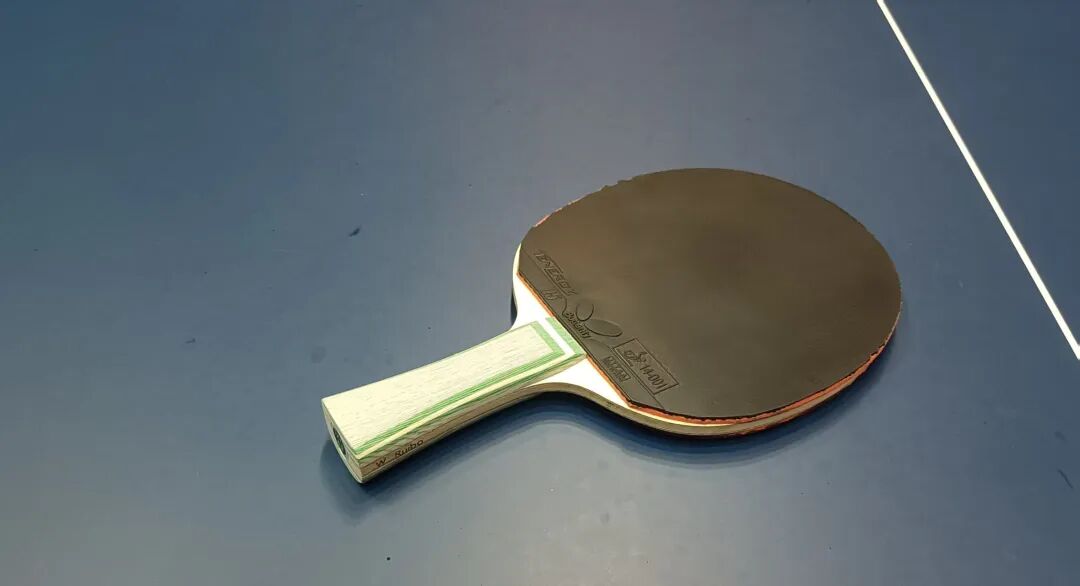
First Look: STIGA LUMA Carbon — Wen Ruibo's Blade
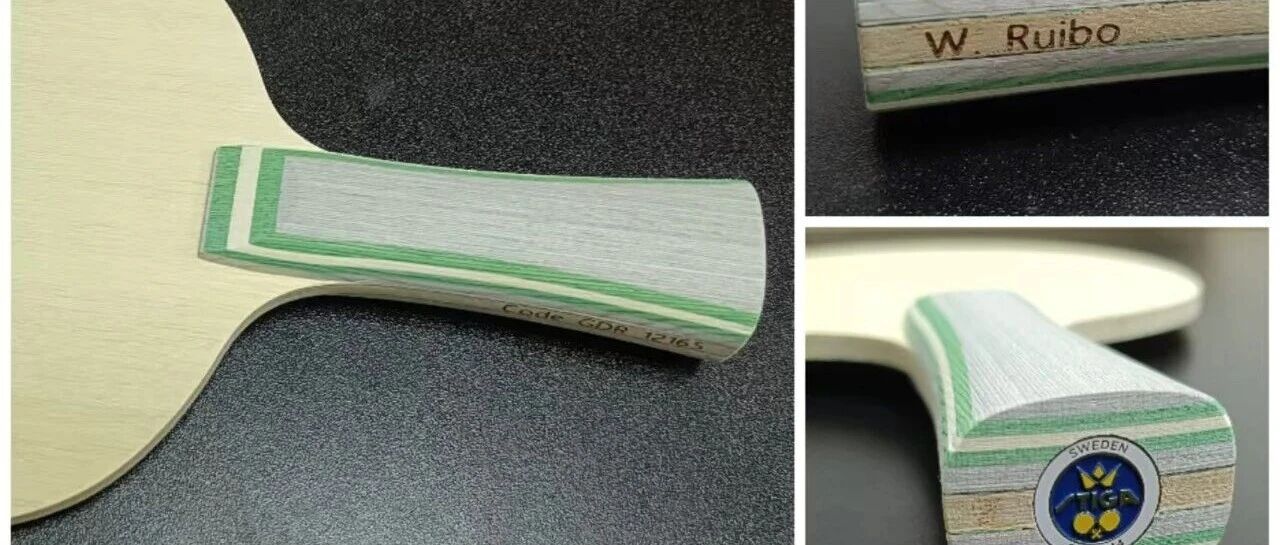
Based on Wen Ruibo’s performances this year, he has a real shot at appearing in best-improvement-player discussions. And the LUMA carbon in his hands is one of STIGA’s flagship new releases of the year.
Today, let’s take a close look at the LUMA carbon.
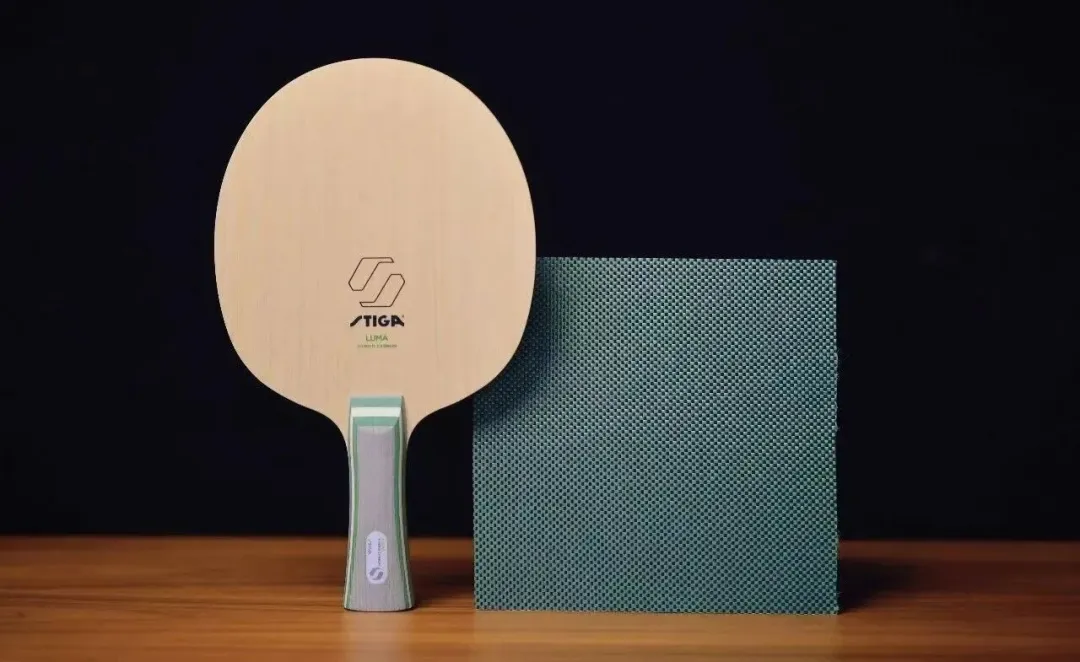
What You Need to Know
The sample I tested is a player’s-edition blade — no logo plate. The handle is extremely plain, with lines that resemble Butterfly’s Viscaria. The grip curve is similar too.
Although it looks like a player prototype, reportedly the only thing missing is the logo badge. Meaning it’s essentially identical to the retail version that will hit shelves.
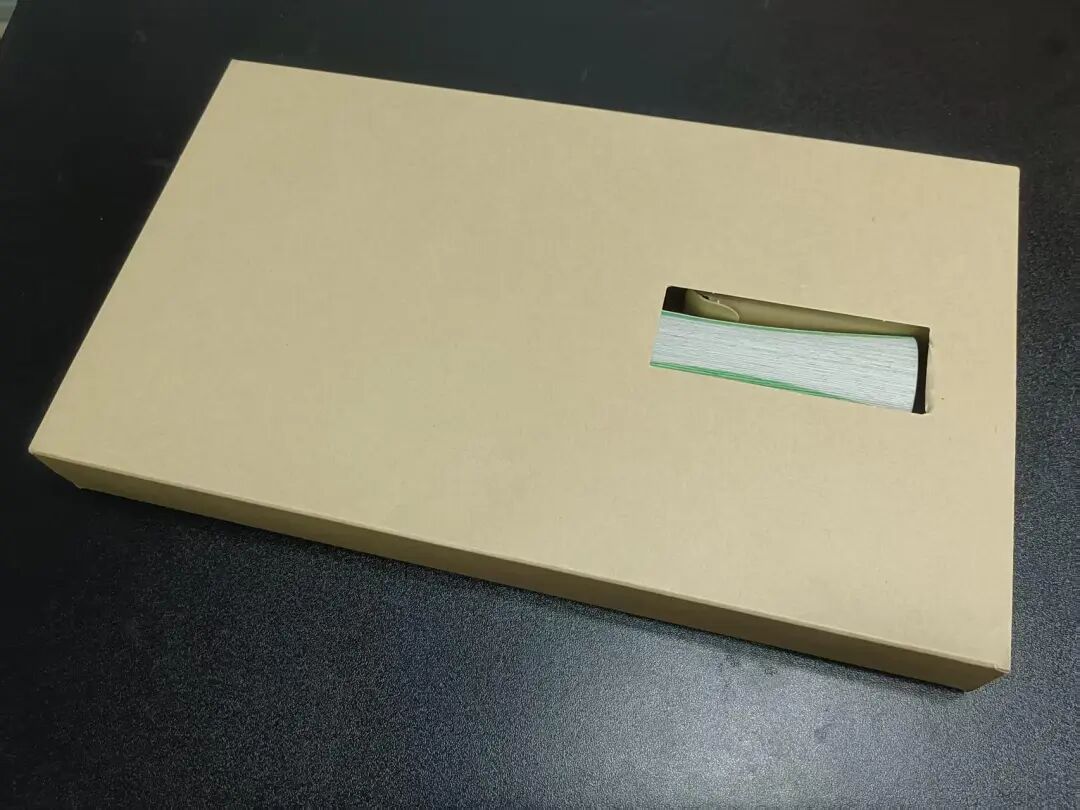
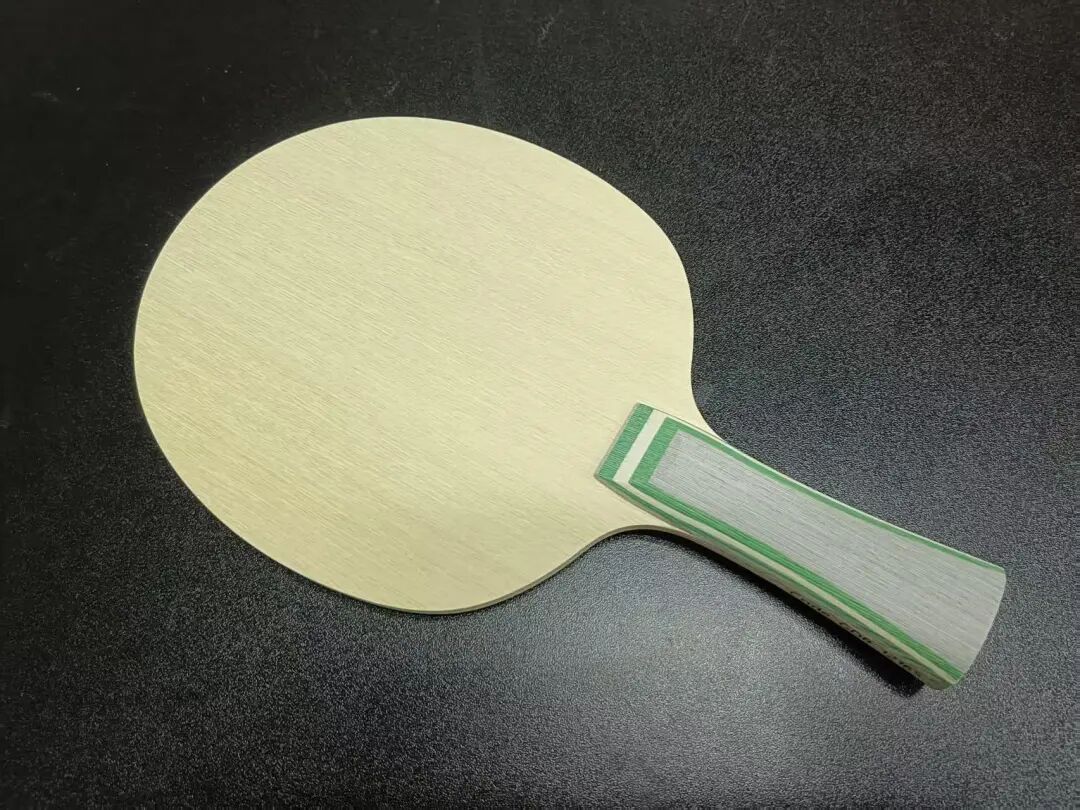
The green accent lines on the handle signal the LUMA’s defining feature: “green aramid carbon” fibers. The construction is a classic 5+2 outer configuration — Koto face veneer, green aramid carbon layer, Ayous transition layer, Paulownia core. Five-plus-two.
Measured thickness: 5.80 mm. Weight: 93.7 g. But the balance feels excellent — it doesn’t feel heavy at all.
How to Describe the LUMA’s Feel
It’s closer in character to the STIGA Inspiration Carbon or Tibhar Alex. The surface feel is relatively firm and crisp. It’s not the soft, penetrating type like the Ice Carbon HRD or the Double Fish Zhouqihao — those lean more toward a cushioned, muted texture. Even though all of these are Korean-made.
Compared to the Viscaria, at low-to-medium force the LUMA’s surface feels harder. But once you drive through it at full power, there’s a subtle softness inside — and the springback is noticeably better than the Viscaria. The Viscaria is more linear and faithful, while the LUMA has a visible “extra bounce” when you load up. This helps you accelerate, but can also send the ball long if you’re not careful.
The LUMA has higher peak energy — the first-speed off the bat is faster, and the overall support feels very solid. It’s excellent for absorbing and returning heavy incoming shots. The speed is penetrating in character, though the second-bounce spin isn’t especially vicious.
Real-Play Testing
A note on rubber pairings: I tested two grippy rubbers on both sides, then forehand-tacky with backhand-semi-tacky, and forehand-tacky with backhand-grippy. No obvious weak spots in any setup. The LUMA is quite versatile. Despite being an outer carbon, the dwell time is surprisingly good. Green aramid carbon blades generally offer strong rebound and good arc-generation.
One challenge I noticed: the forehand works better with a more penetrable rubber, so you can exploit the speed advantage. If the rubber is too hard, the blade becomes difficult to drive through — you lose speed advantage without gaining spin quality.
Good grippy rubber options that bite well: HELIX Platinum, DNA Platinum, or Tenergy 05. When I used grippy rubber on both sides, the control was surprisingly comfortable — good dwell with penetrating power.
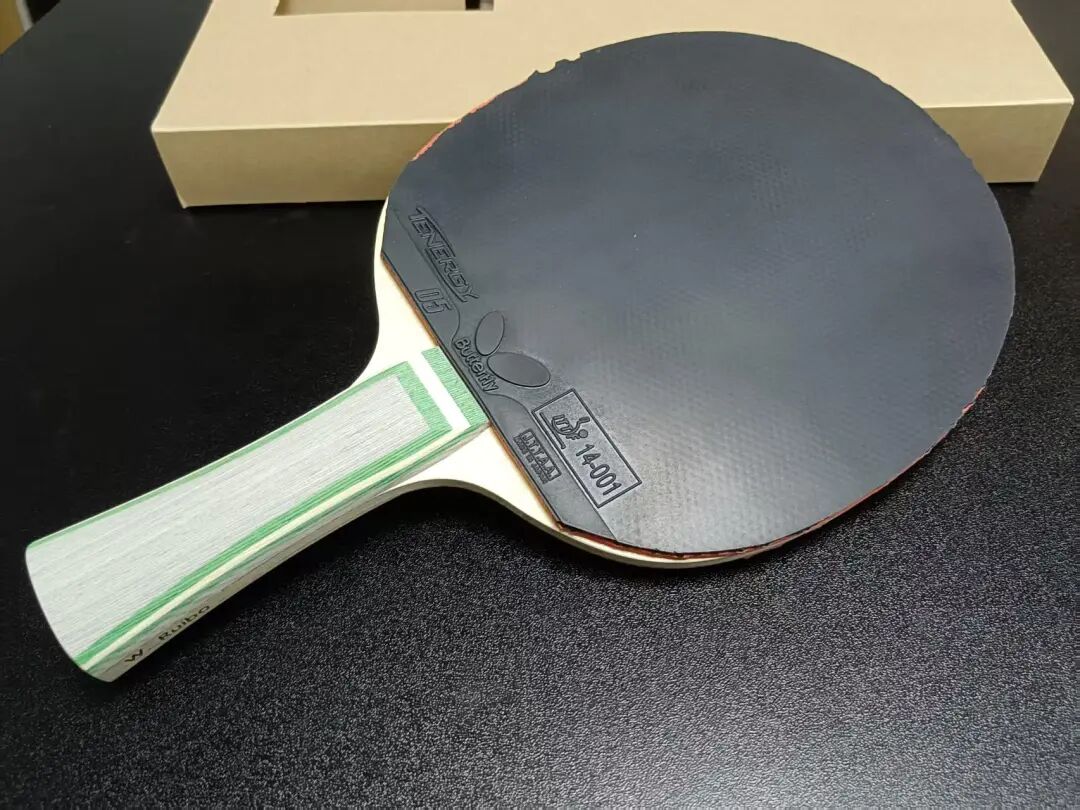
Semi-tacky outer rubbers also work well, as do softer domestic high-tack rubbers — for example, 39-degree boosted NEO Blue Sponge Provincial Hurricane 3.
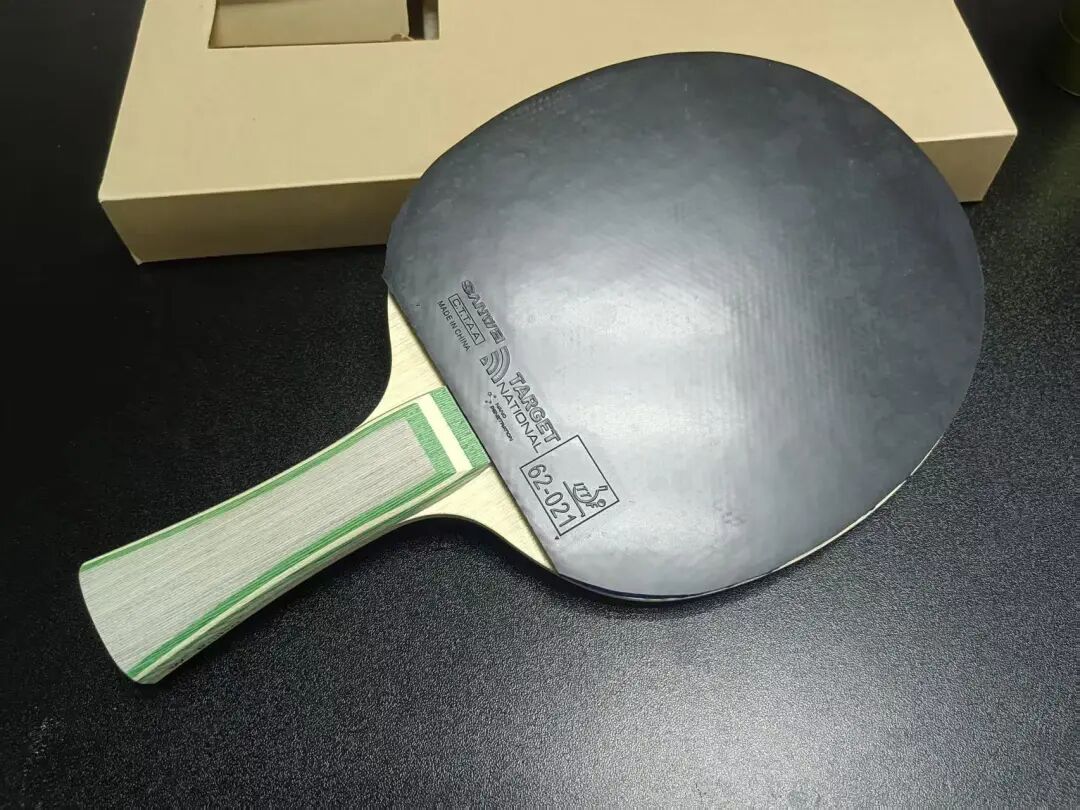
For the backhand, a rubber with some tackiness is friendlier for most amateur players. The LUMA’s backhand explosiveness is on par with the Viscaria, but the sudden extra-bounce effect after full loading is more pronounced. A slightly tacky backhand rubber stabilizes the error margin and adds spin. And since the blade’s first-speed is already excellent, a tacky rubber doesn’t feel slow. Wen Ruibo pairs DNA Hybrid on the backhand — it works well.
Short Game
The ball doesn’t pop up easily. Very stable. Slightly on the woody side but well-controlled. Banana flicks with a tacky rubber feel fast and loaded — definitely suited to advanced amateurs and professionals.
In fact, with a blade this explosive, even small, compact movements carry a threat. It truly suits skilled players.
Defense and Counterattack
Quick counter-drives and redirecting with added weight feel very stable. The structural support is rock-solid. I think penhold push-attack players would also suit this blade well. Its defensive sweet spot is wide.
Mid-Distance and Close Table Attack
It can be very fast. It simultaneously delivers dwell and speed. Forehand-to-backhand transitions are smooth and steady — ideal for fast-exchange players.
Mid-distance performance remains strong. If anything, stepping back gives you more room to unlock the blade’s full power potential.
For average amateur players, this blade has a moderate entry bar. Rubber selection needs to lean toward the penetrable side. Overall, it’s firm and on the crisp side — more of a fast-arc weapon that rewards explosive speed, high-tempo rallies, and all-around attack and defense. It’s less suited to players who want a transparent, spin-rich feel (that type is better represented by blades like the Fate Carbon or Cyber 6).
One note: the sample I tested exceeded 93 g, which likely makes the overall feel stiffer. Consider your own power level and whether to select a lighter piece when purchasing.
Overall, the LUMA carbon is a quality blade — excellent at high-speed exchanges and counterattacking. But it has a moderate entry bar. Choose a lighter piece and pair it with the right rubbers, and that bar drops significantly.