Fan Zhendong's Fundamental Table Tennis Techniques Explained

Fan Zhendong’s Fundamental Table Tennis Techniques Explained  Fan Zhendong’s playing style, as defined by Butterfly’s official site, is ‘the origin is the peak’ and ‘the strongest fundamental play.’ Today, we will delve into Fan Zhendong’s ‘fundamental play.’
 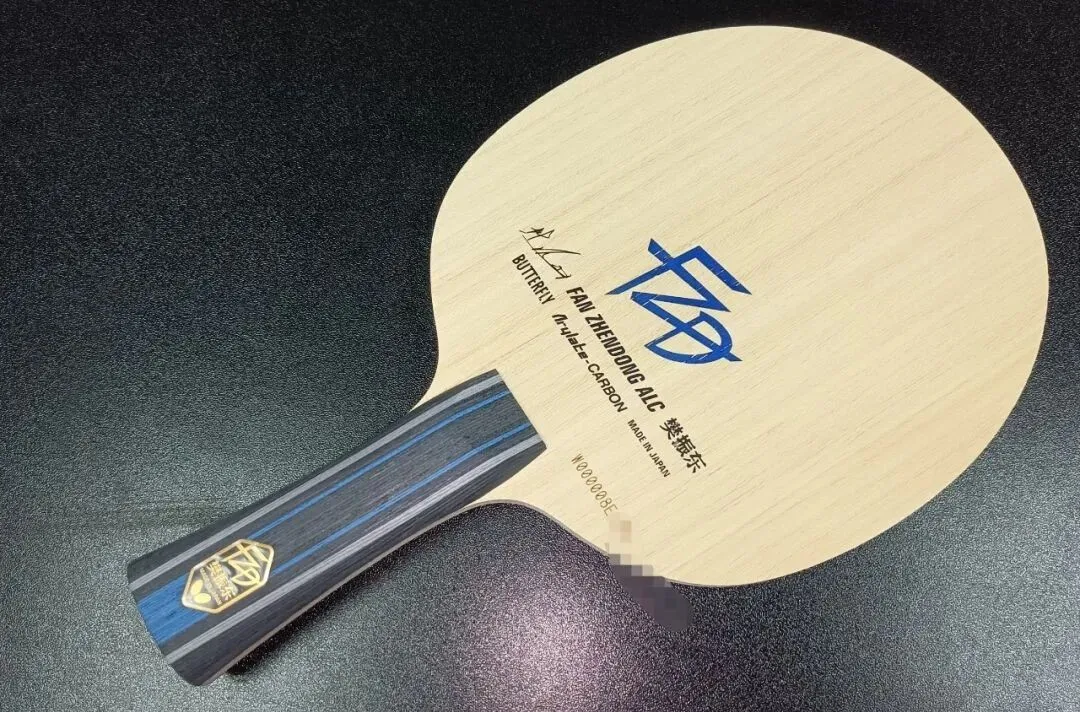 Fan Zhendong emphasizes that he has focused on basic training since childhood, particularly multi-ball drills for forehand and backhand. This not only builds muscle memory but also instills a sense of ‘achievement.’ Fundamental techniques are crucial and positively impact other skills.
Previously, in the ‘Reaching the Pinnacle’ series, a former national team player highlighted the importance of mastering basic movements and using body weight effectively before focusing on power, especially for young players.
Forehand Loop Against Long Balls
Fan Zhendong highlights several key points for this technique. Firstly, power should come from the coordinated effort of the legs, waist, and arms, not just the arm swing. The force transfers from the legs through the waist to the arms. Additionally, players should rely on their memory of training to adapt to different incoming balls, which improves both the quality and consistency of their strokes.
Fan Zhendong suggests that the ‘memory’ he refers to is the result of repeated training, knowing how to respond to different balls. He emphasizes visualizing oneself playing and correcting one’s movements in the mind.
For long balls, Fan Zhendong advises that the contact point should be in front of the body. This maintains the distance between the ball and the racket, allowing for more varied shot placements and making it harder for opponents to anticipate.
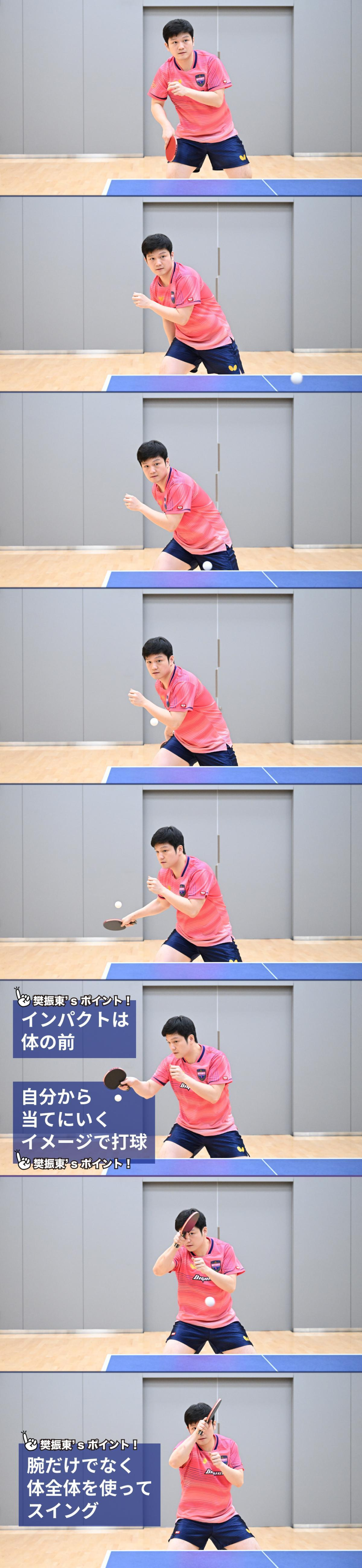 (Image from Butterfly’s official site)
Forehand Loop Against Backspin
Fan Zhendong advises players to ‘remember the feeling of hitting back.’ The trajectory of the shot should feel like drawing an arc. It’s important to recall the successful arc and sensation of the shot.
When looping backspin, the body weight should be lowered more than when looping a regular long ball. While the swing appears to move from bottom to top, the power should also incorporate a ‘back-to-front’ motion.
It’s crucial to keep the arm relaxed before the swing to ensure acceleration at the point of contact.
Backhand Loop Against Long Balls
The backhand loop is primarily executed in front of the body with a smaller motion compared to the forehand. The body weight should be slightly higher, and the motion involves a downward swing. This is Fan Zhendong’s signature backhand smash.
It’s important to fully relax the shoulders and elbows for more stable shots.
When dealing with long balls, raise the body weight (around the waist) to create a downward swinging motion, which adds more pressure.
Backhand Loop Against Backspin
Fan Zhendong explains that the appropriate swing depends on the incoming ball. If the ball is fast (like a sudden long push), it usually has less spin, allowing for a quicker response. If the ball is slower, it likely has heavier backspin, requiring a delayed contact point. Lower your body weight and focus on brushing the ball to create an arc.
Throughout the process, transfer the power from the legs and waist to the arm, using the body to hit the ball for higher stability.
Additional Technique: Left Hand Positioning
An often-overlooked aspect of Fan Zhendong’s technique is his left hand. During the right-handed stroke, his left hand remains extended forward, aiding balance and improving ‘visual measurement’ of the ball.
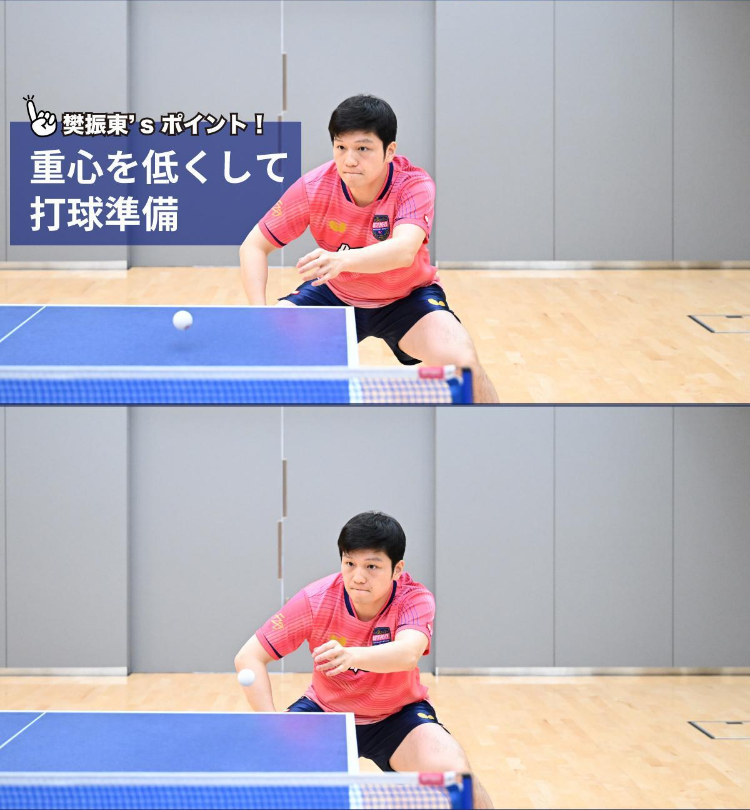 (Image from Butterfly’s official site)
In today’s follow-up article, we revisit the advice from a former national team player on how to use the left hand when holding the racket with the right.
Final Thoughts on Fundamentals
Finally, we emphasize the importance of mastering the basics. For amateur players, it’s challenging to overhaul techniques once bad habits are ingrained. These habits often limit our potential. However, we can start by focusing on practice. Many of us overlook practice sessions, which are essential for improvement.