Donic Desto F2 Review: The Overlooked Little Brother
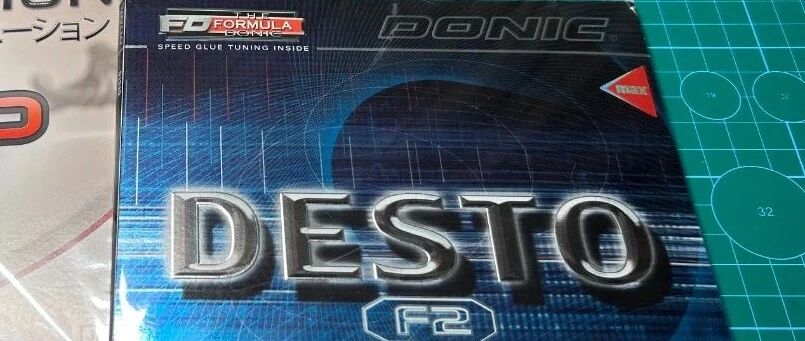
Featured Rubber: Donic Desto F2 — The Overlooked Little Brother
Quick Take:
-
The Donic F1 holds a status among European rubbers comparable to Hurricane 3 — deeply loved by players of all levels, especially older club players. Just like Leilong (Leiston) is overshadowed by its famous sibling, the Donic F2 similarly gets lost in the F1’s shadow.
-
European rubber lines commonly use different model numbers to indicate hardness tiers — similar to how FXP, ELP, and MXP work — matching different player levels. The Donic line runs F1, F2, F3, each softer in turn. From today’s perspective: F1 has just the right punch, F2 is usable but on the soft side, and F3 is too soft to be practical.
-
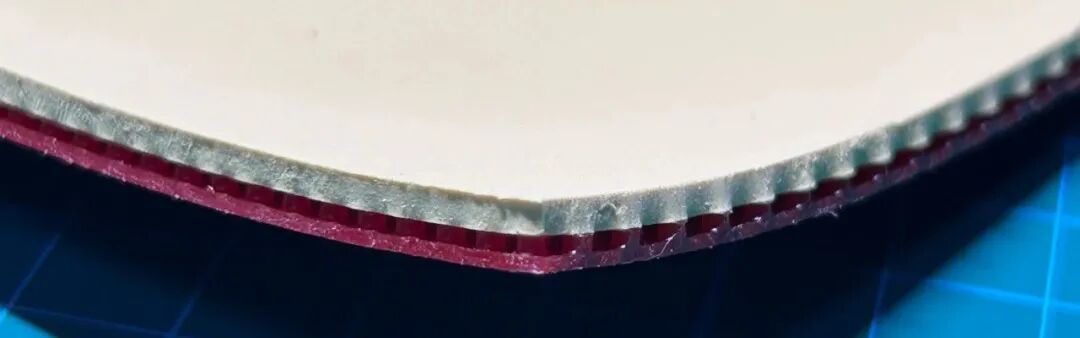
The Donic F2 is around 2.1mm thick, with a white high-density sponge, weighs 59.3g uncut — very light. After a price increase, it retails at around 185 RMB.
-
If Tibhar Evolution MXP is the optimized soft version of the F1, then the Donic F2 is the un-optimized soft version. At the same price, the F2’s overall performance falls short of the MXP. However, precisely because it uses an older-formula sponge, the F2 still delivers a more traditional, “purer” snap-hit feel that’s closer to the F1 than the MXP can manage. In certain setups — as shown in the photo, paired with a Timo Boll ALC — the F2 can achieve a light, snappy striking effect that makes it more suitable on the backhand than the MXP.
-
The old reason people chose the F2 was that it offered slightly better control and spin sensitivity compared to the F1. But now that the MXP exists, the F2 and F3 have very little reason to exist. In summary, the F2 has largely been relegated to a backup option behind the MXP — though I won’t deny that the F2 is a decent product in its own right.
Note: All content in this field guide series reflects the author’s personal subjective experience. Individual rubbers may vary, and results will differ depending on the blade pairing. Comments and corrections are welcome.