Tibhar Hybrid K3 Review: A Dignics 09C Rival for the Forehand, If You Can Stomach the Durability
Pros
- Excellent top-end forehand performance for looping, counterlooping, blocking and the short game
- Crisp, direct, speed-glue-like feel with a satisfying clicky sound on drives and smashes
- Superb, fast-yet-controllable blocking and phenomenal active counter-drives
- High throw angle gives plenty of safety over the net and forgiving opening loops
- Genuinely strong control and precise short touches for such a hard, fast rubber
- A cheaper, slightly bouncier alternative to Dignics 09C with a very similar character
Cons
- Poor durability is the universal complaint; tackiness and spin fade in weeks to roughly two months
- High price made worse by how often heavy players must replace it
- Spin, while high, does not reach true tacky Chinese rubbers or a well-executed Hurricane 3 loop
- Demands a stiff, fast offensive blade and an advanced, aggressive game to shine
- Less ideal on the backhand for most players, where it is harder to activate
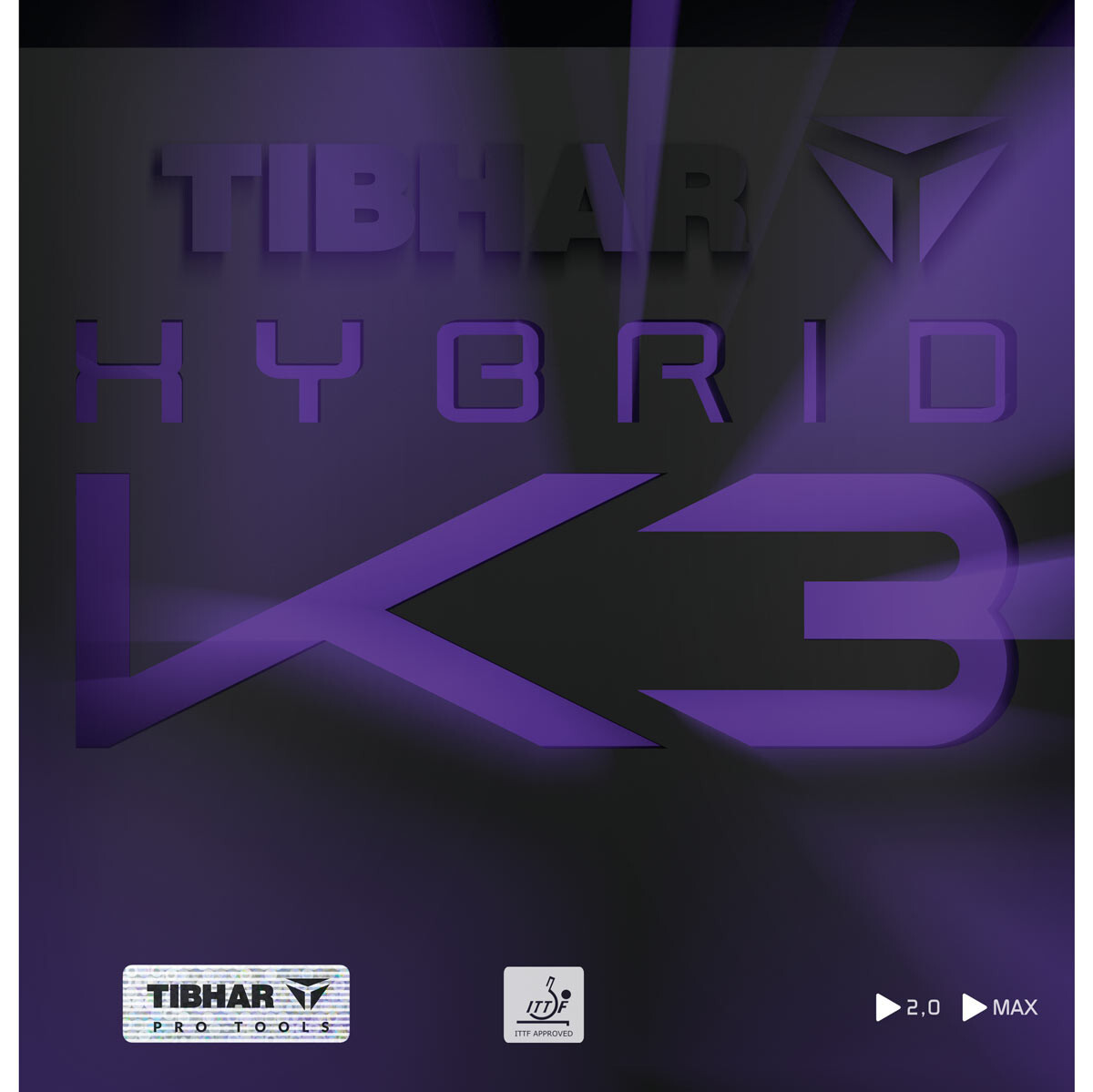
Released in 2021, the Tibhar Hybrid K3 climbed fast to become one of the best-selling top-of-the-line hybrid rubbers in the world, the kind of rubber people mention in the same breath as Butterfly’s Dignics 09C, and the one the Lebrun brothers and Darko Jorgic put on their forehands. This review pulls from five independent English-language sources: the Revspin community database, r/tabletennis threads, RacketInsight’s playtest, the Megaspin store listing with its 22 customer reviews, and the Tabletennis11 blog review. The point is to show what the K3 actually does on the table, where it lands against Dignics 09C, and why almost everyone who plays it ends up talking about its durability. The verdict barely changes from source to source: a superb forehand attacking hybrid with a hard sponge and a lightly tacky topsheet, dragged down by a topsheet that wears out fast.
Performance
At the core is a very hard, cream-colored, factory-boosted sponge that Tibhar labels 53 degrees; RacketInsight’s durometer reads an adjusted 51 degrees on the ESN scale. The topsheet over it is grippy and medium-tacky at most, able to briefly lift a ball off the table or hold it for about a second when brand-new, nowhere near the deep stick of a Chinese rubber. What you notice first is the feel: crisp, direct, almost speed-glue-like, with a clicky sound on drives and smashes. Speed lands at a low OFF level. Tabletennis11 places it between the Evolution MX-S and MX-P and well ahead of the softer K1, and RacketInsight points out it’s bouncier and easier to activate than Dignics 09C in spite of the hardness.
That hardness makes drives, flat hits and smashes stable and predictable, so on flat shots the rubber acts more like a European tensor than a tacky hybrid. Looping is a strength. The medium-high throw adds dwell and safety over the net, opening against backspin is easy with zero ball slippage thanks to all that grip, and counterlooping holds up near the table and well back from it, where the hardness lends stability. The catch everyone agrees on: spin is high for a non-Chinese rubber but doesn’t reach a well-executed Hurricane 3 loop or match Dignics 09C, which reviewers call grippier, tackier and spinnier.
Blocking gets singled out again and again, superb, automatic, with active counter-drives that come off fast, deep and dangerous, yet controllable rather than wild. The short game holds up for a rubber this fast too: precise short touches, controllable pushes that come off fast, flat and deep, and confident flicks the high throw helps along. Specs land near 70g uncut (about 47 to 51g cut, depending on the blade), and the K3 wants a stiff outer-carbon offensive blade. On slower or inner-carbon blades, several users found it harder and slower to activate. Then there’s the universal weakness, durability. Revspin rates it just 5.4 out of 10, and every source tells the same story: the tackiness fades and the ball starts flying long anywhere from a single session to four to six weeks for daily players and roughly two months for moderate ones. A few argue diligent cleaning and a protective film stretch its life.
What Reviewers Agree (and Disagree) On
Every source lands on the same core profile: a hard, lightly tacky hybrid that excels as a forehand attacking rubber, with outstanding blocking and counter-driving, a forgiving high throw, and control that surprises people, all undercut by durability as the defining weakness. The argument is over how bad that durability really is, and whether it kills the rubber. Some Megaspin and Revspin reviewers call it the worst they’ve ever seen and fit only for sponsored players. One Megaspin reviewer pushes back, saying the complaints are about the topsheet alone and that careful care keeps it playable as long as rivals, and a Revspin user on a moderate schedule reported little wear after two months. Sides split too: most reviewers favor the forehand, yet several Reddit and Revspin users run it happily on the backhand for the control, and RacketInsight’s tester preferred Dignics on his forehand and the K3 on his backhand. Tackiness draws a smaller disagreement, with Megaspin’s marketing copy calling it very sticky while hands-on testers describe it as grippy and only slightly tacky.
Who Should Buy It
Buy the K3 if you’re an intermediate-to-advanced or professional offensive player who wants a high-end, hard hybrid for the forehand, plays a stiff fast carbon blade, and prizes blocking, counter-driving and short-game control next to a forgiving high throw. It’s a natural pick for players who like the character of Dignics 09C but want something a little bouncier, easier to activate and cheaper, and for anyone curious to play the rubber the Lebrun brothers use. The deciding question is your hours. Train a handful of hours a week, or don’t care what it costs, and the short topsheet lifespan is a minor nuisance against a rubber that’s a joy to play. Train heavily and you’ll replace it roughly monthly, so budget for that, because the running cost is the one thing that makes reviewers hesitate. Anyone after maximum raw spin from a truly tacky Chinese-style rubber, or beginners on slow blades, should look elsewhere. The K3 pays off an aggressive game on fast equipment.
FAQ
How does the Tibhar Hybrid K3 compare to the Butterfly Dignics 09C?
They’re direct rivals. Reviewers find them close in character, but the Dignics 09C is grippier, tackier, spinnier and feels harder, while the K3 is bouncier, easier to activate and cheaper. A lot of players treat the K3 as the value pick, and some prefer it outright. RacketInsight’s tester went Dignics on the forehand, K3 on the backhand.
Is the Hybrid K3 really that bad on durability?
It’s the biggest weakness in every source. The lightly tacky topsheet fades and the ball starts flying longer anywhere from a few weeks to about two months, faster for heavy daily players. Careful cleaning and a protective film stretch its usable life, by some owners’ accounts, but plan on a shorter lifespan than most rubbers either way.
Is the K3 better on the forehand or backhand?
It’s a forehand rubber first, and that’s where most players use it, where the hardness, high throw and blocking shine. A fair number run it on the backhand for the control, though, especially against fast tensors, so it works on both sides if your technique suits a hard rubber.
What blade should I pair with the Tibhar Hybrid K3?
A stiff, fast offensive blade, outer carbon ideally, a Timo Boll ALC or similar. The high throw and hardness add dwell and forgiveness to a direct blade, while slower or inner-carbon blades leave the K3 feeling harder and slower to activate. It’s made to partner top-of-the-line offensive blades.
How tacky is the K3 and how much spin does it generate?
Grippy and only lightly tacky. It’ll hold a ball for about a second when new, not the deep stick of a Chinese rubber, and that tackiness fades with use. Spin runs high for a European hybrid and is excellent on loops and serves, but it falls short of a true tacky rubber like Hurricane 3 and of the spin ceiling on Dignics 09C.
Sourced From
This review synthesizes opinions from 5 independent community sources:
- Revspin (forum)
- Reddit r/tabletennis (forum)
- RacketInsight (forum)
- Megaspin (ecommerce)
- Tabletennis11 Blog (forum)