JOOLA Dynaryz ZGR Review: Tacky Hybrid Spin Weapon for Advanced Forehand Players
Pros
- Exceptional spin for topspin loops and counter-loops
- Tacky-tensor hybrid blends Chinese-style grip with tensor catapult
- Multiple gears cover both touch play and power shots
- Blocking and passive control beat what a hard rubber suggests
- Spinnier and tackier than the AGR sibling
Cons
- Very hard sponge (57.5 degrees) demands high racket speed and technique
- Heavy weight (approx 56g cut) can cause arm fatigue
- Short tight serving is harder than on pure Chinese rubbers
- Tacky feel can fade after around two months of heavy use
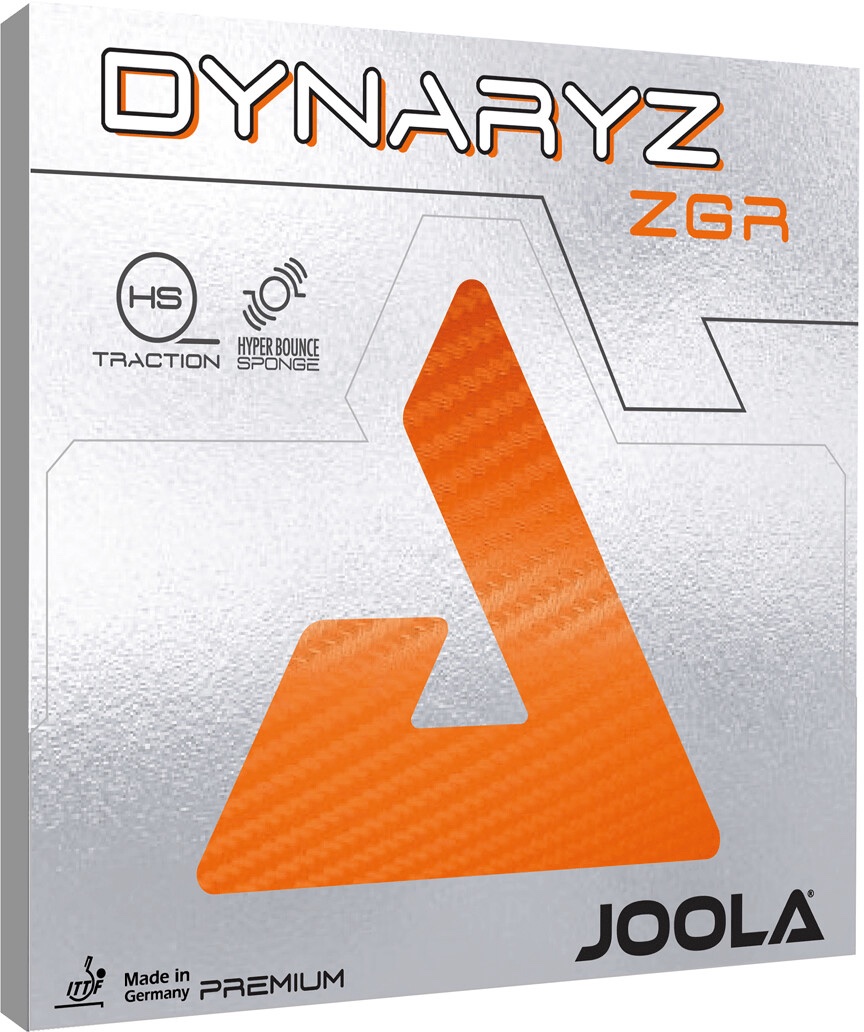
The JOOLA Dynaryz ZGR is the spinnier, tackier sheet in JOOLA’s Dynaryz hybrid line, set above the AGR as a modern Chinese-style forehand weapon. It marries JOOLA’s Hyper Traction Surface topsheet to a Hyper Bounce tensor sponge rated 57.5 degrees Shore C, chasing the grippy spin of a Chinese tacky rubber with the speed and catapult of a European tensor. This review pulls from Megaspin user reviews, a dedicated coach review at TableTennisCoach, and aggregated community ratings at TableTennisReference.
Performance
Topspin is the ZGR’s calling card. The tacky-ish topsheet grips the ball hard, and the spring-loaded sponge adds drive without demanding elite technique on every contact. One coach reviewer called it probably the best rubber for crisp topspin shots, and said his shots were more consistent and accurate than with faster European alternatives. Counter-looping and mid-distance rallying are where it pulls ahead, launching the ball on a heavy, flat arc that opponents struggle to read. The throw angle runs low for a hybrid, so you can attack with pace without the ball ballooning over the table. Set against the AGR, the ZGR is clearly tackier and lifts more spin on brushed loops against backspin, but that same trait punishes half-hearted strokes against backspin, which come back short on both pace and spin.
Blocking is easier than the 57.5-degree hardness implies, since the sponge’s multiple gears let you redirect passively with controlled bounce. Pushes and short play hold up, and forehand touch shots won over some reviewers. Fast long spinny serves are strong, though the springy sponge makes very short tight serves harder to master than on a pure Chinese tacky rubber. That hardness is the gate: without enough racket speed, the rubber turns inconsistent and unforgiving. Against hybrids like the Dignics 09C and Rakza Z it holds its own, with reviewers noting longer flight and more speed, though it is less accessible to players with moderate stroke power. Durability is the one caveat, with the tacky surface feel reported to fade after roughly two months of regular competitive play.
What Reviewers Agree (and Disagree) On
Reviewers agree the ZGR is a top forehand rubber for advanced players and a punishment for anyone who can’t drive the ball with consistency and power. The spin potential and topspin quality drew near-universal praise. Control is where they part ways: some worked easily with the multiple gears and consistent arc, while others, mostly those close to the table, found it erratic. A minority called it the worst of the Dynaryz range purely on adaptation difficulty. Weight and durability came up as recurring gripes, not dealbreakers for most. Against the AGR, the ZGR is clearly spinnier and more Chinese in character, and every reviewer acknowledges the distinction.
Who Should Buy It
The ZGR fits advanced forehand attackers who loop mostly from mid to long distance and have the racket speed to compress a hard tensor sponge. Coming off a Chinese tacky rubber like DHS Hurricane and after more catapult and speed without losing spin, you will like it a lot. It is the wrong call for beginners, close-to-table blockers, or anyone with shaky looping mechanics. If you want similar spin with more margin, look at the JOOLA Dynaryz AGR or softer hybrids.
FAQ
How does the ZGR compare to the JOOLA Dynaryz AGR?
The ZGR is clearly tackier and spinnier than the AGR, with a more Chinese-style character. The AGR’s tensor-style topsheet grips less, which makes it more accessible. The ZGR pays back players who can compress its harder sponge, but it forgives less.
Is the Dynaryz ZGR suitable for beginners or intermediate players?
No. The hard 57.5-degree sponge needs real racket speed and consistent brushing to activate. Intermediates and beginners will fight it for control and get inconsistent results. It is built for advanced competitive players.
What sponge hardness does the Dynaryz ZGR have?
The Dynaryz ZGR has a sponge hardness of 57.5 degrees Shore C, which is considered very hard. This places it in the same range as Chinese professional rubbers, requiring strong technique to engage fully.
How long does the ZGR last before losing performance?
Several reviewers noted that the tacky feel of the topsheet diminishes noticeably after around two months of regular competitive play. The surface can also scratch easily. Casual or recreational players may get longer life from the rubber.
What blade pairs well with the Dynaryz ZGR?
Inner-fiber carbon blades and ALC-style carbon blades are most commonly recommended, as they complement the rubber’s high speed and spin without amplifying vibration too much. JOOLA blades such as the Zhou Qihao Hyper ARY-C and Freitas ALC are frequently cited as good matches.
How does the ZGR compare to the Dignics 09C?
Community reviewers note the ZGR delivers longer flight distance and faster speed than the Dignics 09C, with comparable spin potential. However, the Dignics 09C is generally considered more accessible and tacky, while the ZGR leans harder and demands more power to fully engage.
Sourced From
This review synthesizes opinions from 3 independent community sources:
- Megaspin (ecommerce)
- TableTennisCoach (forum)
- TableTennisReference (forum)