Stiga Dynasty Carbon Review: Premium OFF Blade with a Wood Soul
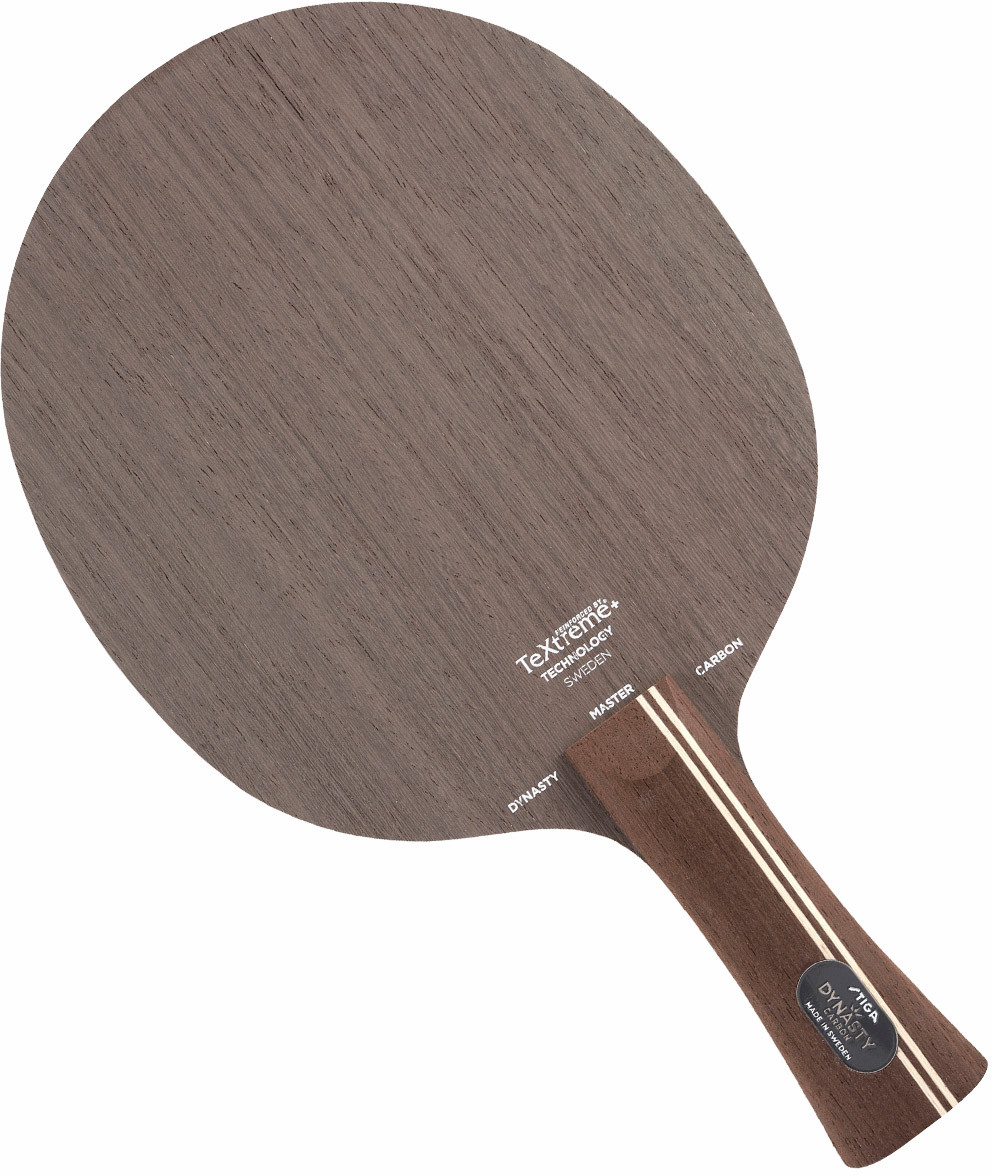
Pros
- TeXtreme+ carbon produces a woody, dwell-rich feel uncommon in outer-carbon blades
- Generously large sweet spot for its construction class
- Outstanding at-table control: flips, pushes, and blocks are clean and consistent
- Medium-high throw angle suits topspin-dominant players
- Pure carbon plies deliver higher energy efficiency than arylate-carbon alternatives
- Comfortable handle grip praised across shakehand and penhold variants
Cons
- Average weight around 88–92 g; full setups can exceed 200 g
- Rough factory surface on handle wings requires sanding to prevent blisters
- Koto top veneer prone to splintering after repeated rubber changes
- Premium price around USD 200 is hard to justify for recreational players
The Stiga Dynasty Carbon came out of years of work between Stiga’s engineers and World and Olympic champion Xu Xin. The brief was simple to state and hard to pull off: build a carbon blade that keeps the tactile warmth of the classic all-wood line, the ‘STIGA feeling’, while adding the edge consistency and energy efficiency only carbon fiber gives. The answer was TeXtreme+, a Swedish-patented spread-tow carbon fabric that runs very thin yet holds the same stiffness from the center of the blade out to the edges. Layer that over a thick ayous mid-veneer and a Koto outer ply, and you get a blade tuned for dwell and touch that still hits OFF-class speed when you swing through it.
Performance
Expect a stiff, snappy carbon blade and the Dynasty Carbon will catch you off guard. It plays like wood. The contact sound is muted and dense rather than crisp, and the ball stays on the face longer than it does on outer-carbon composites like arylate-carbon blades. Long-term users confirm this holds up over months — it isn’t a break-in phase but a design outcome of the thin TeXtreme+ layers over the thick ayous core.
The short game is where it earns its keep. Pushes stay low and controlled, forehand flips work even against heavy backspin, and the medium-stiffness build lets blocks at the table absorb pace instead of spraying it back. The throw sits medium-high, which fits topspin-first players and gives a natural looping arc without forcing an exaggerated upward swing.
Swing hard and the power is there for players who earn it. TTGearLab’s mechanical testing found that pure carbon plies run more energy-efficient than mixed arylate-carbon plies, so a clean strike carries more energy to the target than an arylate-carbon blade at the same elasticity index. Off-table looping and counterlooping are strong, and penhold users single out the placement precision during reverse penhold backhand exchanges.
The blade does not do the work for you, though. If your swing speed is modest, the pace will feel flat next to faster ALC or ZLC composites. One Reddit user played it for a year at competition level and then moved to a faster penhold blade, because reaching the Dynasty Carbon’s top speed cost more energy than they could sustain across a full tournament day. Weight ties into this. Production samples run from 78 g to 92 g, most clustering around 88–90 g, which pushes full setups past 190–200 g with modern tensor rubbers. That’s normal for professional-grade blades, but it’s worth knowing if your arm tires.
Durability draws one recurring complaint. The Koto top veneer can splinter at the edges after repeated rubber changes, and the raw handle surface wants a light sanding before heavy use or it will blister your hand. These are quality-control nits that don’t touch how it plays, but they stand out on a blade at this price.
What Reviewers Agree (and Disagree) On
Across Revspin, Reddit, Megaspin, and TTGearLab the core read is the same: a woody-feeling, dwell-rich outer-carbon blade with a large sweet spot that rewards advanced technique. The arguments are about value and speed. Some users see a rare niche — the only Stiga outer-carbon blade with a thick ayous core and pure TeXtreme+ carbon — while others point to far cheaper blades like the DHS B2X that land in similar territory. Speed splits the room too. High club and national-level players find the OFF rating accurate and satisfying; power players used to ALC-class blades call it modest.
Who Should Buy It
This blade fits advanced players around USATT 1500 and up who already loop with proper technique and want something that bridges all-wood feel and carbon performance. Penhold players are a natural match — both Chinese penhold and reverse penhold backhand — and several of them across Revspin and Reddit rank it among the best in its category. Two-wing loopers who care about placement and spin consistency more than raw pace will get a lot out of it. If you’re new to carbon, want a feather-light setup, or count on the blade to supply pace your swing doesn’t, look elsewhere.
FAQ
How does the Stiga Dynasty Carbon compare to the DHS H301?
Both run a Koto outer ply over a thick ayous core, so dwell and throw come out similar. The Dynasty Carbon adds TeXtreme+ layers that lift energy efficiency a little and stiffen the edges, giving slightly more power at full swing. Control and short-game feel are close. The gap is price — the Dynasty Carbon costs much more.
Is the Dynasty Carbon suitable for beginners?
No. It’s an OFF blade that pays back players who bring their own swing speed and spin. Beginners will struggle to control it and won’t tap its carbon efficiency. It’s built for advanced and competitive players with looping technique already in place.
What rubber pairings work best with this blade?
On the forehand, reviewers most often reach for high-performance tensors like Dignics 09C, Dignics 05, or Yinhe Big Dipper. The blade’s controlled dwell time sits well with grippy spring-sponge rubbers that add pace. If you’re chasing maximum touch, softer rubbers around 38–40 degrees do the job.
How fast is the Dynasty Carbon compared to ALC-class blades?
TTGearLab’s lab test puts it faster than moderate blades like the Korbel but slower than true high-speed blades like the Timo Boll ALC or Carbonado 190. It lives in the upper OFF range, not OFF+, so anyone expecting ALC-level pace will find it a step slower.
Is the Dynasty Carbon the same as the Xu Xin Dynasty Carbon?
The Xu Xin Edition is a branded version with a different handle look and label, but the core TeXtreme+ construction and the way it plays are the same. On the table you won’t feel a difference; the choice comes down to looks or handle size.
Does the blade require any preparation out of the box?
Most reviewers say sand the handle wings lightly before your first session. The factory finish is rough enough to raise blisters during long play. Beyond that, nothing — it plays at full performance from the first hit.
Sourced From
This review synthesizes opinions from 4 independent community sources: