Sanwei V5 Pro Review: The Budget All-Wood Blade That Plays Like a Clipper
Pros
- Outstanding value, often compared to blades costing several times more
- Fast all-wood pace with a high-pitched, crisp ash-surface impact
- Lively vibration gives clear feedback on shot quality
- Surprisingly good control and short game for the speed
- Strong for looping and hitting through underspin, very spinny
- Comfortable handle and clean, factory-sealed finish
- Large sweet spot and mistake-forgiving for an offensive blade
Cons
- Demands solid technique and punishes imprecise strokes
- Plays closer to OFF than the advertised OFF+ rating
- Copy-to-copy weight and ply consistency can vary
- Hard ash surface feedback is not for limba-surface fans
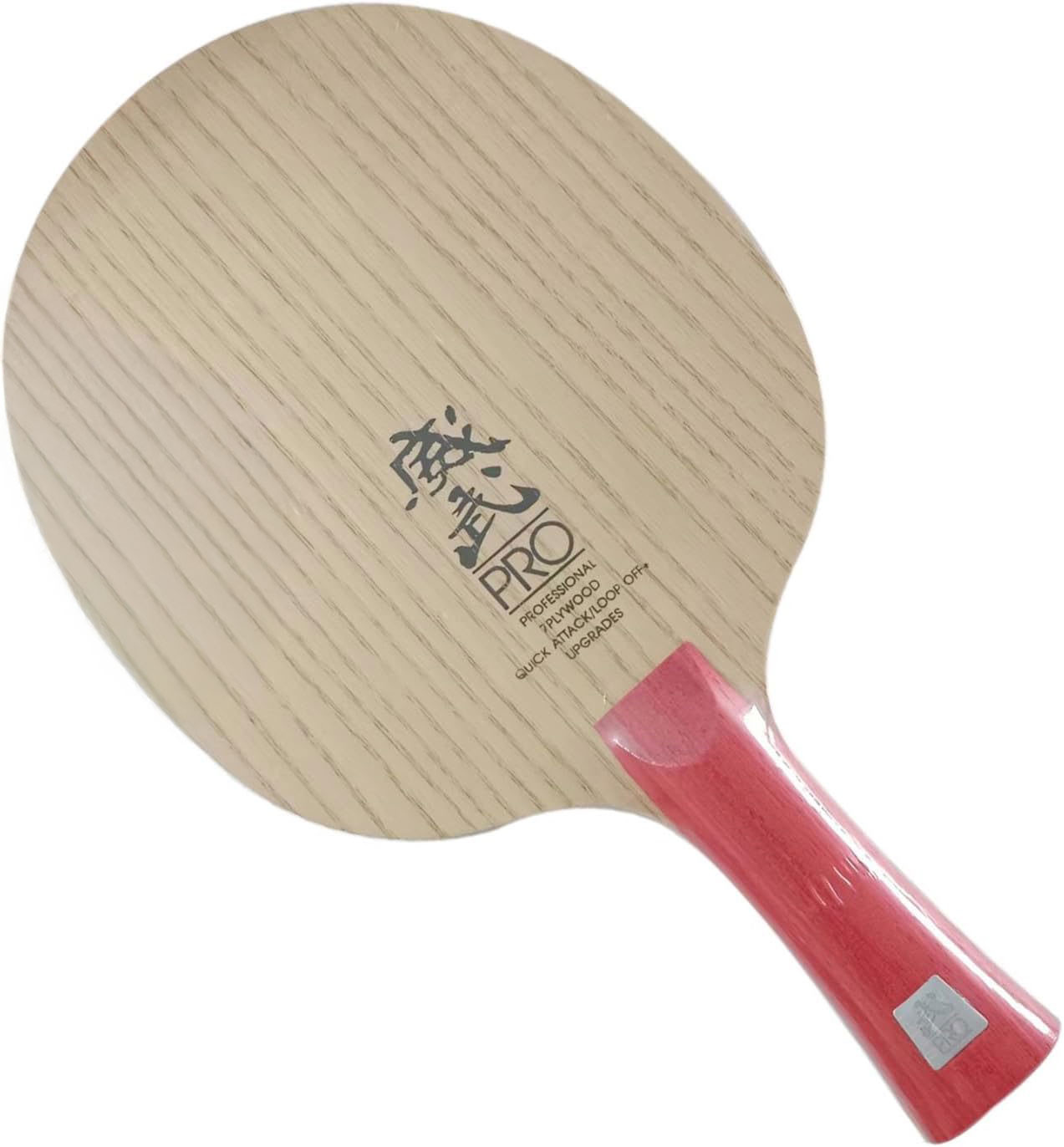
Plenty of players want a real all-wood attacking blade and refuse to pay European or Japanese prices for one. The Sanwei V5 Pro has become their answer. It is a 7-ply all-wood blade built around an ash outer surface and an ayous core, roughly 90 grams at about 6.3mm thick, and Sanwei sells it as a fast quick-attack and loop blade. The spec sheet is ordinary; the reputation is not. Experienced players who own far pricier blades keep describing the V5 Pro as a cheap stand-in for a Stiga Clipper or Nittaku Violin, and many say they prefer it to blades costing several times more. This review pulls the consensus from Revspin reviews, Megaspin verified-customer feedback and r/tabletennis discussions to work out who the blade is actually for.
Performance
The V5 Pro sits firmly in the OFF range. Most reviewers clock it faster than a Stiga Clipper or a Nittaku Violin Carbon on the same rubbers. The ash outer ply throws off a high-pitched, almost carbon-like ping and a crisp, hard impact, and there is a clear gear that opens up when you commit to the stroke: hit harder, and you get more speed and more control at once. The speed never costs you control, which is what reviewers praise most. One Megaspin reviewer called it a fast blade with insane control. A Revspin user coming off a Yinhe V14 Pro ALC carbon blade found the all-wood softness fixed his flat-hitting and smashing, and his loops from mid-distance stayed at least as fast as the carbon blade had been.
The short game holds up. Pushes stay short, longer balls land where you aim them, and the medium throw keeps flicks and pushes honest. Spin is the other strength. Players call it spinny, and it is especially good at hitting and looping through underspin; one Megaspin veteran rated it the best blade he had tried for topspin-smashing through backspin. The sweet spot is large, and there is a slight flex with strong, lively vibration that most players read as a quality cue, though a minority dislike the feedback the hard ash top ply sends back over the big flexible core. Technique is the catch. The V5 Pro rewards clean strokes and punishes sloppy ones, so it suits players who let the setup do the work rather than muscle every ball. It is fast and demanding enough to sit a step above a true beginner blade, which puts it with improving intermediate and advanced attackers. Being all-wood, weight and ply consistency drift from copy to copy: samples run from the low 70-gram range up to around 90 grams, and a few owners report slightly uneven inner plies, so it is worth knowing before you order.
What Reviewers Agree (and Disagree) On
All three source communities land in the same place: the V5 Pro is a best-bang-for-the-buck all-wood blade that plays like sticks costing several times more, and the comparison they reach for most is the Stiga Clipper. Speed, the speed-control balance, spin on underspin balls, the comfortable handle, the clean finish — these come up again and again, and more than a few buyers liked their first copy enough to order a second. The arguments are about feedback and the speed rating. Most love the lively vibration as a quality cue; a vocal minority dislike the hard ash surface and would rather play limba. Several reviewers also insist the blade is really OFF, not the advertised OFF+. Opinion splits on the target player too: some call it great for beginner-to-intermediate players, while others stress it demands solid technique and suits anyone ready to step up their attacking game.
Who Should Buy It
Buy the V5 Pro if you are an improving intermediate or advanced attacker after a fast, spinny all-wood blade with strong feel and real control, and you would rather not pay big-brand money for it. It fits players who read vibration as feedback, who loop and drive with a solid short game close to the table, and who already have reliable stroke mechanics. Pair it with a tacky or hard forehand rubber like Hurricane 3 Neo and a medium to medium-soft backhand rubber; reviewers found tensors like Victas V15 Extra or Tibhar MX-P bring out its best. Skip it if you are a complete beginner still learning basic strokes, if you prefer the muted feel of limba-surfaced blades, or if you specifically want a stiff composite blade for maximum close-table blocking speed.
FAQ
Is the Sanwei V5 Pro really all wood?
Yes. Seven plies of wood, no carbon or synthetic layers, with an ash outer surface over an ayous core. That construction is the reason players pick it: the controllable, vibration-rich feel that composite blades flatten out.
How fast is the Sanwei V5 Pro?
It plays in the OFF range, and reviewers report it beating a Stiga Clipper or Nittaku Violin on the same rubbers. Sanwei advertises OFF+, but the noticeable vibration and flex lead several experienced reviewers to call it a true OFF instead.
Is it good for beginners?
It leans toward improving intermediate to advanced attackers, not complete beginners. The blade rewards solid stroke technique and punishes imprecise strokes, so it pays off for players who have the basics down and are ready to step up their attacking game.
What rubbers go well with the Sanwei V5 Pro?
The common pick is a tacky or hard forehand rubber such as Hurricane 3 Neo with a medium to medium-soft backhand rubber. Tensors like Victas V15 Extra and Tibhar MX-P came up repeatedly as the ones that bring out the blade’s speed and spin.
Why does the weight of my Sanwei V5 Pro differ from the listed spec?
Natural all-wood blades vary from copy to copy. Owners report samples anywhere from the low 70-gram range up to around 90 grams, and a few note slightly uneven inner plies. That spread is normal for budget all-wood blades.