DHS Hurricane King Blade Review: Pure Wood, National-Team Speed
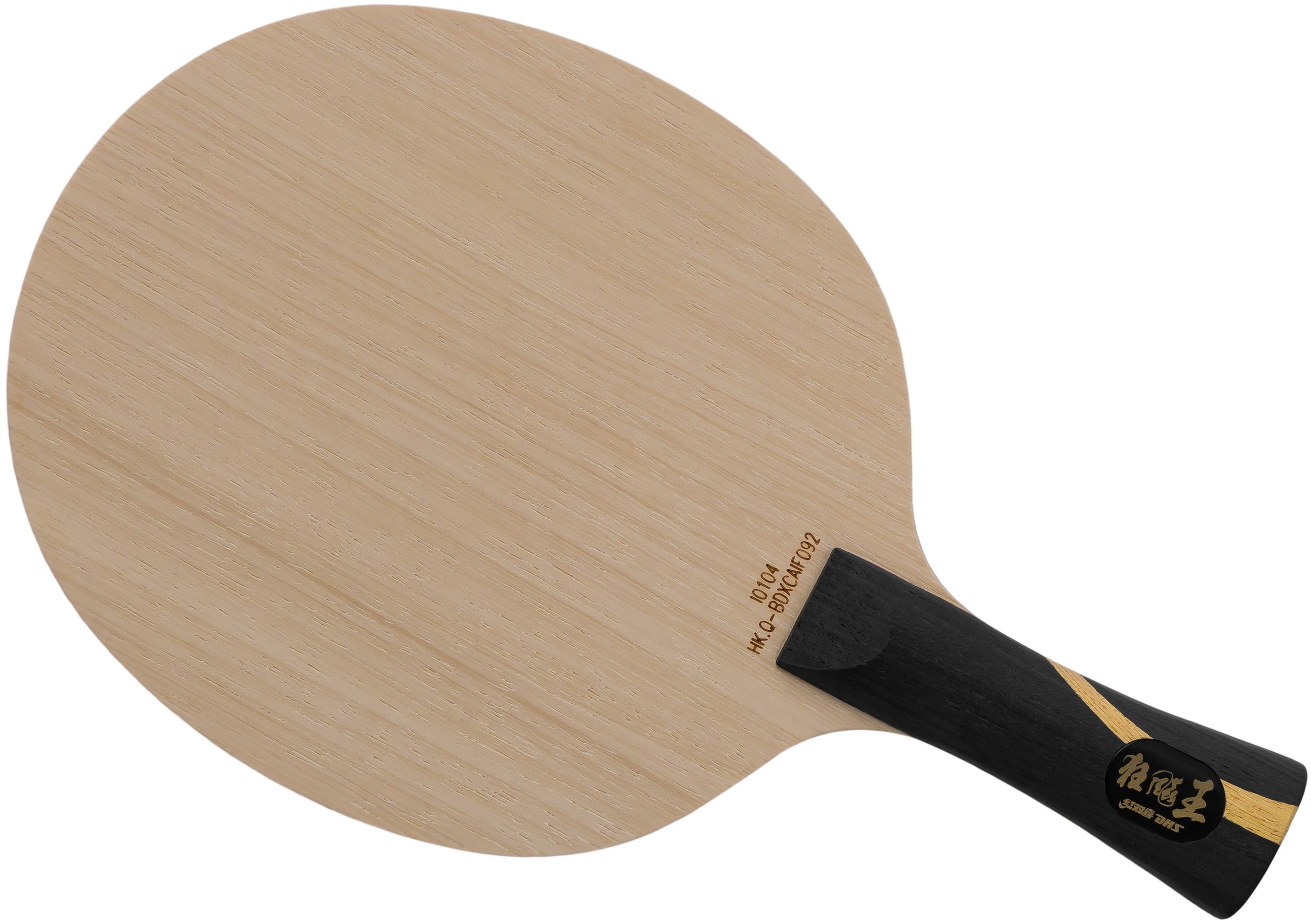
Pros
- Confirmed pure 5-ply wood build - Koto, spruce, ayous - with no carbon dampening the natural wood feel
- Rated 9.1/10 overall on Revspin and 8.73/10 on Tabletennis Reference, both unusually high
- Hard, direct hit that testers describe as faster than typical all-wood blades like the Offensive Classic-CR
- Outstanding compatibility with tacky Chinese rubbers such as Hurricane 3, plus tensor sheets
- Strong short-game control for blocking and stopping close to the table
- National-team lineage tied to the Wang Liqin era of Chinese offensive table tennis
Cons
- Premium price (roughly 125 to 141 USD) that multiple forum reviewers call 'not worth it' versus cheaper blades
- Handle reported as thinner than standard by some owners and as an unfamiliar thick, flat grip by others
- Punishes passive strokes - reviewers stress it needs the player's own power and technique to perform
- DHS's own OFF++ speed label is seen by players as overstated compared to how the blade actually plays
The DHS Hurricane King is a Chinese national-team-style offensive blade tied to the Wang Liqin era of DHS equipment, sold as a pure wood 5-ply build rather than one of the newer carbon-reinforced Hurricane King variants (such as the Hurricane King ACB or the Q968 Hurricane King National, both of which do add carbon or arylate layers). Revspin, MyTableTennis.NET, and Tabletennis Reference all independently confirm the standard Hurricane King’s construction as 5-ply wood with no carbon.
Performance
Across all three sources, the construction detail lines up exactly: Revspin lists ‘Koto, spruce, ayous’ at 85g and 5 plies, Tabletennis Reference lists ‘Material 5 (Wood, 5 ply wood)’ at 87g plus or minus 3g and 5.5mm thick, and a MyTableTennis.NET tester independently logged the blade at 87g. None of the three mentions carbon or arylate anywhere in the specification data, which settles the construction question for this base model. On the court, reviewers describe a blade that punches above its all-wood classification: the original 2005 MyTableTennis.NET tester called it ‘a lot faster than Offensive Classic-CR’ despite being ‘quite hard’ for a wood blade, and Revspin’s 29 aggregated user ratings average Speed 8.6 and Control 8.8 out of 10, with an overall score of 9.1. Tabletennis Reference’s 11 reviews average Speed 8.27, Spin 9.00, and Control 8.18, with reviewers highlighting that the blade ‘fits well’ with both tacky and tensor rubber but shows ‘outstanding’ compatibility with harder, sticky Chinese rubbers like Hurricane 3. DHS’s own catalog speed class for the blade runs as high as OFF++, but forum testers on Revspin push back on that label directly, with one writing ‘DHS has rated OFF++ of this blade. i think its -OFF to OFF,’ which is why this review classifies it more conservatively as OFF+. Handle feel is the one spec where sources diverge slightly - Revspin reviewers call the handle ‘thinner than standard size,’ while Tabletennis Reference reviewers describe a ‘thick, flat grip’ unlike a Japanese flare handle - which likely reflects differences between FL, ST, and CS handle variants sold under the same blade name.
What Reviewers Agree (and Disagree) On
All three sources agree the standard Hurricane King is genuine 5-ply all wood with no carbon, that it hits harder and faster than most wood blades, and that it rewards committed loop and drive technique with strong control for short game. The clearest disagreement is value for money: Revspin and Tabletennis Reference users rate it 8.7 to 9.1 out of 10 overall, while several MyTableTennis.NET forum posters call the roughly 125 to 141 USD price ‘not worth it’ next to cheaper wood blades of similar performance.
Who Should Buy It
This blade suits experienced offensive and all-round looping players who already generate their own power and want a hard-hitting, spin-friendly wood blade to pair with tacky Chinese rubber like Hurricane 3, in the spirit of the national-team players it is modeled after. It is a poor fit for beginners or passive, block-heavy players, since multiple reviewers stress it will not carry the ball for you without a full stroke.
FAQ
Does the DHS Hurricane King have carbon in it?
No. The standard Hurricane King is a 5-ply all-wood blade (Koto, spruce, ayous per Revspin’s materials list), confirmed by Revspin, MyTableTennis.NET, and Tabletennis Reference. Carbon and arylate-carbon layers appear only in newer variants sold under related names, such as the Hurricane King ACB and the Q968 Hurricane King National.
What speed class is the DHS Hurricane King?
DHS’s own catalog rates it as high as OFF++, but Revspin reviewers who have used it describe the real-world feel as closer to OFF to OFF+, which is why this review classifies it as OFF+.
What rubbers pair well with the Hurricane King?
Reviewers report outstanding compatibility with tacky Chinese rubbers such as DHS Hurricane 3 and DHS TG3 Neo, and it also performs with tensor sheets like Tenergy 05, though the tacky pairing better matches the blade’s Chinese national-team design intent.
How does the price compare to something like a Butterfly Viscaria?
The Hurricane King has historically retailed in the 125 to 141 USD range, similar territory to premium carbon blades like the Viscaria, even though it is pure wood with no carbon reinforcement - a gap several MyTableTennis.NET reviewers specifically flagged as poor value.
Is the Hurricane King good for beginners?
No. Reviewers across all three sources describe a hard, direct-hitting blade that needs the player’s own power and committed stroke technique; it does not carry or forgive passive shots the way a slower all-round blade would.