DHS Hurricane 3 National Blue Sponge Review: Elite Forehand Spin Weapon
Pros
- Unmatched spin generation — highest of any Hurricane variant
- Outstanding serve and receive spin manipulation
- Excellent short-game touch and control due to extreme tackiness
- Superb power looping and counterlooping at high swing speeds
- Long durability when not over-boosted
- Used and trusted by world-class professionals
Cons
- Requires boosting and approximately one week preparation before use
- Physically very demanding — risks fatigue and overuse injury for weaker players
- Low throw angle makes consistent looping harder to learn
- Genuine supply is very limited; counterfeit risk is high
- Premium price — most expensive Hurricane 3 variant
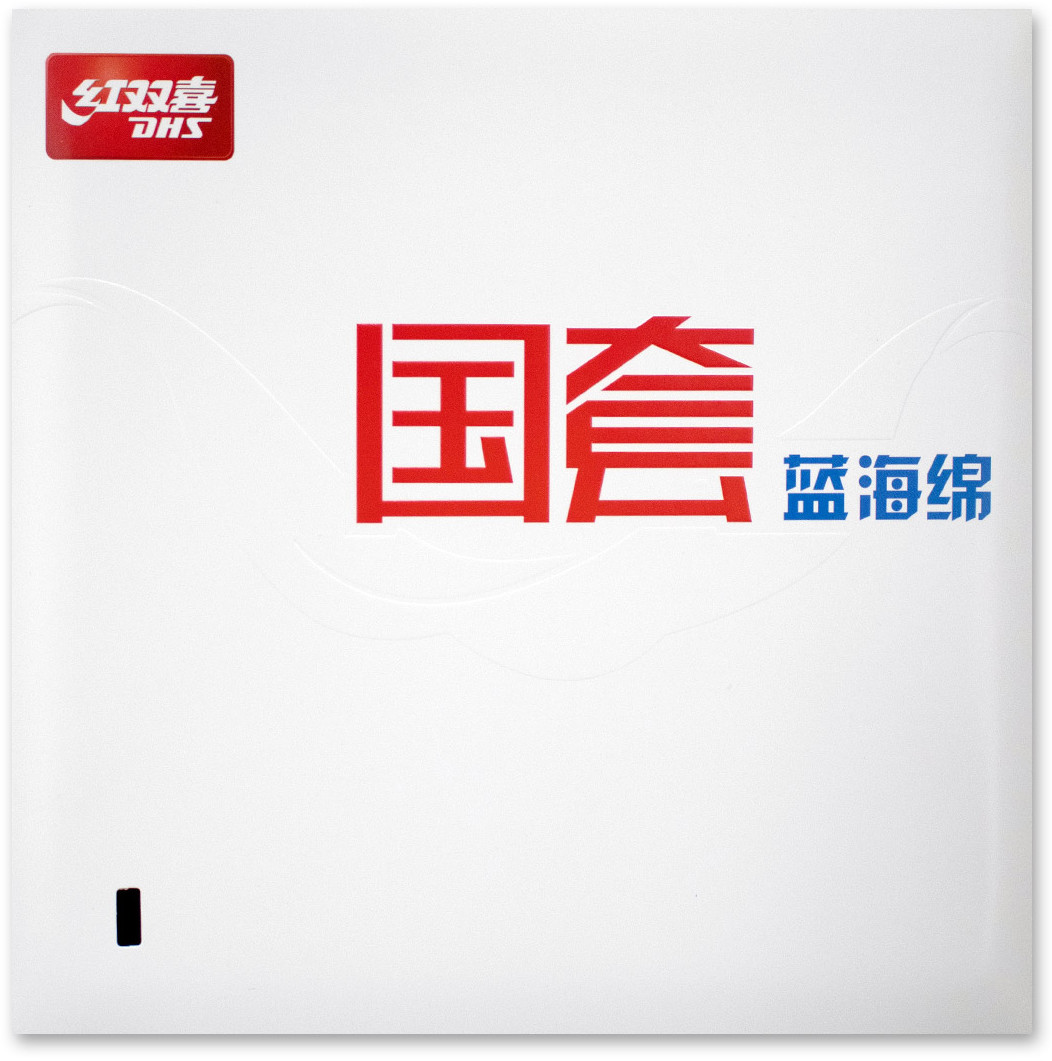
The Hurricane 3 National Blue Sponge sits at the very top of the Hurricane 3 family. The standard Hurricane 3 and the NEO are commercial products you can buy anywhere; the National Blue Sponge is a hand-selected national-grade rubber, the same specification Ma Long, Fan Zhendong and nearly every elite man on the Chinese national team plays. The blue sponge is a harder, denser foam than the orange sponge in the commercial versions, and National means each sheet is picked individually for even sponge density, consistent topsheet tackiness and maximum spin. It costs a lot more than the standard H3 and NEO and usually shows up in small batches through specialist retailers. Know what sets it apart, and what it asks of you, before you buy.
Performance
Spin is the whole story here. Reviewers on Racket Insight, Megaspin and the forums keep landing on the same line: more spin than any rubber they have played. The tacky topsheet clamps onto the ball, so high-topspin serves load up with rotation almost by themselves and heavy backspin receives stay controlled. Close to the table is where it shines. Short pushes, flicks, touch shots and third-ball attacks all run on the topsheet’s grip, which redirects spin with little effort.
Power looping and counterlooping from mid to long range are excellent too, as long as you bring the swing speed. Drive it hard and you get a low-to-medium arc loaded with topspin that dips sharply onto the far side, a ball that is hard to read and harder to handle. The low throw angle is the catch: passive or half-hearted loops clip the net. Commit to the stroke or pay for it.
The sponge runs 40 to 42 degrees on the Chinese scale, roughly 55-60 degrees on the European ESN scale, and out of the package the rubber is very slow. Every reviewer pushes you toward boosting with something like Haifu National Black, two to three layers with proper drying time. Boost it and the speed and spin jump; a stiff, deadened sheet turns lively and explosive. Even boosted it stays slower than European tensors and Japanese spinners, so the pace comes from your stroke, not a catapult. That is the point of the design and it fits the Chinese training model, but it is physically hard and can wear down or injure a player who is not conditioned for it.
Moisture kills the tack. The topsheet loses grip fast when wet, so it needs a protective film or cover sheet between sessions. Authenticity is the other worry. National-grade stock is scarce, the market is full of fakes, and you should buy only from reputable specialist retailers.
What Reviewers Agree (and Disagree) On
Racket Insight, Megaspin reviewers, TableTennisHub and the forums line up on one verdict: this is the premier tacky forehand rubber for spin, ahead of the standard H3 and H3 NEO on topsheet quality, sponge consistency and spin ceiling. They also agree it has no place in a beginner’s hands or below advanced club level, and that boosting is effectively required for competition. They split on how usable it really is for the average advanced club player. Racket Insight lands at a cautious 3.6 out of 5 and argues the low throw angle and physical demands make it less practical than European alternatives for most. Megaspin and Reddit reviewers are warmer, calling it best-in-class for forehand loop specialists who buy into the Chinese training model. Price-to-performance divides them as well: at street price plus booster cost, some players reckon boosted Provincial grade or the NEO National gives 90 percent of the result for less money and a gentler learning curve.
Who Should Buy It
This is a rubber for advanced to elite forehand-dominant players in the Chinese style, the ones who loop nearly every forehand with a full, fast swing. It rewards players already at home with Chinese tacky rubbers who want to step up from the standard H3 or H3 NEO. Blade choice matters: pick a medium-flex all-wood or inner-carbon blade like the DHS Hurricane Long 5 or a Viscaria-class frame. Overly stiff carbon amplifies the hard sponge past the point of control. If you will not boost and maintain the rubber, or you cannot bring high swing speed every time, the H3 NEO Provincial Blue Sponge is the more forgiving choice and still plays at a high level.
FAQ
What is the difference between the Hurricane 3 National Blue Sponge and the standard Hurricane 3?
The National Blue Sponge is hand-selected for consistent sponge density and maximum topsheet tackiness, the top tier of the Hurricane 3 family. The standard commercial H3 runs an orange sponge with looser quality control per sheet. The National also costs a lot more and comes in smaller supply.
Do I need to boost the Hurricane 3 National Blue Sponge?
Almost every experienced user says yes. Out of the package the rubber is very hard and slow. Two to three layers of a booster like Haifu National Black lift speed and spin sharply, and that prep is standard before competitive play.
How hard is the sponge compared to other rubbers?
Very hard. The sponge rates 39-42 degrees on the Chinese scale, roughly 55-60 degrees on the European ESN scale, putting it among the firmest competitive rubbers you can buy. Racket Insight called it comfortably the hardest rubber they had ever reviewed.
Is the Hurricane 3 National Blue Sponge good for the backhand?
No. The extreme hardness, low throw angle and physical demand make it a poor fit for the backhand. Even the top Chinese players keep it strictly on the forehand and run a softer European-style or hybrid rubber on the backhand.
How can I tell if my Hurricane 3 National is genuine?
Real National editions carry rectangular packaging markings; Provincial uses hexagonal and commercial uses octagonal. Genuine stock is scarce, so buy only from reputable specialist retailers. Reviewers warn the fakes play nothing like the originals.
How does it compare to the H3 NEO National Blue Sponge?
The NEO National ships with factory boosting, a pre-tensioned process that makes it livelier out of the package and cuts your prep. Many purists rate the non-NEO National Blue Sponge higher on topsheet feel and spin ceiling once it is properly hand-boosted, but it takes more work to prepare and keep up.
Sourced From
This review synthesizes opinions from 4 independent community sources:
- Racket Insight (forum)
- Megaspin (ecommerce)
- TableTennisHub (ecommerce)
- Reddit r/tabletennis (forum)