The Backhand Tacky Rubber Trend, Part 2
3 — Backhand Benefits From a Touch More Elasticity
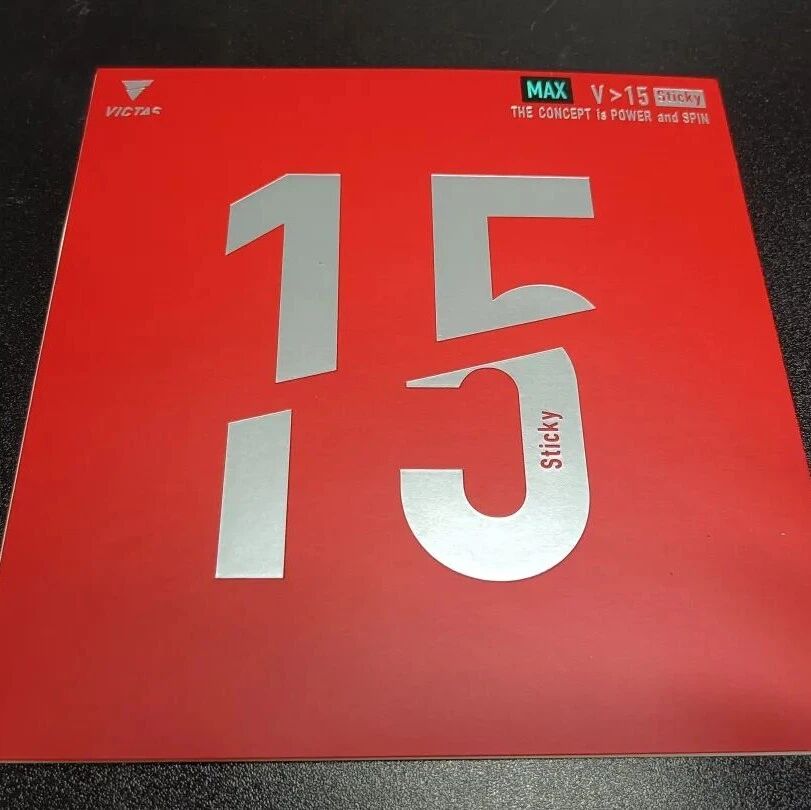
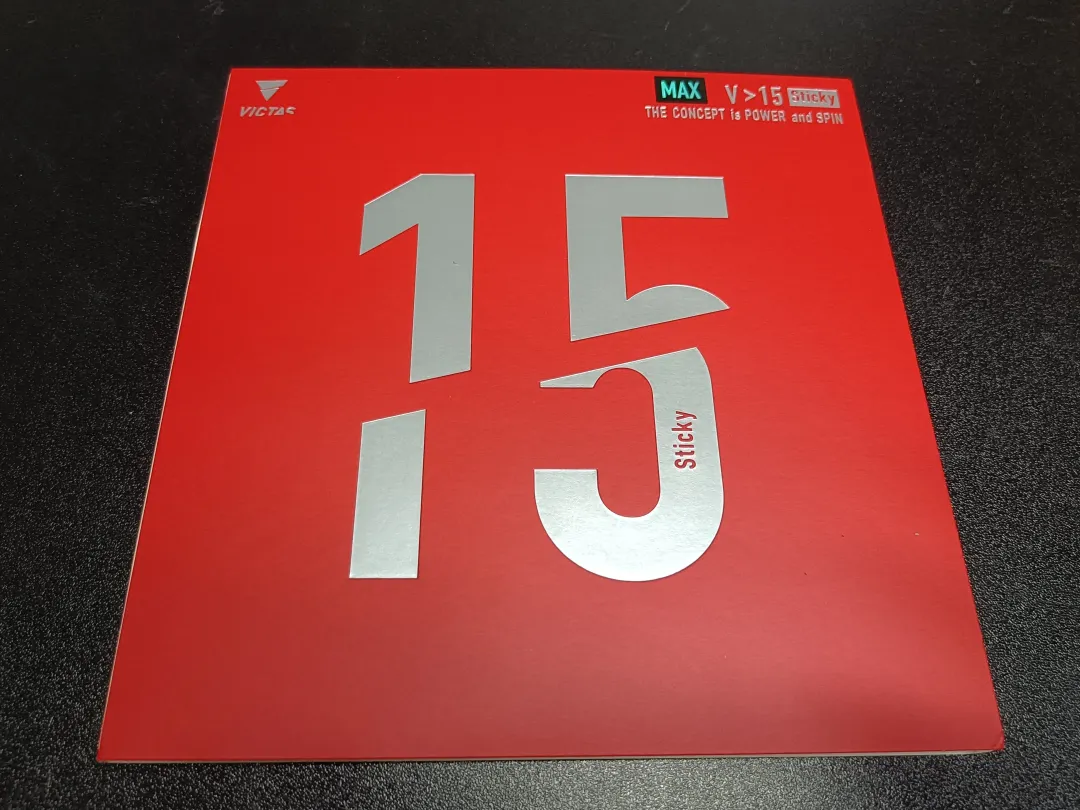
“Not too tacky” and “a touch more elasticity” are clearly related points. The semi-tacky outer rubber discussed above satisfies both. The best-selling example is probably D09c, with a similar performance profile available in the relatively budget-friendly V greater-than 15 Sticky.
When a rubber is too tacky, its elasticity naturally feels lower — there’s more of a stopping sensation, and the ball doesn’t come off as quickly. If speed is lacking and you’re relying purely on spin, the threat is limited. You also have to generate extra force yourself just to build pace.
Furthermore, an overly tacky surface is more susceptible to incoming spin. To neutralize the opponent’s spin, either your technique needs to be very loose and flexible, or you need to apply more force to overpower the rotation.
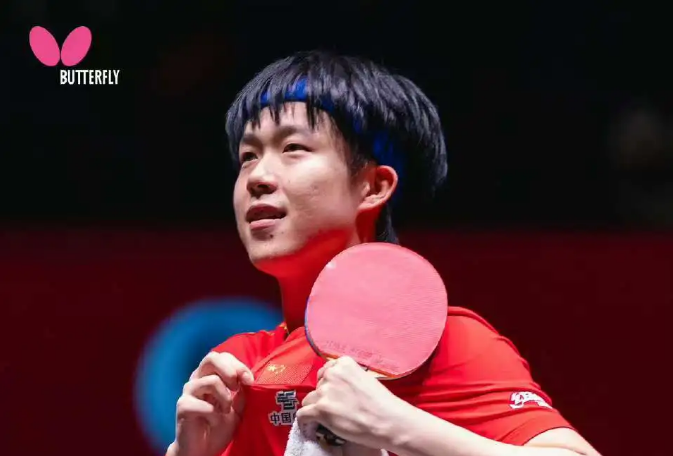
On the topic of “a touch more elasticity” — national team players have different preferences for backhand Hurricane. Ma Long and Liang Jingkun went with Hurricane 3; Wang Chuqin, Chen Meng, and Sun Yingsha went with Hurricane 8-20. Both use 20-degree sponge; the only difference is the topsheet. Wang Chuqin previously used Hurricane 3 but switched to Hurricane 8-20 over the past year or two.
According to DHS’s official documentation, Hurricane 8 has slightly larger pip diameter and greater pip spacing than Hurricane 3, making it more flexible and elastic. Simply put: Hurricane 8-20 projects the ball a little more readily; Hurricane 3, when driven through, feels more solid but also has a higher power threshold.
Of course, both are less elastic than semi-tacky outer rubbers. Semi-tacky outer on the backhand is about being “all-around.” Less spin than Hurricane, less speed than grippy, but there’s still a dwell moment — consistency is good, and the combination of speed and spin is acceptable. With solid power, a brushing-and-hitting mix produces real ball quality. For players with average power, think of it as buying table consistency.
This makes the picture clearer: if your power output is middle-of-the-road, a semi-tacky outer rubber ends up being quite unremarkable — also middle-of-the-road. The backhand tacky trend is very much a mainstay right now, and it suits professionals who generate strong backhand power, but whether it fits any specific recreational player is something each person needs to figure out individually.
Considering recreational ability levels, this semi-tacky outer rubber has a constraint we’ll keep analyzing.
4 — Backhand Benefits From Heavier and Harder — For Professionals
For a while, D09c was the dominant semi-tacky outer choice on the backhand at the national team level. By now there are many alternatives from other brands. Take Chen Yuanyu, Xiang Peng, and Xue Fei — they all use Jekyll and Hyde C55.0 on the backhand. Compared to the commercial D09c, C55 has a sponge with more back-end punch, meaning more power threat. No one doubts national team-level backhand driving ability. Many players’ backhand output now approaches — and in some cases exceeds — their forehand.

Then there are the Stiga-sponsored players: Xu Yingbin using DNA Dragon Grippy at 57.5 degrees, Wen Ruibo using a custom DNA Hybrid at 55 degrees (the highest commercially available is the Hybrid XH). These all point to the same pattern: their semi-tacky backhand rubbers keep getting harder and heavier — built to score directly and finish points outright. The Tibhar-sponsored group is similar, using custom-hardened K3 or K3 Pro at 55 or even 57 degrees.
But many recreational players simply don’t generate that kind of backhand power. Jekyll and Hyde C55.0 and D09c are beyond reach for most amateurs. The problem with semi-tacky outer rubbers is that to produce quality ball output, the rubber needs to be fairly hard — but hard usually means heavy. Without the hardness, the ball doesn’t carry enough, and the threat is ordinary. So putting a soft semi-tacky outer on the backhand tends to yield middling results.
Trends are trends. Whether they fit you specifically is still something you have to weigh for yourself.