Equipment Setups of Six Antispin Attack Players at the Japan National Championships
These six players stood out at the All Japan National Championships. Their style is antispin attack — at least one side has pips. Rather than blindly copying their setups, it’s worth understanding each one’s characteristics, thinking about why a player made these choices, and drawing inspiration for your own gear decisions.
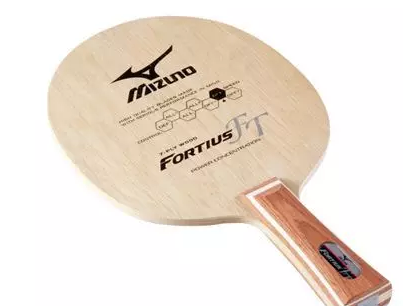
Kiratsugi Kuu: Mizuno Fortius FT, forehand V greater-than 20 Double Extra, backhand Spectol S2 short pips
Influenced by his father’s preference for 7-ply all-wood blades, he also prefers this type — the softer ball contact feel suits him.
This all-wood 7-ply Fortius FT was fairly popular around 2015. At the time I watched Ma Long and Oshima Yuya’s epic 7-game battle at the China Open — Oshima was using this blade, and many players in Japan’s domestic league were using it back then. I played with it myself; the memory has faded, but I recall it feeling a bit tighter than the CL, requiring a more compact looping stroke.
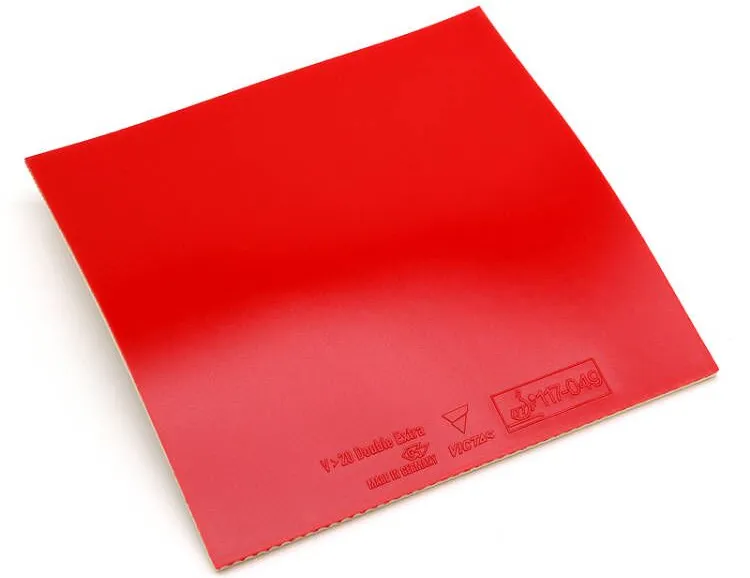
V20 has been discontinued for regular retail. It doesn’t suit Chinese-style play particularly well. For blocking and flat-hitting, it’s outstanding — not the fastest rubber, but extremely consistent. Even on service return, the V20 is less likely to spin-out than the V15, grippier in a dead-friction kind of way. The spin on loops is fairly modest — this rubber rewards direct impact combined with friction; the harder you hit-and-brush, the heavier the ball gets. But it’s not a rubber that produces easy high spin like T05 or Helix Platinum.
The Victas Spectol short pips series: S1 is the classic, non-tensor sponge, emphasizing “linear and honest”; S3 is tensor sponge, emphasizing “variation”; S2 is also tensor with high rebound, but more focused on “ease of control.”
Xiang Bi: Darkrace 7P2A Carbon, forehand Impartial XS (1.9 mm) short pips, backhand 388C-1 (1.5 mm) short pips
Darkrace blades have always had a reputation for high prices, but the feel and consistency are actually quite user-friendly. Not great value for money, but a stable performer.
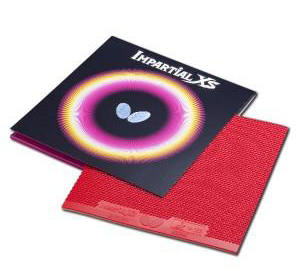
The Impartial XS has been used by several players — Kihara Miyuu and Mukherjee among them. As for the backhand 388C-1, the DHS short pips are well-known for being more erratic than imported short pips and less forgiving; but the ball sinks more, making it harder for opponents to read.
Ito Miku: Fukuhara Ai ZLF, forehand Nittaku G-1, backhand Moristo SP short pips
The Fukuhara Ai ZLF has been discontinued. Looking at her equipment, her style should be similar to Ito Mima’s — using backhand variation and flat-hitting for points, then seizing chances for forehand smashing.
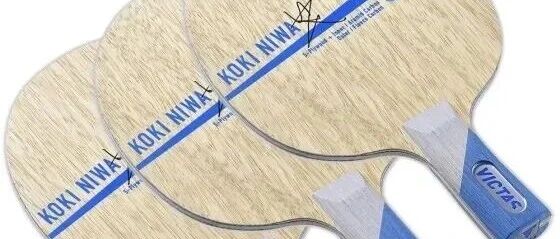
Matsuo Kotaro: Koki Niwa all-wood, forehand D09c, backhand Rakza PO short pips
As for which all-wood blade suits pips play, the answer can be quite varied. Generally a 7-ply all-wood has an advantage — the feel is linear and supportive. Whether to use a hard surface material (like the Ebony 7 used by He Zhuojia and Sun Mingyang) depends on whether you can handle the control comfortably.
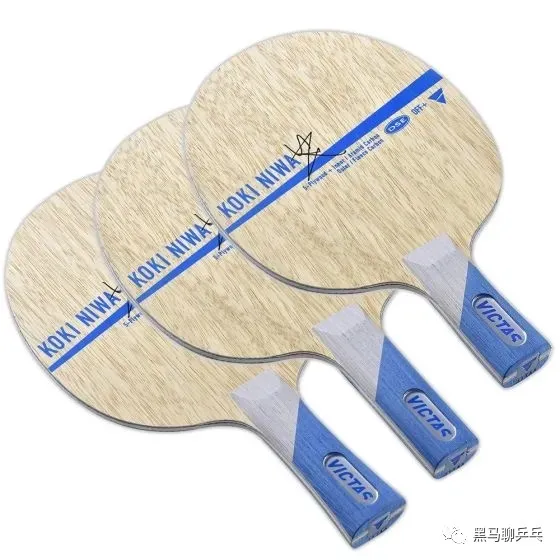
For a player with pips on one side, whether to use Hurricane 3 or a semi-tacky rubber on the other side (like Matsuo’s D09c, or He Zhuojia’s DNA Dragon Grips version) — I think it first comes down to whether you can get used to it, and second, your playing style. If forehand is primarily spin and power, Hurricane 3 is the first choice; if you want a blade that handles both looping and driving and emphasizes close-table speed play, go with a semi-tacky or even a non-tacky rubber.
Iwami Karen: Nittaku Akatsuki flame, forehand Hammond Z2, backhand Moristo SP
I’ve actually never played with either this blade or the Z2…
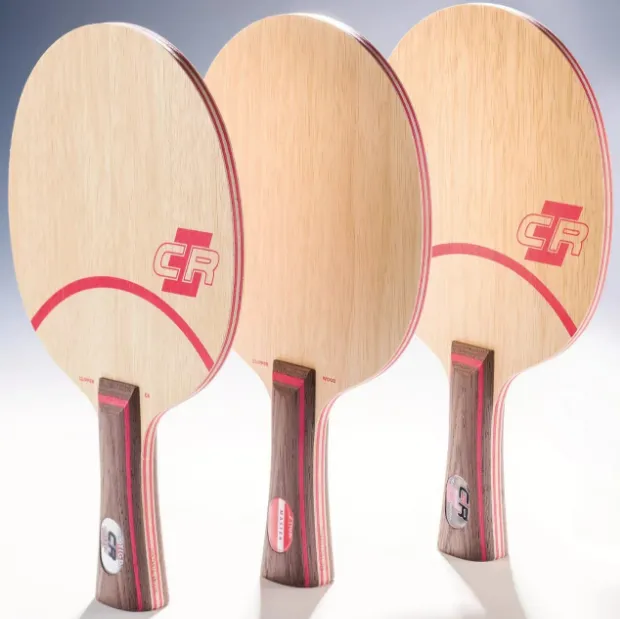
Kiratsugi Saku: Stiga CL, forehand Black Devil Pips+, backhand Nittaku C-1
The CL needs no introduction — it’s an absolute classic. If you’re setting up a beginner, over the course of a year Stiga probably sells more CL blades than anything else.
Black Devil Pips+ has been discontinued. As for the backhand C-1 — steady as a rock. If the G-1 feels too heavy and stiff, the C-1 is genuinely friendly for many recreational players: linear, easy to handle, and very good friction.