Singapore Smash: Thoughts on Some Stars' Equipment Setups
1
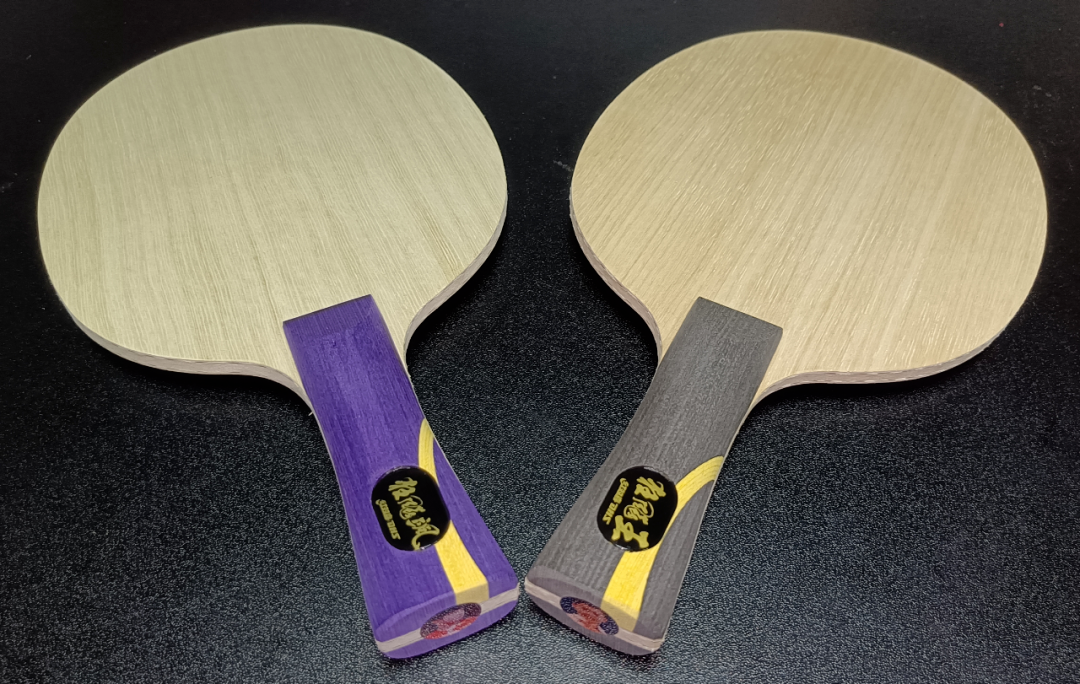
Wang Chuqin: Q968, NEO Blue National Hurricane, Hurricane 8-20 custom Sun Yingsha: S968, NEO Blue National Hurricane, Hurricane 8-20 custom
Debating whether the Hurricane 3 is outdated is pointless — they keep winning titles. At most you can say it has not improved much over the years; it is hard to call it outdated.
As for whether the 968-plus-two-Hurricane setup is tiring to play, it comes down to age. For someone in their twenties it is fine. I am a typical example. Five years ago maybe seventy or eighty percent of my attacks were forehand, with constant pivoting. Now, on a normal evening, a few matches might not even reach ten pivot drives — unless I face someone much better and have no choice. The young ones really are something; their stamina and energy never run out.
One strength of the Hurricane is that its sponge is very sensitive to oil and organic glue, so boosting it well solves the elasticity problem and makes it less tiring to play. Of course, traditional inner blades, the 968 chief among them, force you to generate your own power. No power, ordinary quality; with power, high single-ball quality, ending points in fewer shots — that is the construction at work.
Here is the national-team boosting routine again: take a fresh Hurricane, pre-brush two or three coats of oil on each blade, main and backup. The day before a match, after a morning of training, peel the rubber off, brush one or two more coats, let it dry, and re-glue it just before the next day’s match. Because of the repeated boosting the sponge expands, which is why you see players trimming the overhanging edge with scissors in pre-match practice.
2
Wint: Andro New Core OFF/S, Nuzn 55, Dr. Neubauer anti-spin ABS 3 Pro
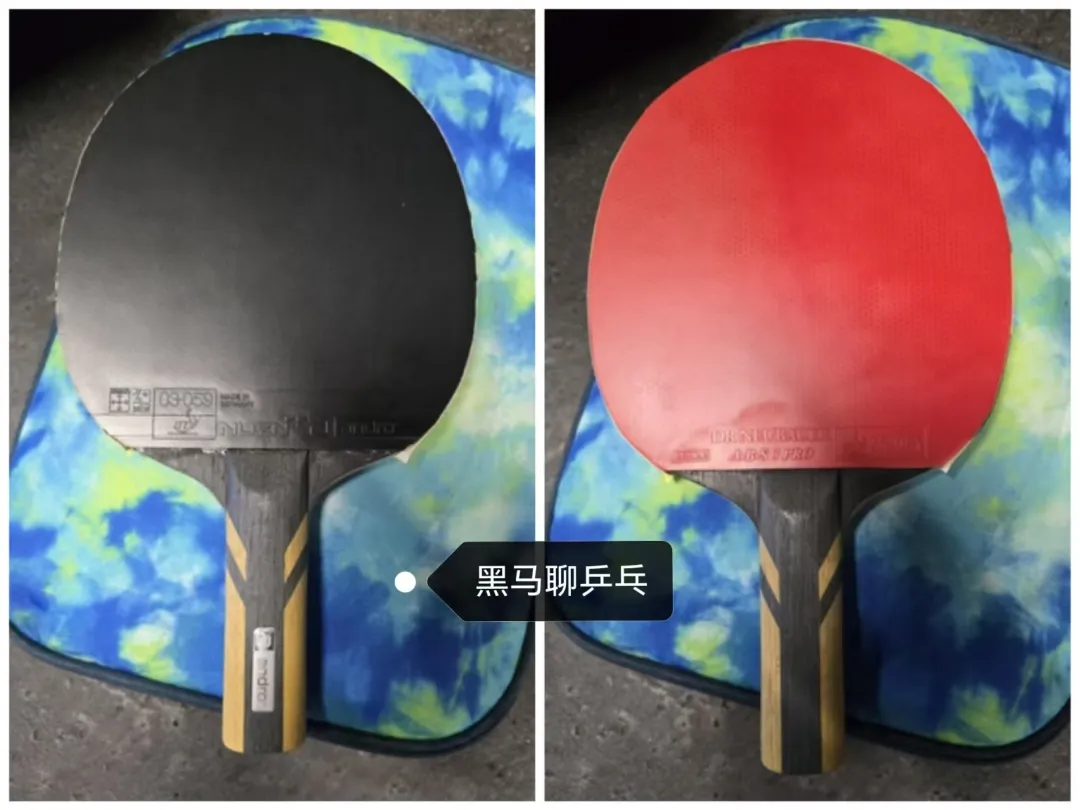
Wang Manyu mainly served short to Wint’s middle-forehand. There Wint’s anti-spin backhand could do little. After Wint touched one back, Wang Manyu backhand-looped to Wint’s backhand, and her backhand punched through Wint’s defense — one scoring pattern. Forced into it, Wint became a “four-sided attacker”: twiddling to take short forehand balls with the anti, and twiddling again on the backhand to loop with inverted.
There is another issue. Constant pivoting and all-court movement burn a lot of energy — a problem with pure five-ply wood. Its rebound speed lags fiber blades, so it is harder work. Her ball quality is still good thanks to strong power, but single-ball quality is hard to raise further. The blade unloads power well for the anti-spin, but if she wanted more single-ball quality, from an equipment angle I would suggest an inner aramid-carbon blade — keeping her arc ability while raising the threat, and less tiring than five-ply wood; she might even break through again.
Of course she has reached this level already — European top-16 women’s champion, Singapore Smash semifinalist. Many would be satisfied and not want to switch, since even after changing, getting past Sun Yingsha and Wint would still be hard.
3
Polkanova: Andro ZCO, Nuzn 55 both sides
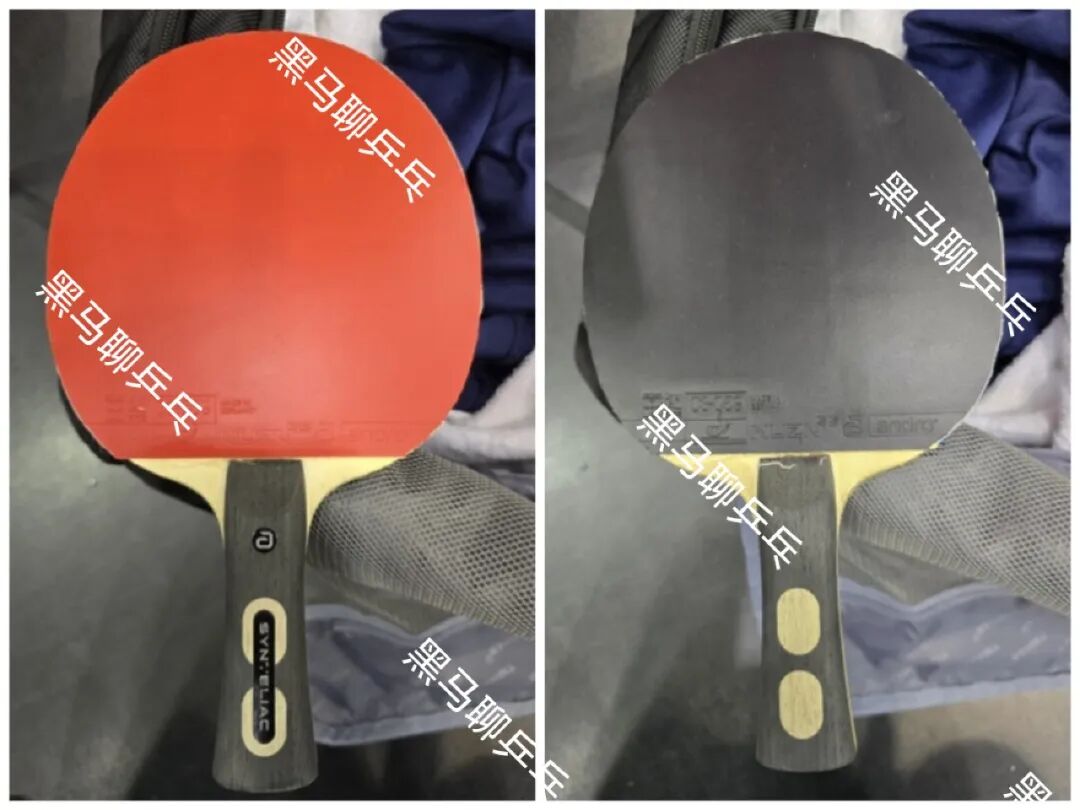
For most of the harder, semi-tacky tensors, an outer fiber blade more easily makes up for their lack of top-end speed and plays with less effort.
Polkanova is tall with long arms and good at long-ball rallies — that is talent. But her overall rhythm runs rushed, with low margin. For this kind of player, beyond gaining experience and “rounding out” her game over time, perhaps a higher-margin blade would help — say a VCO, with more ball-holding pause and more stability. Lin Yun-Ju’s thinking is similar, moving from the Super Lin Yun-Ju (SZLC) to the Super Viscaria (SALC).