World Cup Day Four: Experience, Penetration, Weaknesses, and Smart Play
1
Sofie CD Winters def. Qin Yuxuan 4–1.
Winters: Neues Kern OFF/S, NUZN 55, Nubao ABS 3 PRO (anti-spin) Qin Yuxuan: Fan Zhendong ALC, NEO Blue Hurricane, D09c
Qin Yuxuan should have started with serves aimed at Winters’s forehand short, then targeted the middle and forehand — but she was too inexperienced to execute that consistently. She went to Winters’s backhand wing too much, which had no effect whatsoever. Winters plays anti-spin on the backhand, and her sidespin loop is very smooth.
Qin’s forehand also lacked the penetrating power to punch through Winters’s defense.
2
Wang Yidi def. Harimoto Miu 4–1.
Wang Yidi: W968, NEO Blue Hurricane, D09c Harimoto Miu: Harimoto Tomokazu SALC, D09c, D05
At the Chongqing Champions Cup, Harimoto Miu beat Kuai Man 4–3 to take the women’s singles title. But in head-to-heads with Wang Yidi, Wang has had the edge.
Over the past six months, Wang switched her backhand rubber from D09c to K3 Pro — I couldn’t figure out what K3 Pro was supposed to offer her; maybe a lower entry barrier for amateur players, but she never really found form with it. Then this month she switched back to D09c and looked noticeably better. Against Harimoto Miu here, her backhand felt more stable and produced richer spin — and Harimoto Miu found it genuinely difficult to get in sync.
3
Sun Yingsha def. Kuai Man 4–2.
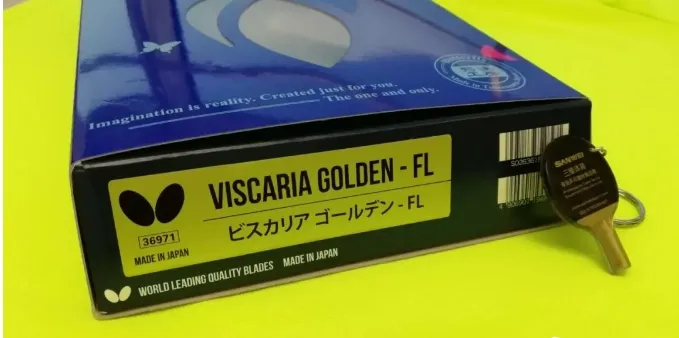
Sun Yingsha: S968, NEO Blue Hurricane, Hurricane 8 (No. 20 sponge) Kuai Man: Gold Label Viscaria, NEO Blue Hurricane, D09c
Kuai Man’s short game and serve-receive were solid — she knew the game plan: attack Sun Yingsha’s middle, then open up the lines to pull her wide. A reasonable approach.
Sun Yingsha knew what she needed to do too. She started by targeting Kuai’s forehand, found it wasn’t enough on its own, then shifted to more long serves. In high-speed rallies, Sun’s footwork and the outright killing power of her forehand are simply better than Kuai’s. That’s partly why people keep saying Kuai needs to work on her fitness.
4
Harimoto Tomokazu def. Jang Woojin 4–1.
Harimoto Tomokazu: Fan Zhendong ALC, D09c, Z03 Jang Woojin: W968, NEO Blue Hurricane, K3 Pro
Harimoto’s loose, almost nonchalant way of playing is actually a portrait of extreme relaxation. You can tell the quality of his game has improved significantly, because he has found the secret to staying loose. This was discussed with a former national team player before.
The hands must be relaxed but not slack or unsteady. The core is engaged but not rigid — only at the moment of contact does the power concentrate: foot, knee, hip, core, arm, wrist, fingers all flowing together through the body’s momentum. That’s how you explode. The arm stays loose but steady, which is what allows you to accelerate into the receive and generate real power.
Watch how Harimoto plays Jang Woojin.
He serves short to the forehand and long to the backhand to control the table. On return, he targets the forehand short angle — a ball Jang can’t load up on, so Jang can only flick it lightly as a transition, and Harimoto counter-loops. If he can’t push it short, he pushes long to Jang’s backhand baseline, then prepares to counter-loop or rip it back.
5
Moregard def. Franziska 4–0.
Moregard: Cyber 6 Gold Label, both sides HELIX Platinum XH Franziska: Franziska ZLC, D05, D09c
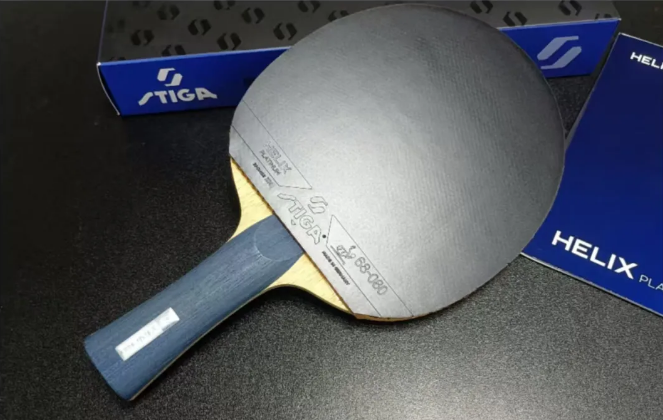
They’re teammates, so Moregard knows exactly where to place the ball to beat Franziska.
Franziska did have his chances though. He led 9–3 in the first game, then threw in a direct serve error followed by a sloppy backhand miss. Moregard clawed back and won 13–11. The key turning point: Franziska kept attacking Moregard’s forehand side toward the end, and Moregard’s forehand has better control and fewer errors. Franziska had been more effective earlier by working the backhand side.
6
Harimoto Tomokazu def. Qiu Dang 4–3.
Harimoto Tomokazu: Harimoto Tomokazu SALC, both sides Z03 Qiu Dang: Viscaria Special Edition, both sides D09c
Qiu Dang won the first two games. He was pushing long or flipping to Harimoto’s middle, then mainly attacking the forehand side — starting from Harimoto’s body position to neutralize the backhand speed-up, then ripping down the line. Very effective.
In the third game, trailing 5–6, Harimoto called a timeout. After the break, he started serving fast and long more directly, and attacked Qiu’s middle more consistently.
For a top-level player, Qiu Dang was making too many unforced errors, especially into the middle. Generally speaking, the middle is tricky for shakehand players — and it’s even trickier for penhold reverse-backhand players, partly because the reverse-backhand stroke itself has a natural inward rotation built into it.
When Qiu has time to step back half a step, he becomes very steady. But the moment Harimoto pushed him forward a little, the errors in the middle piled up — more than you’d expect from a player of his level.