Review Diary: Loki Wei Shihao ZC and SZC — Affordable ZLC at Two Extremes
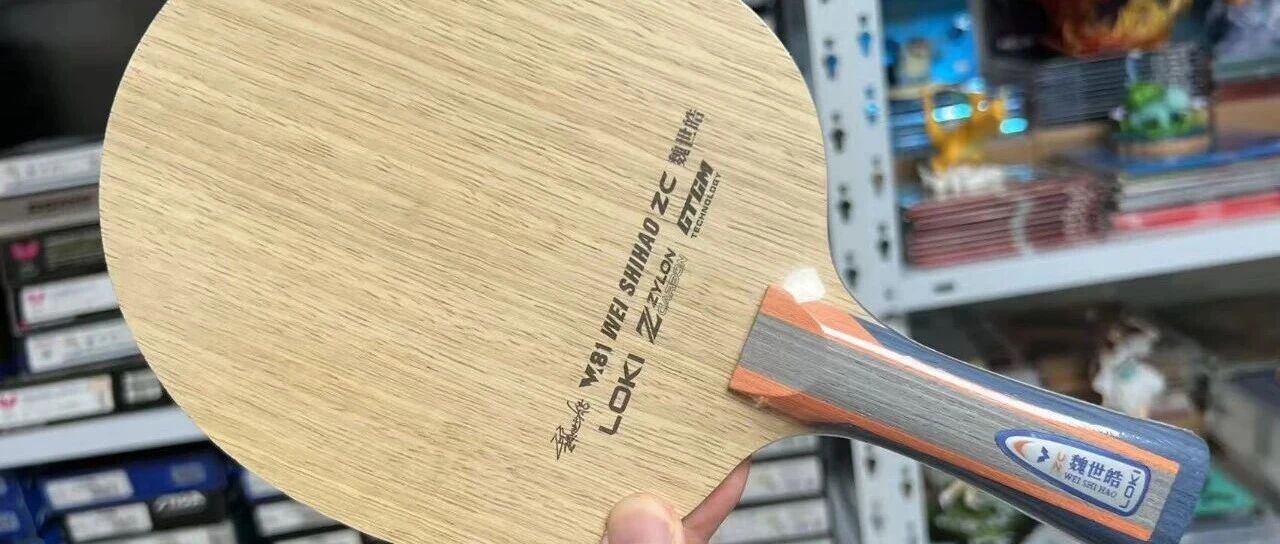
Blades tested: Loki Wei Shihao ZC / SZC
Test rubbers: forehand DNA Red Dragon, backhand Rakza 7 and T05 Hard
Quick Summary
-
In 2026, Wei Shihao became the ambassador for Loki’s classic W81 blade series, which received a full lineup refresh with new names. The series now includes Super Fiber and ZLC Fiber options, bringing fibers that were once expensive down to the 200–300 RMB price range.
-
Last time I summed up the Wei Shihao Arc and SARC in a couple of paragraphs. This time, I’m going into detail on the ZC and SZC — outer carbon and inner carbon respectively.
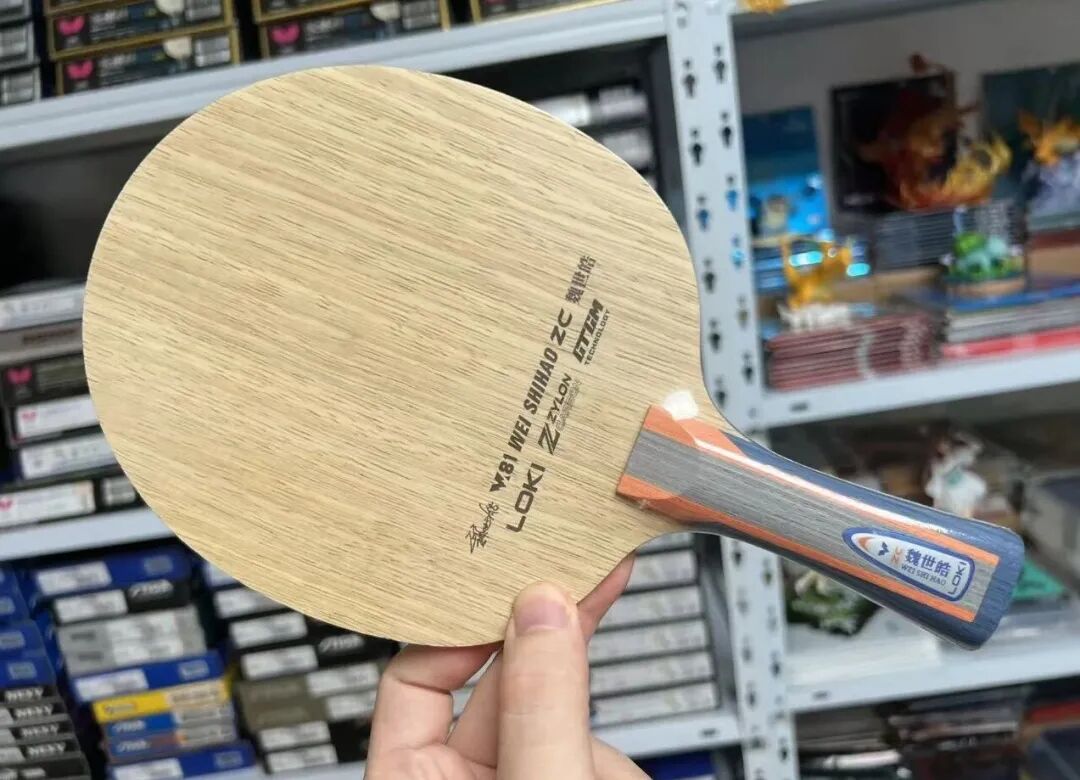
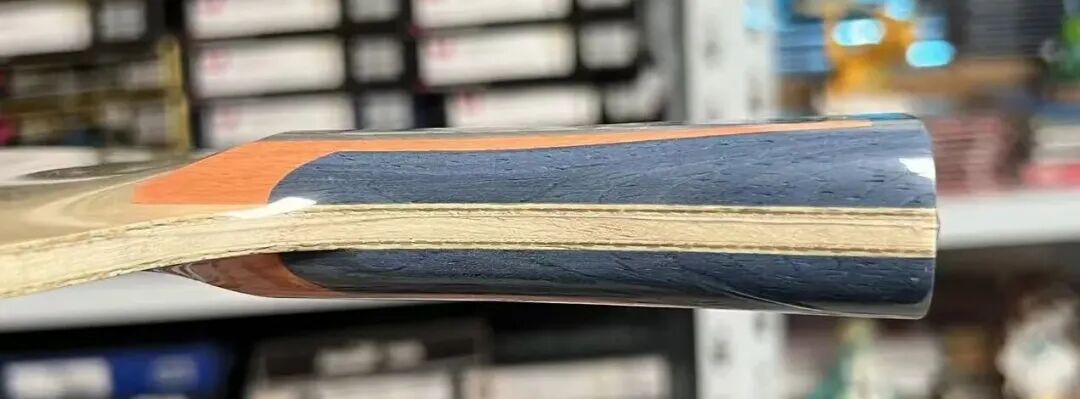
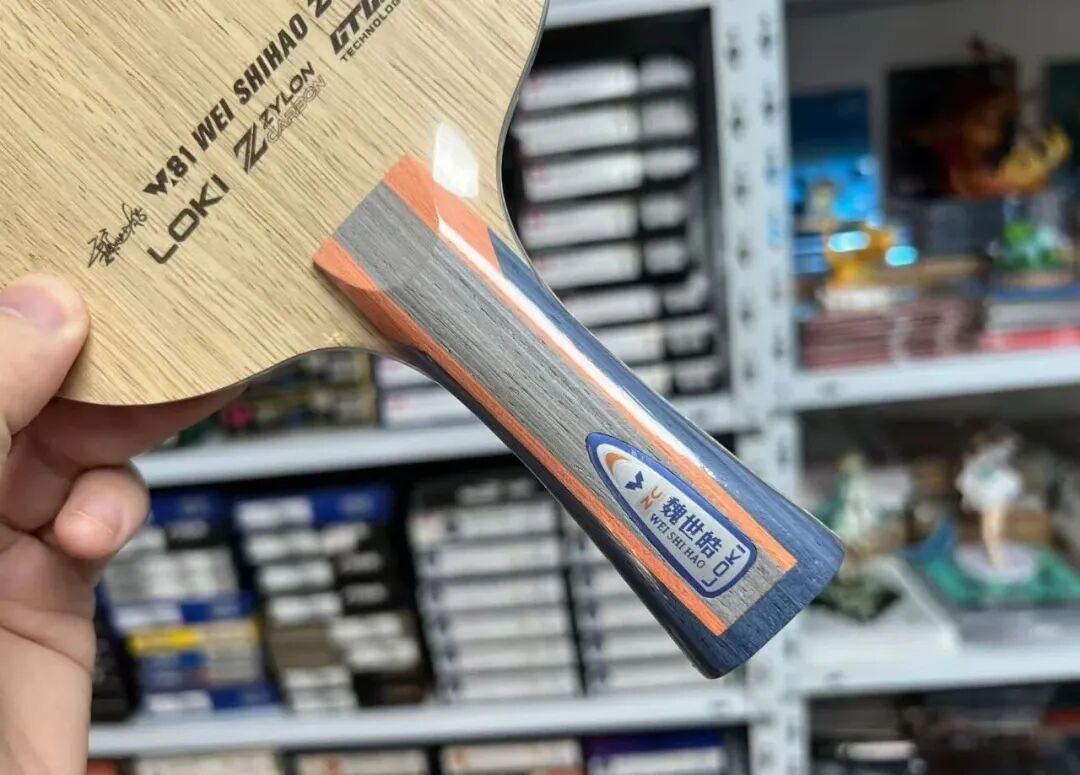
Wei Shihao ZC
-
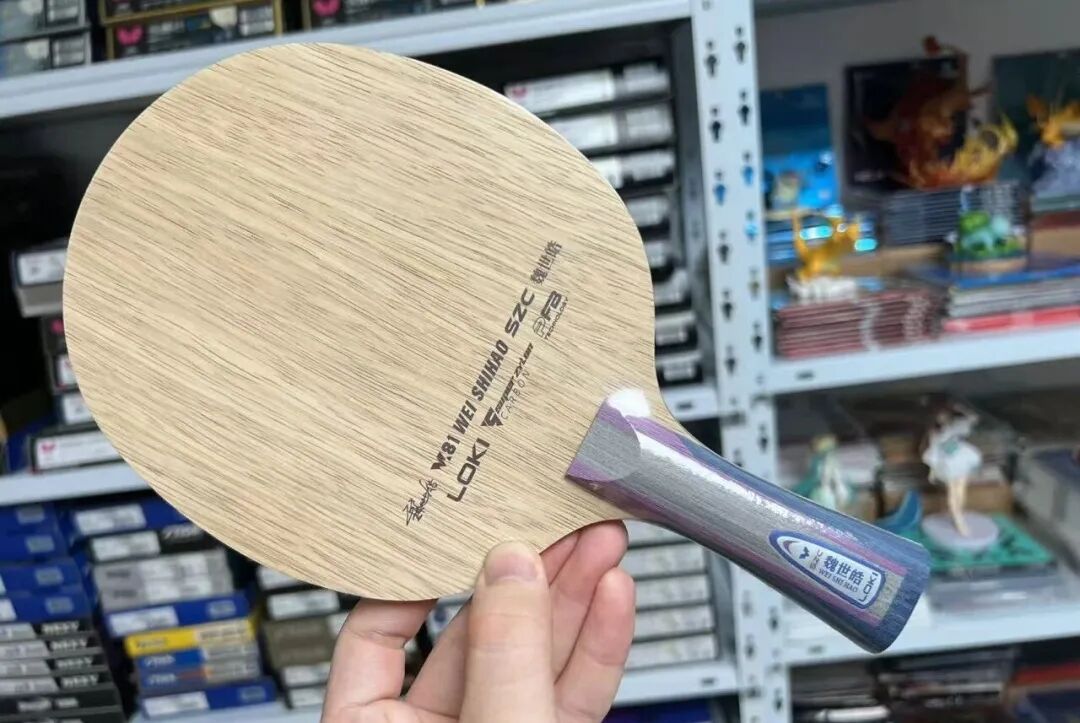
Limba outer veneers with outer ZLC fiber — the same construction as the Harimoto ZLC — at around 5.8mm thick, with an orange-gray-blue tri-color handle design.
-
It achieves a feel similar to the Harimoto ZLC in several key ways: excellent ball output from close to mid-table, a longer arc, easy to borrow force from, with a decent arc height. At the 300 RMB price point, this is very impressive.
-
The contact feel is slightly harder than the Harimoto ZLC — not quite as soft or refined. It adds a slight stiffness, a kind of “snap-and-spring” quality. Control feel is about average given how easily it fires the ball.
-
It has enough power for most situations. Under maximum effort, the deep power isn’t exceptional — like the Viscaria in that it shows an “outer hard, inner soft” character.
-
In short: The Wei Shihao ZC suits intermediate players who want to loop and attack from close to mid-table. Fast off the bat, long arc, easy transition between forehand and backhand, effortless ball output. Good value at 228 RMB.
Wei Shihao SZC
-
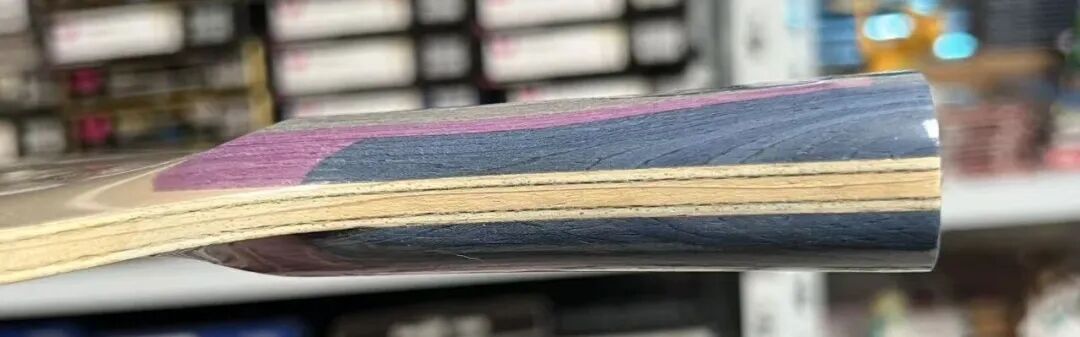
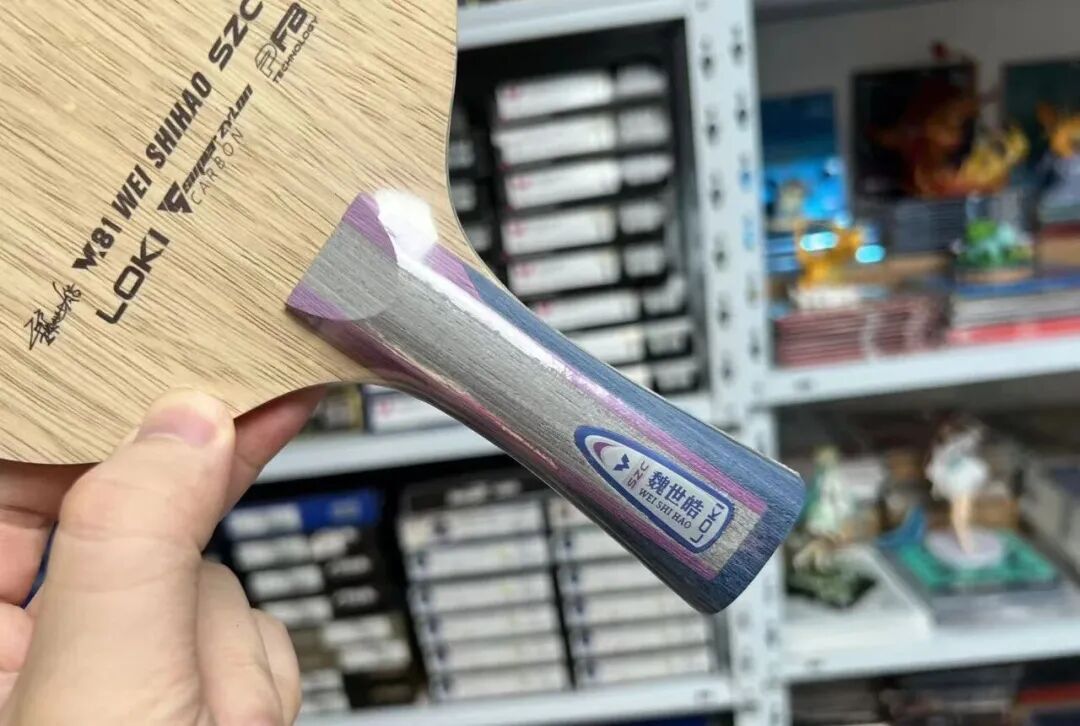
Limba outer veneers with inner Super ZLC fiber — the same construction as the Harimoto Super ALC — at around 5.7mm thick, with a purple-gray-blue tri-color handle design. Priced at roughly one-sixth of the original.
-
Let me first say something about the Harimoto Super ALC. It’s the “all-rounder” of the Butterfly lineup — inner construction, yet the super fiber’s elasticity is incredibly easy to access. Even moderate force produces great speed, combined with the arc of an inner carbon blade. Under full power, the arc can get very long and the ball can fly off the table. It’s generally paired with tensor rubbers.
-
The Wei Shihao SZC and the Harimoto Super ALC share only a structural resemblance — in hand, the two feel absolutely nothing alike.
-
At low to medium force, the SZC barely outputs ball at all — it’s slow, with essentially pure-wood feel. The super fiber behaves like a highly resilient net: at low force, it simply can’t be driven. The energy doesn’t transfer into the fiber, and the fiber gives nothing back. Only the surface veneer and force veneer respond.
-
The SZC has very solid deep power. Under full force, there’s plenty of support, and the arc isn’t overly long. At low-medium force it’s pure wood; under full force it becomes a tough, resilient fiber feel — not over-elastic like the Harimoto Super ALC. The power arc is controllable, and it works with both tensor and tacky rubbers.
-
This shows that even with the same super ZLC fiber, the bonding techniques and the weave composition and ratios between the carbon and fiber layers vary significantly between manufacturers. The key takeaway: the SZC, thanks to the super fiber’s high tensile strength, has an inner structural support that most 300–600 RMB blades simply don’t offer. It’s “soft on the outside, hard on the inside.”
- In short: The Wei Shihao SZC is for intermediate and advanced players who want to drive through the ball with conviction, loop cleanly, and maintain control. A deceptively tough outer feel with serious inner power.