Thoughts on Xianyu and Pinduoduo's Impact on the Table Tennis Gear Market
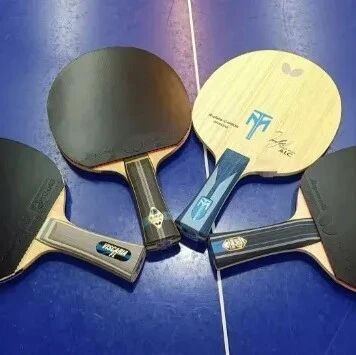
On the question of how to tell real gear from fake, I won’t go into it here. Personally, I think it is of limited use: rather than relying on your own ability to spot fakes, it is better to trust the channel you buy from. These days counterfeiting is simply too easy, and the quality keeps improving. Many people have played with fakes without ever realizing it — take some Hurricane Long 5 and 968 blades, for example.
In most cases, appearance alone is not enough to tell. Some friends send me photos asking for my help, and all I can do is marvel at how sophisticated the faking has become. I generally don’t bother replying. Everyone should stick with sellers they trust. The “detection tips” floating around are fun to read, but not really reliable.
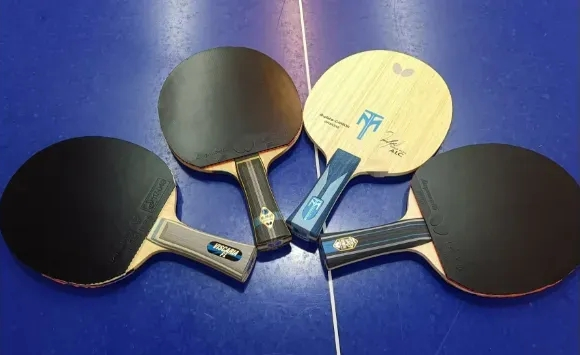
1. Xianyu and Pinduoduo Are Widening the Gap Between Big and Small Brands
Big brands naturally carry discussion and search traffic, so they will dominate on both platforms. Products that were already popular will become even more popular: Butterfly’s Tenergy and Dignics lines, Stiga’s DNA series, Joola’s Rhyzen V and R lines. Beyond those, some mid-popularity products with good value also benefit — Galaxy U2, RKT Yujian, LOKI Dragon rubber, and so on.
In short, what was already hot gets hotter; classic products continue to attract sustained attention; niche products get even less visibility. Big brands make more money; small brands have an even harder time, unless they manage to build some traffic. Apart from that, only the cheapest low-price products still have a slim chance of survival.
2. Who Actually Profits?
First the platforms themselves, then the big brands, then counterfeit sellers and some dealers.
The platforms go without saying — Xianyu has already raised its commission fees. Big brands: while the regular dealers are having a harder time than before due to margin compression (Butterfly’s authorized dealers, for instance), the brands themselves have no sales problem. Authorized dealers face margin pressure from price competition, but for the brands themselves, volume is fine.
Two years ago, Butterfly China was already considering whether to open up the market, relax price floors, and allow cross-region sales. But market changes moved faster than anyone expected. Now the large influx of Japanese-market versions is growing in influence. The online and offline markets have effectively become two separate markets serving almost different customer groups — and the customer bases for Japanese-market versions and authorized products will diverge further and further.
For brand headquarters globally, this is not a big problem. For the Chinese subsidiary, it is a real headache. For consumers, the platforms have brought real convenience and savings — equipment turnover has become faster and cheaper. But some dealers have started buying from Pinduoduo to resell, which is its own kind of irony.
3. Pinduoduo Is Squeezing the Second-Hand Market
When new products become cheap enough, fewer people buy second-hand. You can see this clearly in how quickly traffic for second-hand Butterfly rubber has dropped on Xianyu. People are now waiting for Pinduoduo coupons to drop. The value of second-hand products naturally falls further, and buyers are fewer.
But at the end of the day, as long as a product is reasonably popular, it can still sell — it is only a matter of pricing. The hardest hit are the obscure products: great value sometimes, good quality sometimes, but they can’t even get in front of buyers.
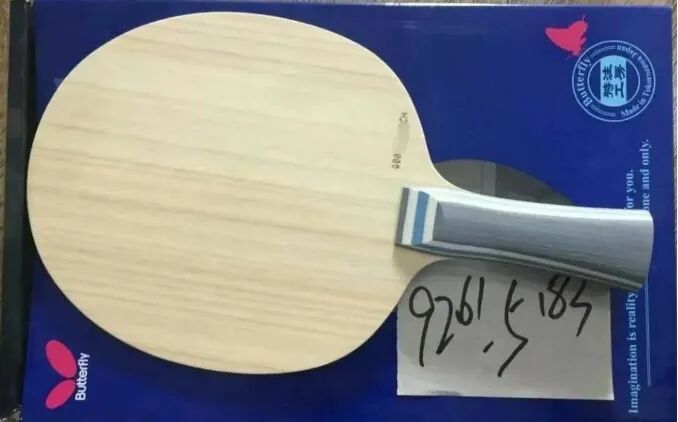
4. The Gear-Collector Community Is Growing
As transactions get easier and prices drop, the ranks of gear collectors continue to swell. Gear collecting is not necessarily about chasing better performance — for many it is simply about playing with toys.
But this inevitably leads to faster cycling of market trends and further drops in second-hand prices. There are simply too many products, and more keep coming.
In sharp contrast, the Butterfly special-edition and limited-edition blades — scarce items that carry a premium — keep going up in price. But interestingly, fewer and fewer people are actually buying them. There may be a few reasons for this:
First, the prices are truly steep, and reselling later is a hassle. Second, many players using standard-market blades play very well, which suggests special editions and limiteds do not necessarily perform significantly better. Third, many people now think of these as just another toy, and they prefer more toys rather than one single better toy.
For me personally, I’ve almost stopped buying special editions and limiteds. For one thing, blade restoration has become incredibly sophisticated — there are dedicated accounts that collect old special editions, restore them, and resell at high prices — so I no longer feel confident buying second-hand specials unless from a trusted friend. For another, I’m now quite clear on what kind of blade suits me. A few years ago I was interested in a Boll ZLC limited or certain player-signature models, but after learning more I realized some of them don’t actually fit my game, and the trial-and-error cost is too high.