Outer vs. Inner Carbon Blades: How to Choose, Simply Explained
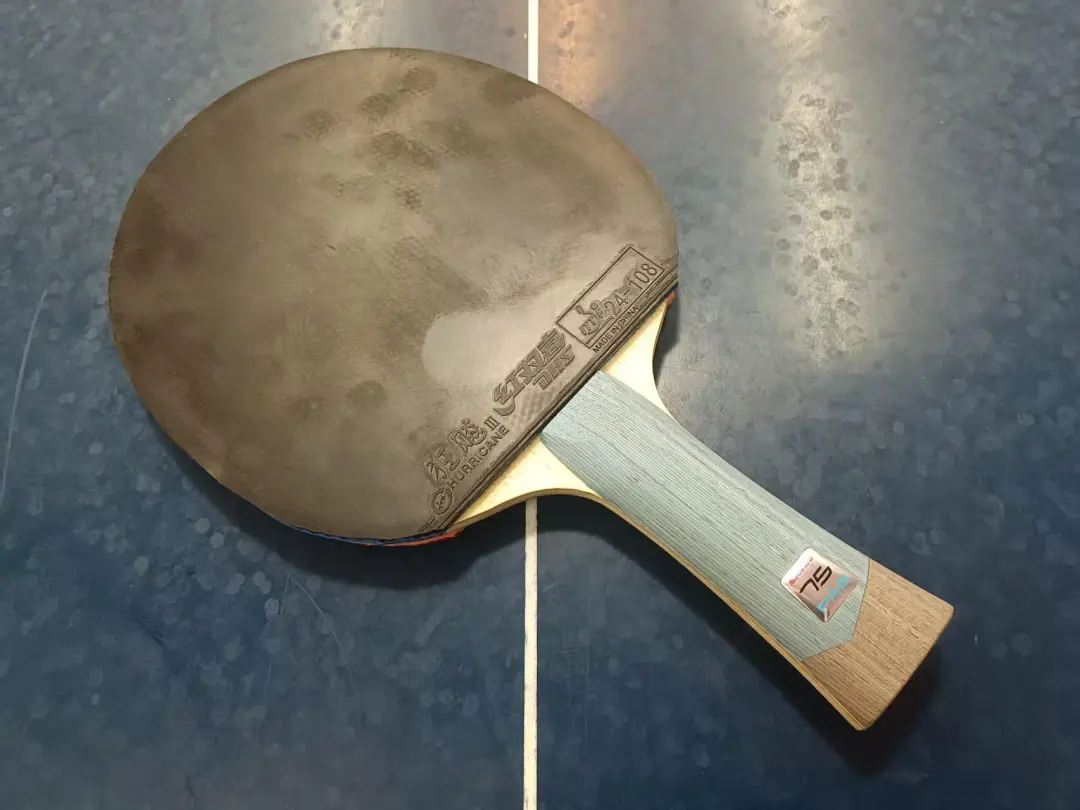
Under ITTF rules, at least 85 percent of a blade must be wood; the rest can be special materials. The most popular construction today is 5 plus 2 — two layers of special material added inside five wood plies. Because that fiber sits in different positions, we get “outer” and “inner” builds.
Outer means the fiber layer sits directly under the face ply. Inner means the fiber layer sits on either side of the big core.
So what is the real difference between outer and inner, and what should drive your choice?
Outer carbon: more bounce, more speed
An outer-fiber blade shows the fiber’s character more readily, so it bounces better and plays faster. That is easy to understand — the fiber (ALC, ZLC and so on) sits right under the face ply, so power passes through the face and triggers the fiber immediately. Take Zhang Jike T5000: an outer carbon blade with no aramid, stiffness taken to the limit. Very springy, and many find it hard to control.
Inner carbon: woody feel at low-to-medium power
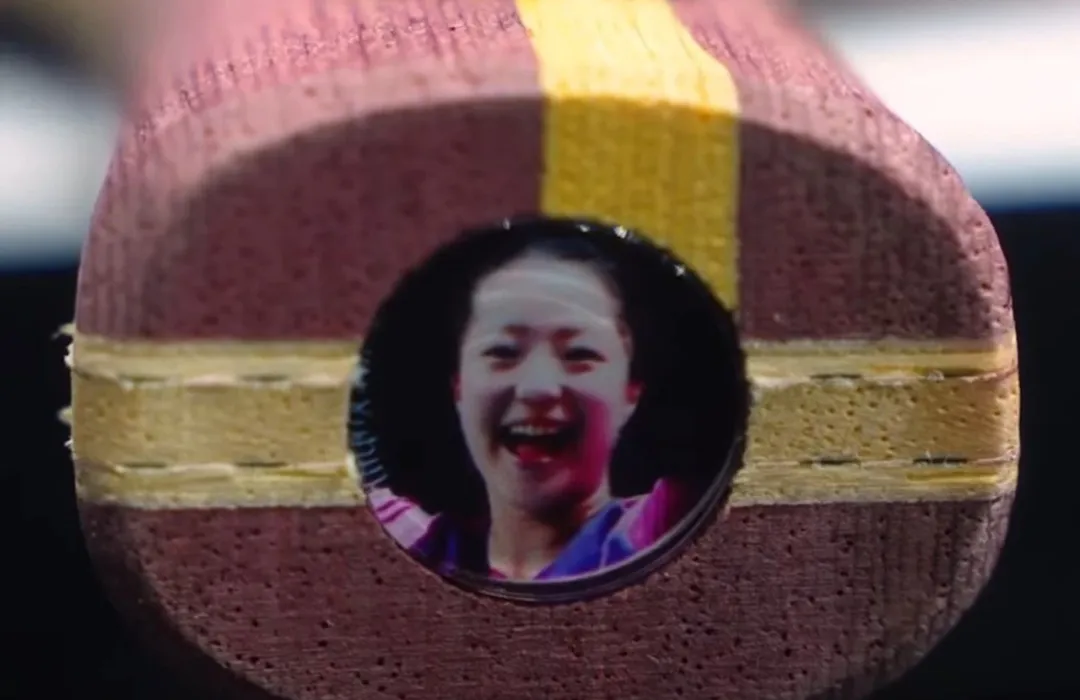
(The inner-KLC Shin Yubin 968)
Because the fiber sits away from the surface, you do not trigger it until you put real power in. When the blade behaves more like all-wood, that means good control, easy spin and moderate elasticity. The Hurricane Long 5, at low-to-medium power, really is softer and woody.
Control matters enormously for a blade. In today’s plastic-ball era, where one shot rarely ends a point, multi-ball rallies are the norm, and stronger players especially demand command over the blade. That is why many of today’s national-team players prefer inner builds — easy ball-holding, easy spin. Even those on outer blades now want more dwell than before, which gave us the “ball-holding outer blade”: the gold-label Viscaria, Lin Gaoyuan ALC and Fan Zhendong ALC are all examples.
Broadly: if you like to control and adjust the ball yourself and generate spin and arc easily, an inner blade is easier to get along with. If you like to borrow power and chase raw speed, consider an outer blade.
Why are some inner blades fast too?
We just said inner blades feel woody at low-to-medium power. But some woods are simply hard. Compare the inner-KLC N301 and W968: the 301 has a koto face, the 968 a limba face, and koto is harder than limba, so at medium power the 301 is faster.
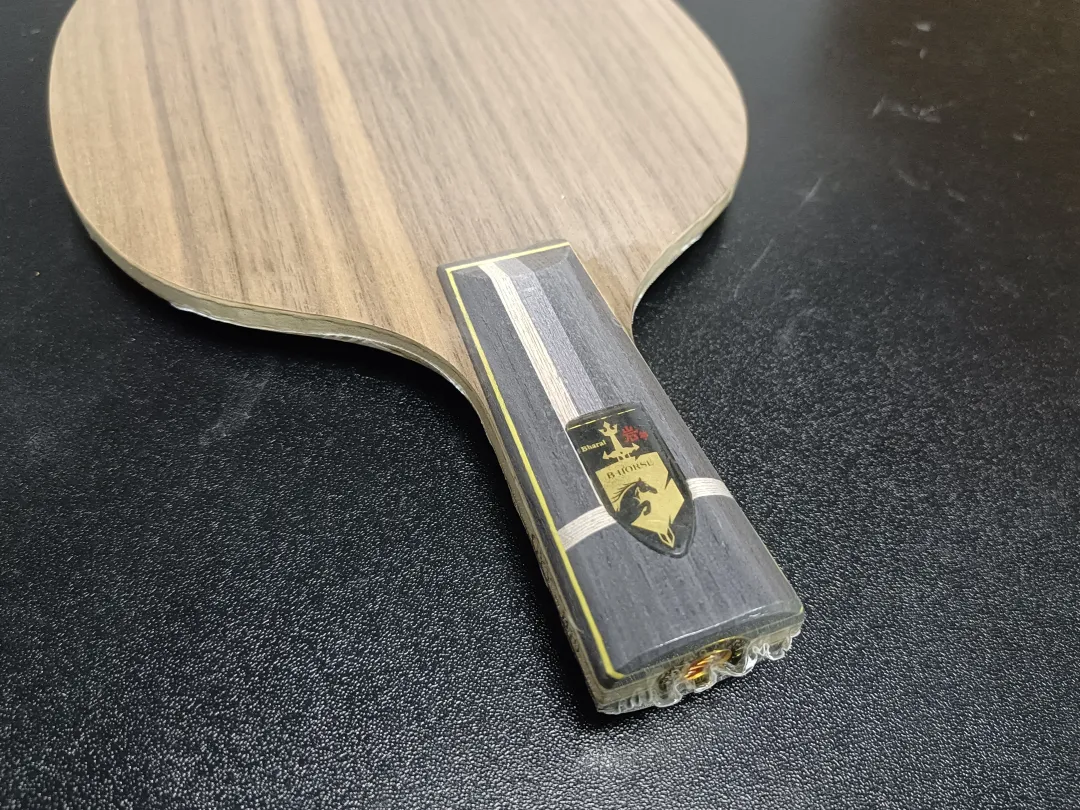
With a face harder than koto — say walnut over inner KLC — blocking is no slower than an outer blade. Inner blades tend to show all-wood characteristics, but wood can be firm too. Walnut, rosewood and ebony all run hard.
So if a hard-faced inner blade and an outer blade can both be fast, how do they differ? On medium-power counter-hits, a hard-faced inner blade is just as quick. But when looping, being an inner blade it still produces stronger deformation and tension, and paired with the usual ayous core it loops a longer, heavier arc with more late power — a bigger threat once you step back. Outer blades, usually built on a kiri core, throw a shorter arc; they loop fine but suit close-to-mid table play better.
Look at where you stand and whether you favor fast close-table play or stepping back to swing — that is one more guide to choosing outer versus inner. Thickness also matters: make an inner blade thick enough and it gets stiffer and closer to outer speed, like the 6.2mm Harimoto SZLC and Ovtcharov ALC.
Makers usually aim for balance. The Boll ZLC was once called the most brutal blade going — high-bounce outer ZLC dumping power into the fiber. To keep it from being too stiff and hard to loop, Butterfly held the body around 5.5mm to preserve enough deformation and tension.