How to Use Semi-Tacky Forehand Rubbers at the London Worlds (Part 2)
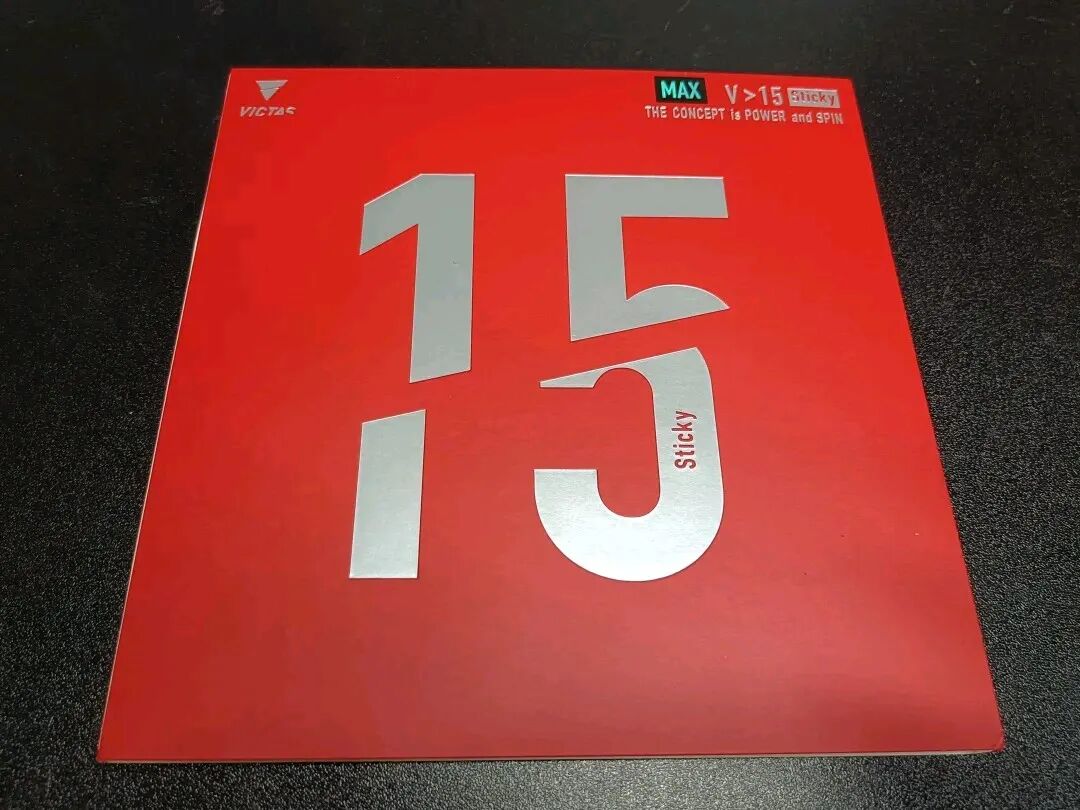
5 — V>15 Sticky (Key Player: Duda)
I’m still not entirely convinced this rubber delivers enough power depth to satisfy elite players. Just as some Victas-sponsored stars reportedly use a specially hardened version of the standard V>15 tacky rubber, it’s reasonable to guess that a hardened special edition of V>15 Sticky exists too — I just haven’t gotten my hands on one yet.
That said, the retail version of V>15 Sticky is genuinely stable. It generates more spin than K3, and the sponge has a satisfying ball-wrapping quality. You can use it on both forehand and backhand. Many players treat it as a budget alternative to D09c. True, the power output isn’t aggressive — you could even call the forehand feel a bit ordinary, and it’s not fast. But given the wide range of amateur skill levels, plenty of players find it adequate on the forehand. And on the backhand, it really is very forgiving; amateurs don’t need to worry much about power depth there.
This brings to mind a thought: several top-selling semi-tacky rubbers are really not violent hitters at all, yet that hasn’t stopped them from selling well. There seems to be a trend now where amateurs gravitate toward these easier-to-use tacky rubbers — the highly tacky K2, the semi-tacky V>15 Sticky, Grubber C2, and DNA Dragon. None of these feel explosive to me, but I shouldn’t evaluate every rubber by my own standards.
6 — DNA Hybrid XH (Key Player: Jarvis)
Jarvis uses it on both sides; Wen Ruibo uses it on the backhand. Today we’re focusing on forehand use. The DNA Hybrid XH sponge feels a bit muted at medium-power swings, but overall it’s firmer and more springy-powerful than the Dragon version. It has some of that dense, substantial feel you get from Chinese high-density tacky rubbers.
I keep thinking of it as sitting somewhere between the Huangchao ZGR and ZGX — it shares traits with both. It delivers more punch than the ZGX, but without the tight tension of the Huangchao ZGR.
7 — K3 and K3 Pro (Key Players: The Lebrun Brothers)
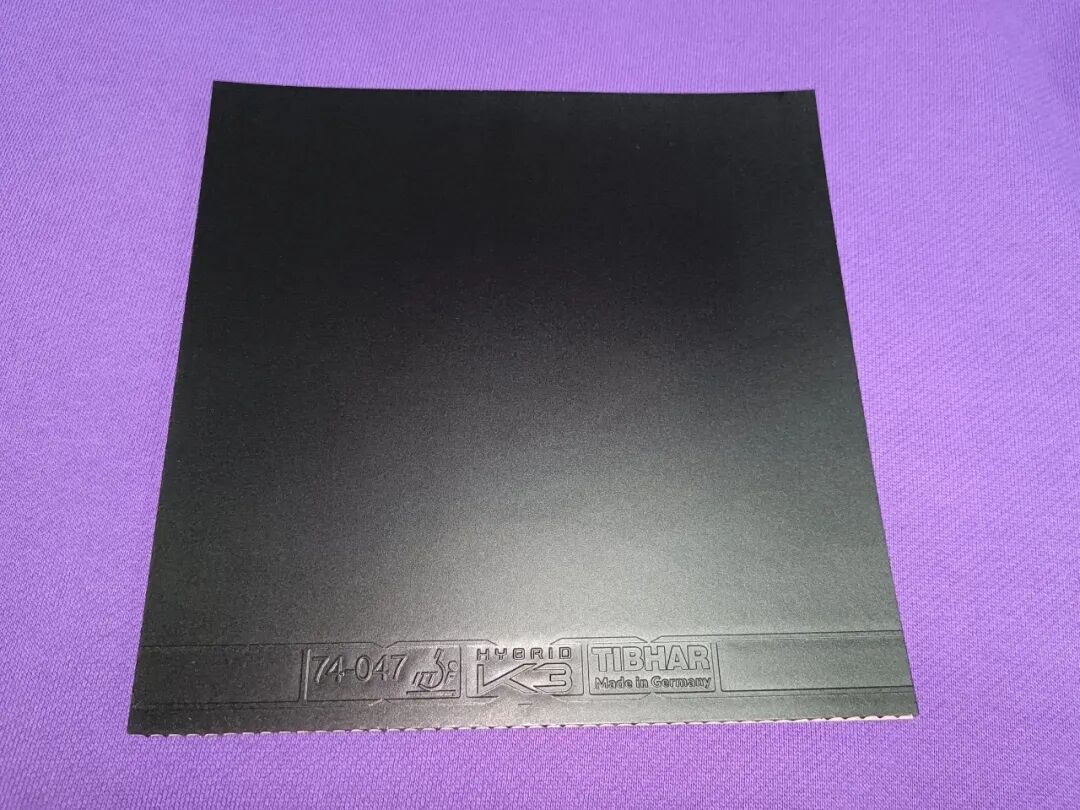
I’ve obtained special-edition K3 Pro and an unreleased Infinity sample — I’ll try to review them this month. The goal isn’t just to judge how good they are, but to understand how the players generate power in their matches. If the retail and special-hardened versions differ in performance, that’s worth documenting so everyone knows.
After all, even among amateurs, many feel that the retail K3 or K3 Pro loses support when playing away from the table — it starts to feel a bit weak. Up close, the K3 Pro offers just a tiny bit more support than the K3, and a slight speed bump. But for the traditional Chinese forehand, it still doesn’t feel powerful enough. Sometimes I think even the national standard rubber 3 or the Hyper-Power AMG version (which hits harder) outperforms these.
Maybe it’s a brand calculus: they figure amateur players are fine with this hardness level, and they believe the power gap between amateurs and pros is enormous.
As for the K3/K3 Pro longevity question everyone asks about — ESN’s semi-tacky rubber surfaces basically come in those two variants. Expecting a sudden improvement in lifespan isn’t realistic. In fact, the better an outer rubber performs energetically, the shorter its life you should expect. The more the factory pre-loads the rubber with energy before shipping, the faster the surface degrades.
One other rubber worth mentioning: Andro’s NUZN 55, used by Goat and Winter, gets solid reviews. I haven’t played it yet, so I can’t speak to it.
This month I’ll get around to reviewing the new Hugo rubber that everyone has been asking about.