Loki Telson China Tacky Rubber Review — 57.5 Degrees Forehand
Rubber Under Review
Rubber: Loki Telson China — 57.5 degrees, forehand
Scoring standard: 6 = pass, 7 = good, 8 = excellent, 9 = very good
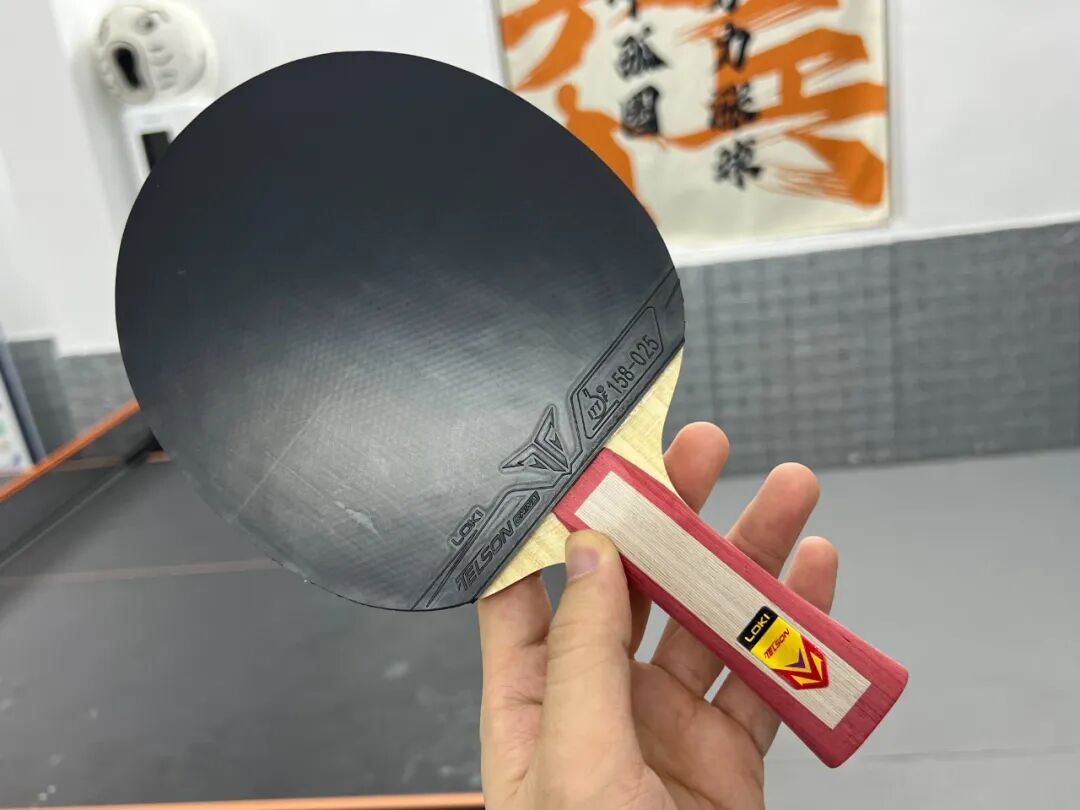
Test setup: Telson Yanlong (outer ALC blade), Telson China 57.5 degrees on the forehand (tacky)
Overview
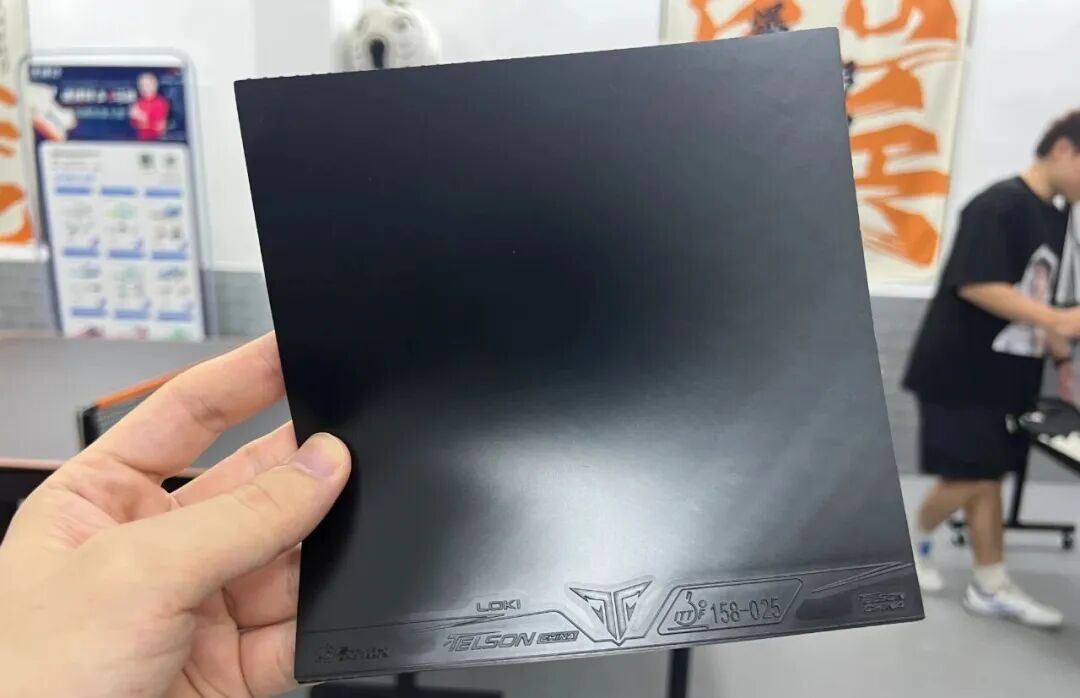
- Telson China is a newly released rubber from Loki, designed for forehand and backhand use in three hardness options: semi-tacky (52.5 / 55 / 57.5 degrees). I tested the forehand 57.5-degree version.
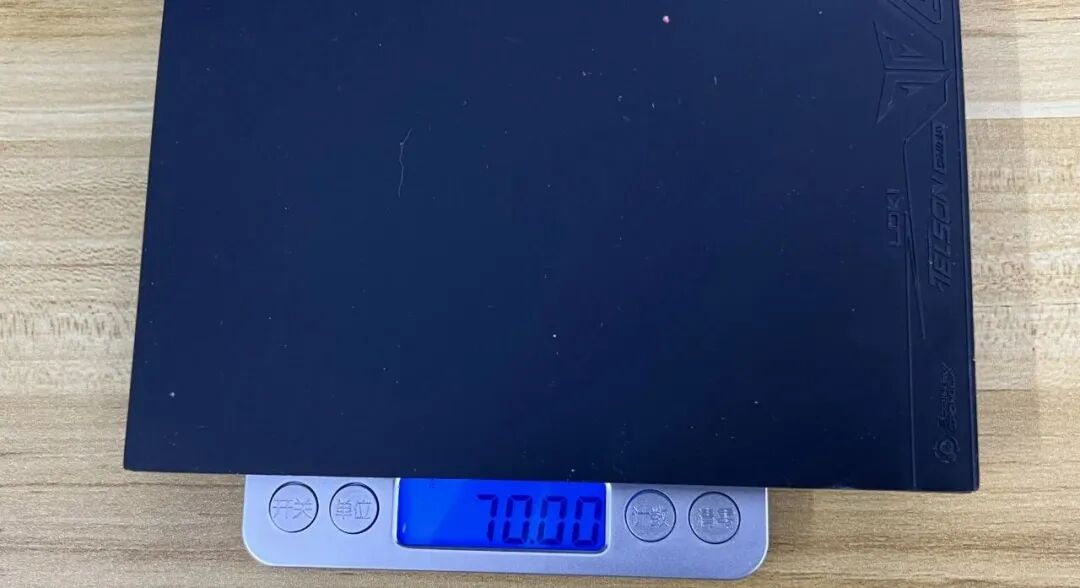
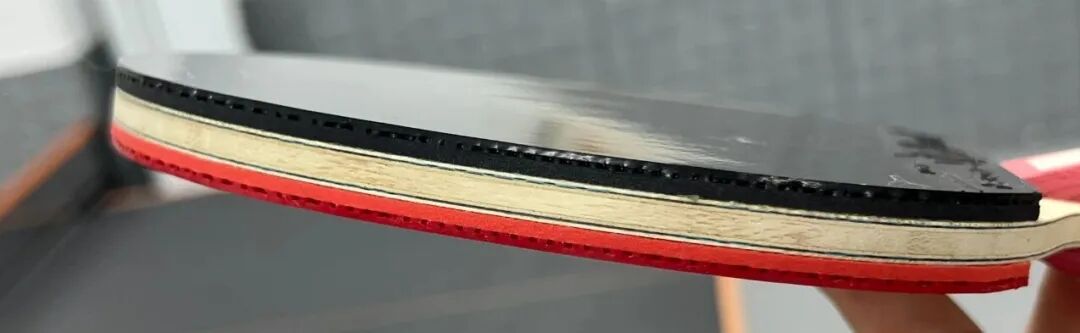
- Telson China 57.5 degrees uses a black cake sponge, 2.1 mm thickness, bare weight around 70 g — quite reasonable.
- The topsheet is lightly tacky; pressing the sponge gives a hardness feel of roughly equivalent to Hurricane at 40 degrees.
On-Table Feel
- Forehand drive: Feel is not very clear at low power — somewhat vague. The sponge hardness is high.
- Forehand smash: There is a definite power threshold. Once you drive through the sponge, the contact is crisp and bright.
- Forehand contact: Compared to other rubbers, this one requires pushing forward slightly more, or adding a bit more drive-through.
- Forehand loop: After increasing the drive ratio, both arc and power come through — crisp, strong, and with decent speed.
- Sponge behavior: Once you loop the ball into the sponge, you can feel the sponge’s support. It handles mid-distance well thanks to the roughly 40-degree base hardness. However, the sponge’s power ceiling doesn’t keep expanding as you step back — though for recreational players, mid-distance is typically the limit anyway. Telson China’s power output is sufficient at that range. If you need more, pair it with a stiffer blade or go with Hurricane at 40–41 degrees.
Based on points 1–4: the Telson China 57.5-degree tacky version, due to its firmer sponge, performs only averagely at low power on topspin balls. Performance improves noticeably once you drive through the sponge, but the transition through medium power is not very smooth.
- Serve: Stands out here — grip is good, rotation is slightly less than Hurricane but topsheet traction is still comfortable. Can produce quality serves off the topsheet, and the sponge enables long backspin and fast flat serves with more threat than Hurricane. So this rubber may actually suit recreational players better in the serve department.
- Flick: Not ideal — at low-to-medium power the feel is uncomfortable when you can’t drive through, and the short, explosive motion of a flick makes it harder to consistently drive through compared to, say, DNA Dragon.
- Forehand push control: Average evaluation — while the tack helps with control, the sponge is quite firm and feedback is not pronounced.
- Forehand loop against backspin: Similar to above — at low power the arc is stable and consistent, going up easily. At medium power without driving through, the transition feels rough and the firm sponge invites errors. Once you drive through fully, speed, quality, and consistency all jump up noticeably — clean and fast.
- Final verdict: Telson China 57.5 degrees suits recreational players rated around 1500 and above on the forehand. All-around performance clears the baseline, but the low-to-medium power feel transition is weaker and requires stepping in and adding more drive. My personal recommendation is to drop a hardness level and try the 55-degree version — the feel should be considerably better, and it could serve as another boosting-free alternative to Hurricane.
Overall: Telson China tacky 57.5 degrees scores below 7; the tacky 55-degree version earns 7.