Five Decades of Outer Carbon Blades: Evolution and Full Survey (Part 2)
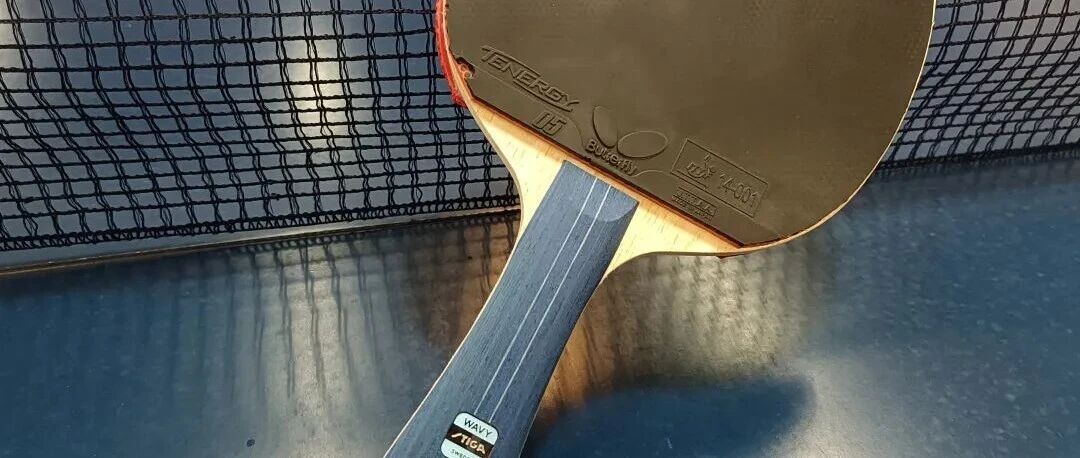
More Outer Composite Blades Targeting Intermediate Players
We know that top professionals use composite blades like ALC, ZLC, and KLC. But until recently, intermediate-level players mostly used all-wood blades or thin-carbon fiber blades. Over the past few years, outer composite fiber blades targeting intermediate players have been increasing.
Part of the reason is the plastic ball: blades need more support and redirecting ability. Another part is that intermediate players are a real market, and brands are investing more energy in developing it.
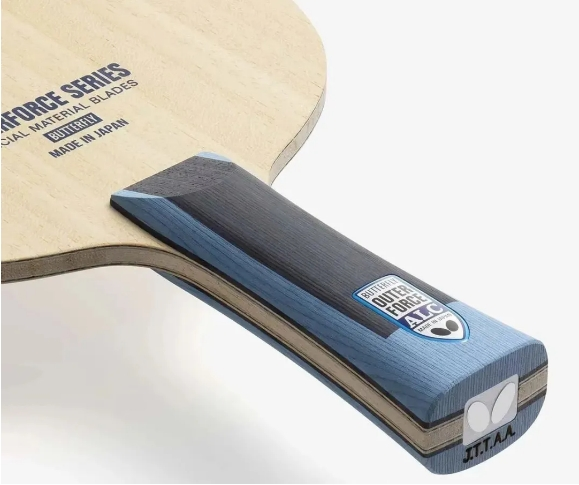
Last year, Butterfly released the OUTERFORCE series, primarily aimed at intermediate players. The face material was changed from koto and limba to ayous — a wood with lower density. This moderately suppresses the blade’s elasticity and puts more emphasis on ease of use. In other words, it doesn’t bounce as much as the Viscaria or Boll ZLC, but it’s relatively easier to control.
Nittaku launched the Hayata T2 in July — an outer ultra-thin carbon — also targeting intermediate players. It emphasizes moderate elasticity, good dwell, and lightweight design.
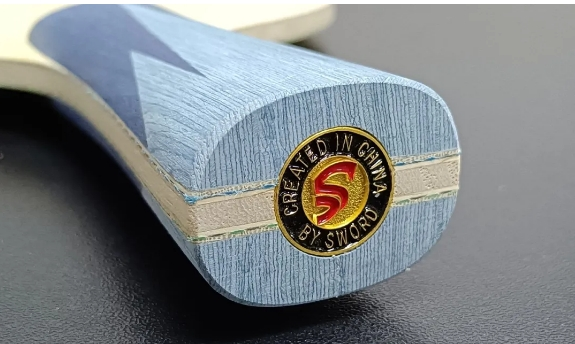
Our own previously mentioned “Yaonie” blade features one side in green aramid carbon and the other in blue aramid carbon. The green aramid side is harder and springier; the blue aramid side is relatively softer and grips the ball more, suitable for players who need more stability on one side of their game.
The Non-Carbon Fiber Type
STIGA’s Power Carbon is in this category too — lower price, outer construction. This model uses outer white super fiber, but no actual carbon. Despite being fairly fast, it’s still very controllable.
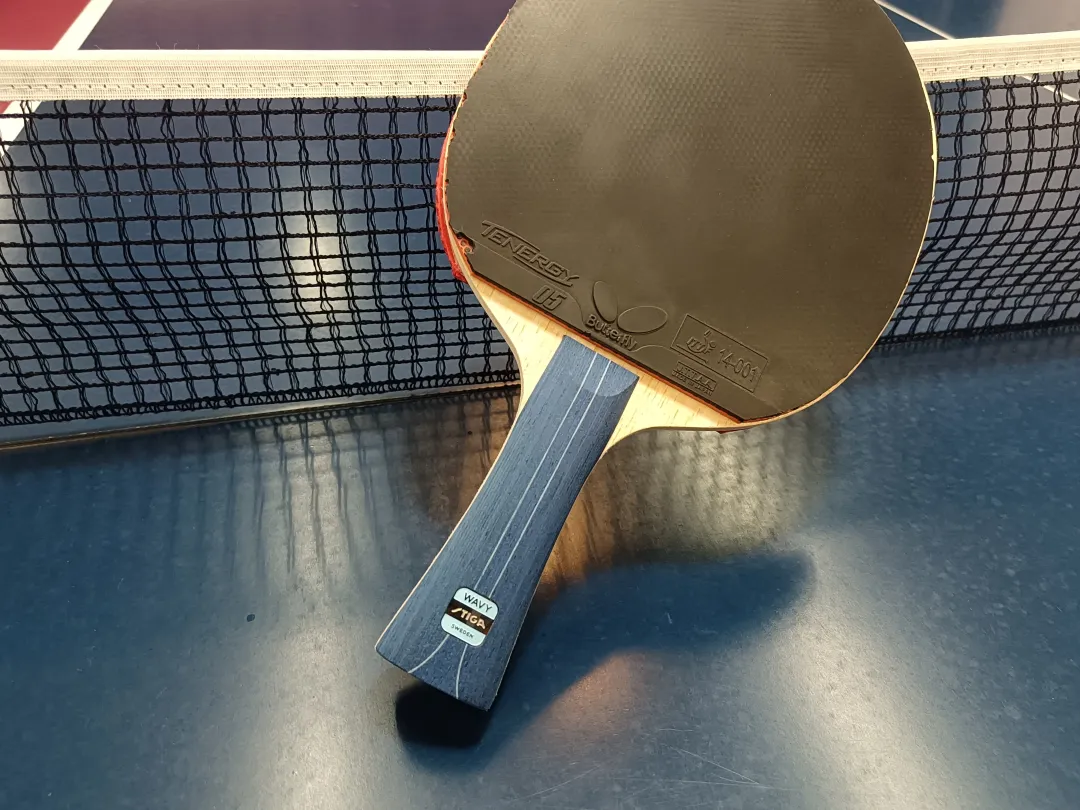
Blades with fiber material but no carbon are increasing. They have less elasticity than carbon blades, a feel closer to all-wood, are more forgiving, and it’s easier to generate spin. They tend to be lighter as well, with decent redirecting rebound. The blades still have good elasticity overall.
The image below shows four materials: CNF (Butterfly’s Revoldia CNF), orange aramid fiber (Hugo HAL), CAF (Boll CAF), and ZLF (Liu Shiwen ZLF).
The Market’s Mainstream Balanced Blades
Among today’s mainstream balanced outer composite blades, the Butterfly ALC series leads the pack. Aramid-carbon weave combines soft dwell with excellent speed and elastic feedback. Outer ALC blades are popular across all brands right now.
Outer ZLC is also widespread — the feel is a bit harder than ALC. Beyond that, there are outer KLC (like the Nittaku Hurricane King SPEED), outer green aramid carbon (Andro VCO, Tibhar Alex), and more.
Here are the balanced outer blades that get the most discussion:
Fan Zhendong ALC: Top sales in Japan regardless of grip type — let alone in China. It sold out for a while. We’ve discussed the performance extensively.
Xiaoyan: I haven’t played this one. Structurally, it’s the same as the Hurricane King SPEED — outer KLC — but with a koto face. Generally runs on the lighter side.
GLADIAS AR: Victas released this new model in April last year. The AR emphasizes power. Flexible yet forceful. The structure tells you everything: two layers of outer aramid carbon, with an ayous large-core rather than the koto core common in outer blades.
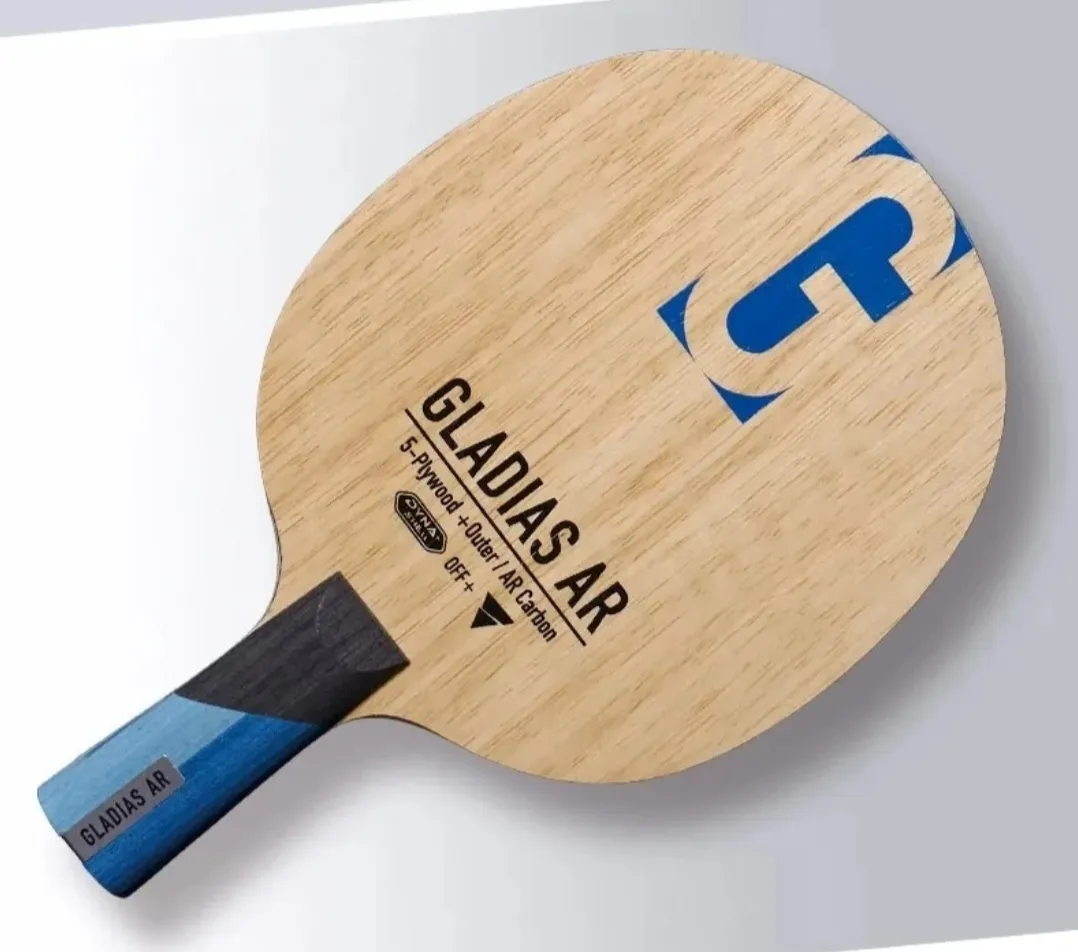
This is actually the same structure as my Mackerel Shark I from a few years back. Pitchford’s ZX-Gear Out uses different fiber but also features outer construction with an ayous large-core. This type of blade, with good power generation, can naturally produce long arcs and doesn’t lack punch.
36.5 ALX: Playing this one feels similar to the Lin Gaoyuan ALC — a classic example of a balanced blade. More details in my earlier review.
Original True Carbon: Thinner than most outer ALC blades, also very good for dwell and spin enhancement.
Lingan Mixed Carbon: High elasticity, high arc. Strong dwell, great back-end power.
Beyond these, there are many more. The vast majority of the well-known ones we’ve already reviewed.