When National Team Players Used Off-the-Shelf Blades (Part 2)
3 — Viscaria
The quality of the retail Viscaria has been validated by many national-team players. That’s beyond debate. In recent years, the most famous example is probably Chen Meng’s P-code Vis at the Paris Olympics.
This isn’t to hype up P-code blades. Ishikawa Kasumi’s R-code plays great, and my V-code is perfectly fine too. Quality variation exists, but as long as you pick one that feels solid and not hollow, it plays well. As for selecting a blade, I don’t have that many tips. Most of the time, picking a blade feels like pure guesswork — the playing feel rarely matches what you imagined. I’d suggest just buying a few and keeping the one that feels comfortable.
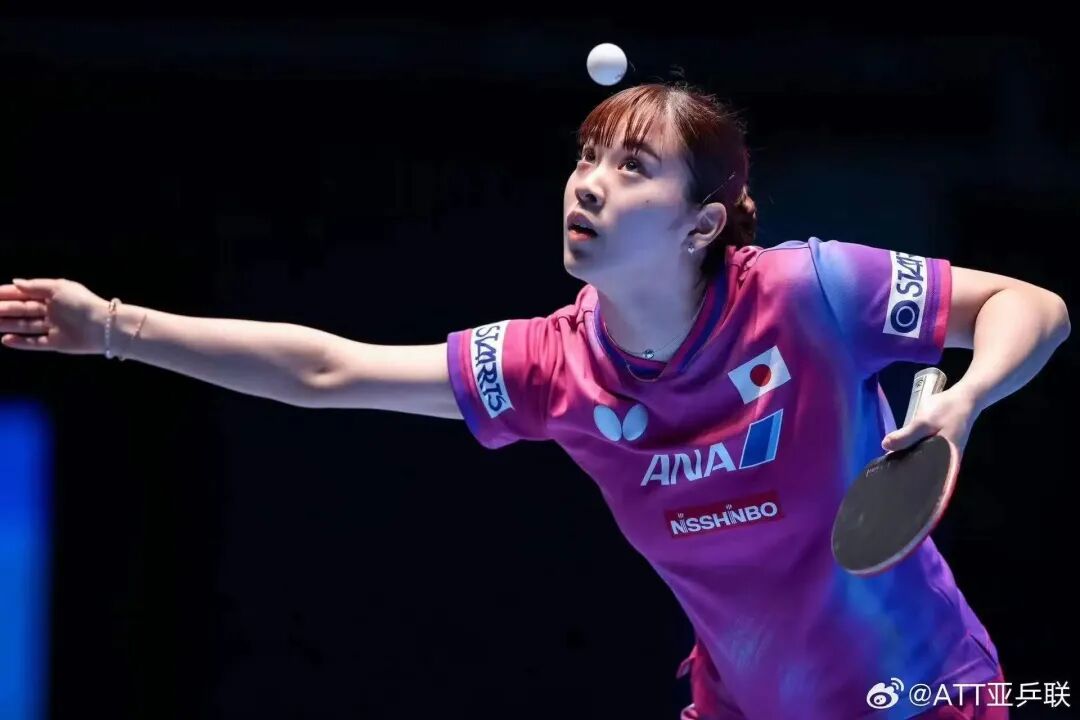
Both the Chinese national team and the Japanese national team (prime example: Hirano Miu) include players using retail Viscaria. Non-Butterfly-sponsored players have a lower chance of getting custom blades than you’d think — unless they receive one as a gift, even elite players can’t easily get them. This is especially true in the Japanese team, where internal competition is fierce and players are wary of each other, so don’t assume everyone on the Japanese team is using custom gear.
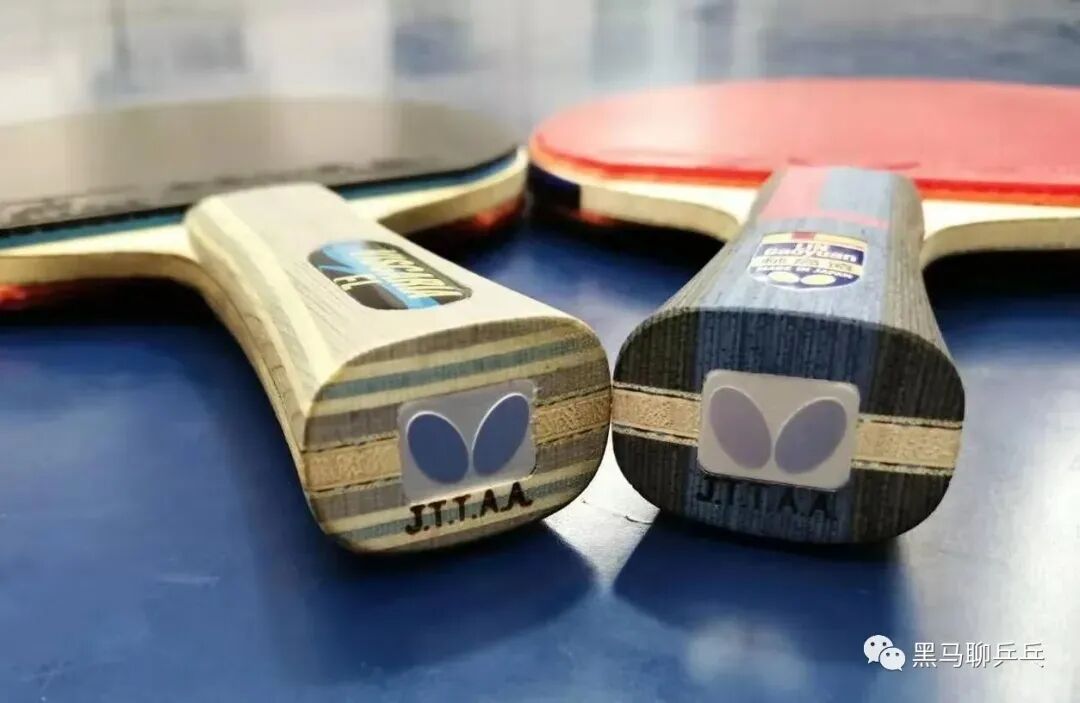
This further proves the standard of Butterfly’s retail line. The same goes for Fan Zhendong ALC and Lin Gaoyuan ALC. Zhu Chengzhu, who previously used Lin ALC and now plays Viscaria, Du Kaixian, who uses Lin ALC, and a long list of players using these blades all make the same point: Butterfly’s retail version is more than adequate.
As for rubber pairing, that’s personal. Speaking from my own experience, if I pair T05 with Viscaria on the forehand, it doesn’t work well for me — I almost need a tacky rubber to ensure spin quality. But with something like Lin ALC or Boll 70, which have better ball-wrapping feel, forehand T05 is no problem. For Viscaria, tacky rubber on the forehand is closer to a universal answer.
Super Viscaria and Fan Zhendong SALC are also used by many national-level players. The Fan SALC in particular is very popular — Chen Meng, Wang Xiaotong, and Yokoi Saki among the representatives. These two blades have a higher entry threshold than regular ALC, but they improve the dwell time and speed at medium force levels. Once you pair them correctly and adjust to their rhythm, they’re fine.
Interestingly, plenty of people actually produce great ball quality with Fan SALC but ultimately give it up because they never feel confident with it.
4 — Harimoto Tomokazu SALC and SZLC
For SALC, Nagasaki Miyu is the prime example. For SZLC, Otofuji Satsuki. Both are using retail versions. After Nagasaki Miyu switched from Butterfly to Mizuno, she lost access to custom blades. Butterfly places strict limits on this — even at Liu Shiwen’s level, the custom gear she received after leaving Butterfly was only through a gift from someone else.
The SALC’s soft, penetrating feel, high speed, and error forgiveness; the SZLC’s ability to borrow the opponent’s force and its powerful driving character — both are very distinctive retail blades in their own right.
5 — “Custom” Blades You Can Actually Buy
For example, the W968 and Q968 — versions used by some overseas players — are essentially at the standard of the official numbered retail version, which any of us can pick up. That said, many recreational players report that recent 968s don’t play as well as older ones. Older 968s had a more ferocious forehand with deeper underlying power. The newer ones have a more balanced forehand-backhand feel, but the forehand lost some of that punch. Whether it’s a formula change or just a result of higher production volume and less careful quality control, I’m not sure.
Gold-label Vis is another custom blade that’s easy to buy — just expensive. Selecting one is similar to picking a Fan ALC or Minion ALC. Light ones often feel weak; heavy ones are noticeably more solid. Probably because there’s nothing particularly special about the formula, so the wood needs to be solid for the ball quality to be decent.
Yinhe’s custom blades are also easy to purchase national-team equivalents of. The Yu Ziyang Imperial Edition and the North Korean team’s 520X and 520L specials — the best of the Blue-Gold Workshop — are essentially at the level used by the athletes.