Yasaka Sweden EK Carbon Blade Review — Affordable OFF Carbon with Swedish Craft
Pros
- Genuine carbon speed at an accessible price point
- Excellent blocking and near-table consistency
- Wide, comfortable handle with high construction quality
- Forgiving CFNW carbon fleece gives a larger sweet spot
- Medium throw angle suits a broad range of rubber types
- Made in Sweden at Yasaka's Tranås factory
Cons
- Early ball release makes heavy topspin harder to produce
- Weight around 87-90g may feel heavy for some players
- Anatomic handle variant often out of stock or discontinued
- Manufacturer speed rating slightly overstated versus real-world feel
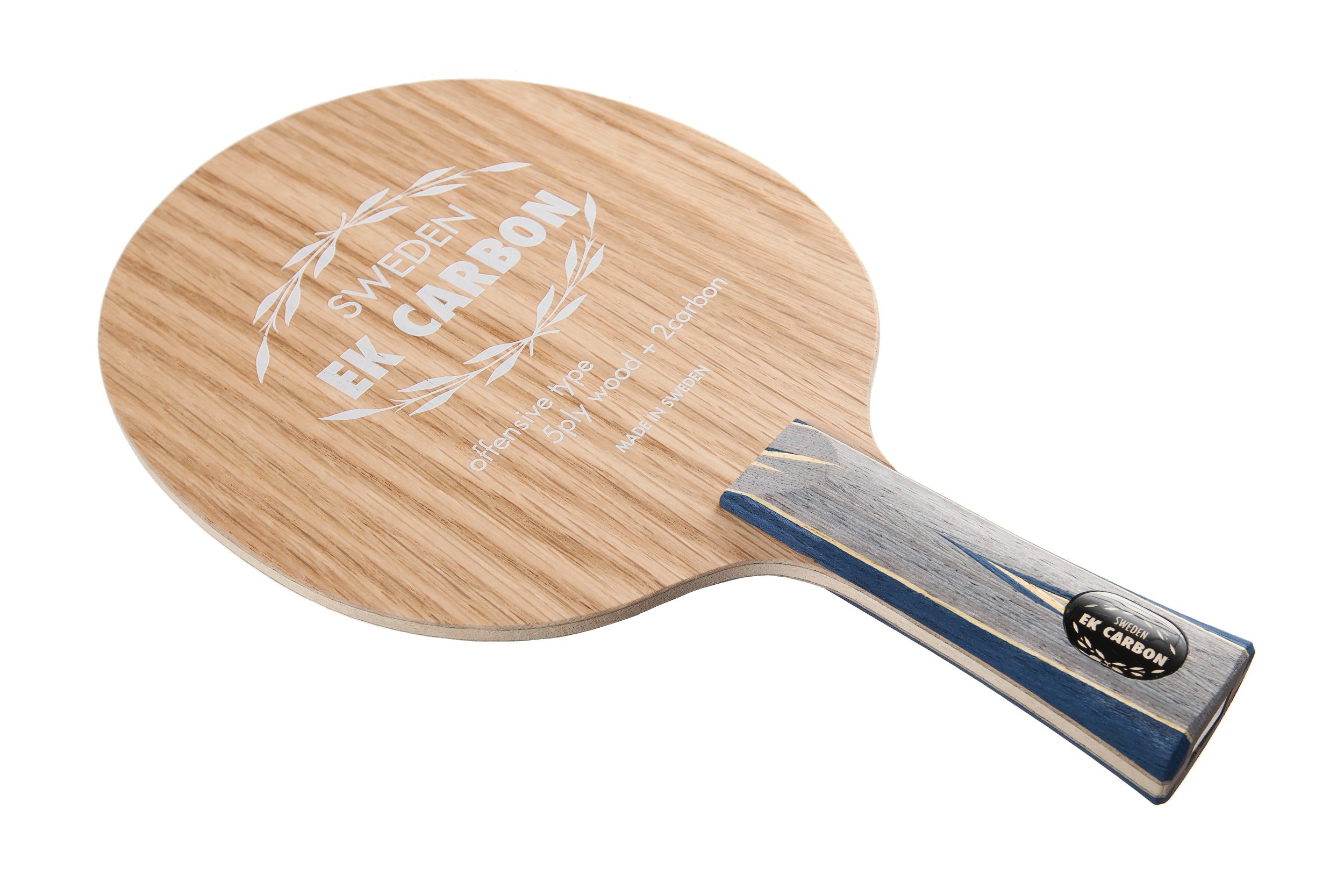
The name carries real heritage. EK is the Swedish word for oak, and this blade runs Scandinavian oak as its outer veneer, the same hard Nordic wood that has defined Yasaka’s Sweden blade family for decades. The 5+2 construction pairs those oak veneers with CFNW (Carbon Fleece Non-Woven) inner layers, a softer carbon weave that widens the sweet spot and tames the harshness you sometimes get from stiffer woven-carbon blades. What comes out is an OFF-class blade that earns steady praise across review platforms, all circling the same qualities: reliable blocking, satisfying contact feel, and a price that puts carbon within reach without cutting corners on manufacturing.
Performance
Speed lands in a practical OFF bracket. Reviewers on Megaspin and TableTennis Reference both clock the blade slightly below the manufacturer’s own speed spec, closer to the boundary between OFF-minus and full OFF. That works in its favour. It is fast enough to punish weak balls with flat drives or smashes, yet forgiving enough to keep blocking and the short game reliable. The oak outer veneer sets the feel. Contact is crisp and slightly hollow, a sensation players keep calling satisfying, firm and responsive without the dead or jarring feedback you sometimes get from cheaper composites. Dwell is moderate. The ball leaves the blade promptly, which helps flat hitting but asks for good technique to wring out heavy loop topspin. Players who like to load the rubber do better pairing this blade with softer rubbers such as Rakza 7 Soft, Mark V, or Rasanter R47/R48, which cover the early release with their own grip and elastic throw.
Blocking is the strongest part of the game here. Reviewer after reviewer flags it at the table, the stiff oak surface and inner carbon stability combining for clean, controlled blocks even against fast incoming balls. Consistency comes up just as often: outer stiffness plus the CFNW sweet spot keeps off-center hits travelling reasonably true. The blade feels authoritative close to mid distance, but step back and the modest speed rating caps the punch next to faster outer-carbon options. The weight of 87-90g runs heavier than many modern alternatives, which some players flag for long sessions, though others say the extra mass helps drive through the ball on flat attacks.
What Reviewers Agree (and Disagree) On
Megaspin, TableTennis Reference and Paddle Palace agree firmly on the build quality, reliable blocking, good feel and strong value, and they keep praising the CFNW sweet spot and medium throw. The argument is over speed. One camp reads the manufacturer OFF rating at face value and finds the blade appropriately fast. The other, especially players coming down from higher-end blades, reads it slower than rated and closer to OFF-minus in real play. Topspin splits the room too: softer-rubber users report good dwell and spin production, while those running hard tensors note the early ball release caps spin. Weight runs the same way, heavier hitters welcoming the mass for stability and lighter-touch players flagging the 87-90g as a negative.
Who Should Buy It
This is the blade for a club-level or developing intermediate player moving from all-wood to carbon who does not want to leap straight to the aggressive outer-carbon options. The forgiving CFNW construction and medium throw keep the learning curve manageable. Blockers and all-round attackers who live at the table get the most out of its strongest suit. Anyone who values a Swedish-made pedigree and reliable Yasaka quality over chasing the highest speed number will be happy here. It is the wrong call for advanced players hunting a modern high-speed outer carbon, or for heavy loopers who need maximum dwell from the blade.
FAQ
What does EK stand for in Yasaka Sweden EK Carbon?
EK is the Swedish word for oak. The blade runs Scandinavian oak as its outer veneer, the material behind its stiffness, speed and distinctive crisp contact.
How does the Sweden EK Carbon compare to the Yasaka Sweden Extra?
The EK Carbon is faster and stiffer thanks to the 5+2 carbon construction, where the Sweden Extra is all-wood. The EK suits offensive players; the Sweden Extra leans toward all-round control.
What rubbers work best with this blade?
Softer rubbers cover the blade’s early release and lift topspin. Common pairings include Rakza 7 Soft, Mark V, Rasanter R47 or R48, Rakza SPO, and Vega Asia DF.
Is the Sweden EK Carbon suitable for beginners?
Call it an entry carbon blade for developing players who already have some foundation. Pure beginners will find an all-wood blade more forgiving, but anyone stepping up to carbon for the first time will find this one accessible and instructive.
What is the difference between CFNW carbon and standard woven carbon?
CFNW stands for Carbon Fleece Non-Woven, a softer, less rigid carbon layer than standard woven carbon. It gives a more tactile feel and a wider sweet spot, which makes the blade more forgiving than stiffer woven-carbon alternatives.
Where is the Sweden EK Carbon manufactured?
It is made at Yasaka’s factory in Tranås, Sweden, the same plant behind the broader Sweden blade family, which keeps the manufacturing standards consistent.
Sourced From
This review synthesizes opinions from 3 independent community sources:
- Megaspin (ecommerce)
- TableTennisReference (forum)
- PaddlePalace (ecommerce)