Donic Waldner Senso V1 Review: Classic All-Wood Control with a Speed Upgrade
Pros
- Outstanding control and consistency — community average 8.5 control, 8.0 consistency
- Large forgiving sweet spot reduces unforced errors
- Senso V1 hollow handle adds pace without changing the pure wood feel
- Excellent for blocking and short touch play
- Classic 5-ply abachi-limba Swedish construction for natural ball feedback
- Multiple handle options (flared, straight, anatomic) suit different grip styles
- Accessible price around 40-48 euros or 45 USD
Cons
- Limited top-end speed for players who rely on aggressive flat hitting
- Low stiffness (community average 4.2 out of 10) may feel too soft for advanced players
- ALL-plus rating means it will be outgrown by players moving into a full offensive game
- Hollow handle design may feel unusual to those used to conventional solid grips
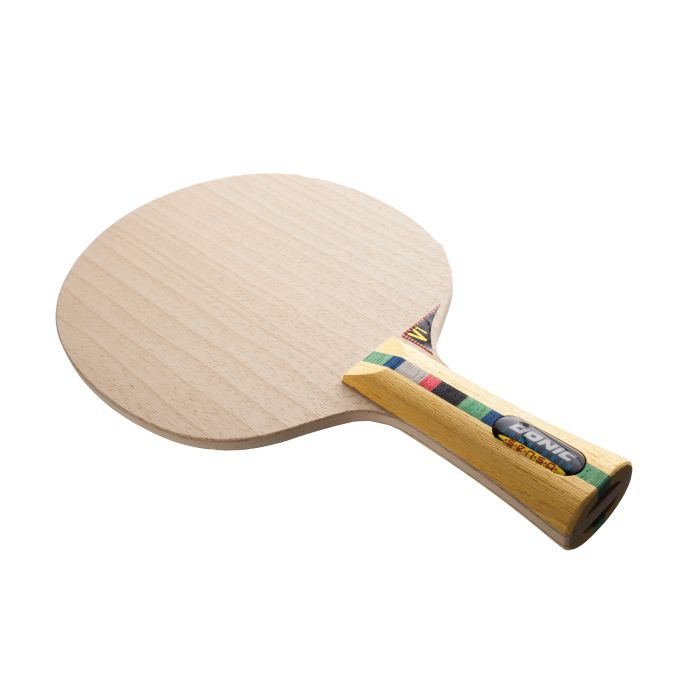
The name alone carries weight. Jan-Ove Waldner played at the top for four decades, and Donic stamped his name on a blade that tries to live up to it. Unlike the Waldner Senso Carbon V1, which folds in a carbon fibre layer for stiffness and speed, this Senso V1 is pure 5-ply all-wood, built from abachi and limba veneers in the classic Swedish style. What sets it apart is the Senso V1 handle: a computer-calculated hollow cavity that raises blade speed while leaving the control characteristics identical to a solid grip. The payoff is an ALL-plus blade that runs a touch quicker than its rating suggests, without giving up the soft, ball-gripping feel that draws people to all-wood in the first place.
Performance
Speed lands in the upper ALL range, community scores averaging around 7.4 out of 10. Enough pace for looping and counter-hitting, nowhere near the explosive kick of a carbon or arylate composite. Reviewer redcode still finished points with it when needed, especially behind medium-hard rubbers in the 36-40 degree range.
Control and consistency are the real draws, averaging 8.5 and 8.0. Blocking stands out most: reviewer BMX2 called it perhaps the best blocking blade and said balls always land on table, which the forgiving arc and predictable dwell time bear out. The 5.8mm thickness and medium stiffness, community average 4.2 out of 10, give a soft, absorbing contact that suits short play, serve-return, and controlled loops.
Pair it with Tenergy or similar high-tension rubbers and topspin exchanges hold up, though the soft flex shifts the balance toward the rubber side and leaves the racket top-heavy. Medium-speed rubbers like Donic Coppa or Butterfly Sriver balance every phase of the game and forgive ragged technique. Flat hitting is the weak spot. The soft flex eats energy instead of returning it, so high-speed flat drives come off less crisp than they would on an OFF blade.
What Reviewers Agree (and Disagree) On
Most reviewers land in positive territory, with overall scores clustering from 8.0 to 9.3. The agreement is firm on two points: this is a strong control and blocking blade, and its sweet spot beats most rivals in the ALL-plus segment. Where they split is the speed ceiling. Some intermediate players such as Gaucho feel it runs out of pace for demanding third-ball attacks; others like redcode counter that clean technique gets enough speed to finish points. One outlier scored it 1.0 and dismissed it whatever the rubber, but that review stands alone against an otherwise warm reception.
Who Should Buy It
Get the Donic Waldner Senso V1 if you are a beginner or intermediate player after a dependable all-wood blade with natural feel and forgiving control. It fits players who loop steadily with medium-hard rubbers, lean on touch play and blocking, and are building a game around technique rather than power. Skip it if you need more speed for high-level competition, or if you are a flat-hitter who wants a stiff, direct response.
FAQ
What is the difference between the Donic Waldner Senso V1 and the Waldner Senso Carbon V1?
The Waldner Senso V1 is pure 5-ply all-wood. The Waldner Senso Carbon V1 adds a carbon fibre layer that raises stiffness and speed sharply. The non-carbon V1 is softer, control-first, and rated ALL-plus; the Carbon V1 climbs into OFF territory with a harder, more direct feel. If you want natural wood feedback and high control, the non-carbon V1 is the one.
What does Donic’s Senso V1 technology actually do?
The Senso V1 is a computer-designed hollow cavity inside the handle. Donic says this hollow space raises the blade’s speed over a solid handle while keeping the ball-control characteristics identical. The effect is small rather than dramatic: a modest speed bump built into the grip, with the wood layers untouched.
Which rubbers pair well with the Waldner Senso V1?
Medium-hard rubbers in the 36-42 degree range work best, with Donic Coppa, Butterfly Sriver, or Tibhar Evolution MX-P among the usual picks. Tenergy 05 and other high-tension sheets work too, but they shift the balance point and leave this soft blade feeling top-heavy. Stay away from heavily tacky Chinese rubbers unless you actually want a slow, control-first setup.
Is the Waldner Senso V1 suitable for beginner players?
Yes. Several reviewers single it out as an ideal beginner blade. The large sweet spot, high control rating (8.5 average), and forgiving all-wood feel cut down unforced errors and help build correct stroke mechanics. It will not outrun a beginner’s learning curve, and it stays useful well into the intermediate level.
What handle styles are available for the Waldner Senso V1?
Donic sells the Waldner Senso V1 in flared (FL), straight (ST), and anatomic (AN) handles, and some retailers list a concave variant too. The flared handle gets reviewed most, and people call it very comfortable with a natural feel in the hand.
How does the Waldner Senso V1 compare to other ALL-plus blades in its price range?
Inside the Donic lineup it slots above the Appelgren Allplay and below the Persson Powerplay on speed. Set against common all-wood blades at the same 40-48 euro price, such as the Butterfly Timo Boll Allround or Stiga Allround Classic, the Waldner Senso V1 runs a little quicker thanks to the Senso V1 handle while matching or beating them on control. An 8.5 community control average is high for an ALL-plus blade.