Xiom Omega VII Tour Review: The Hardest-Hitting Rubber in the Omega Family
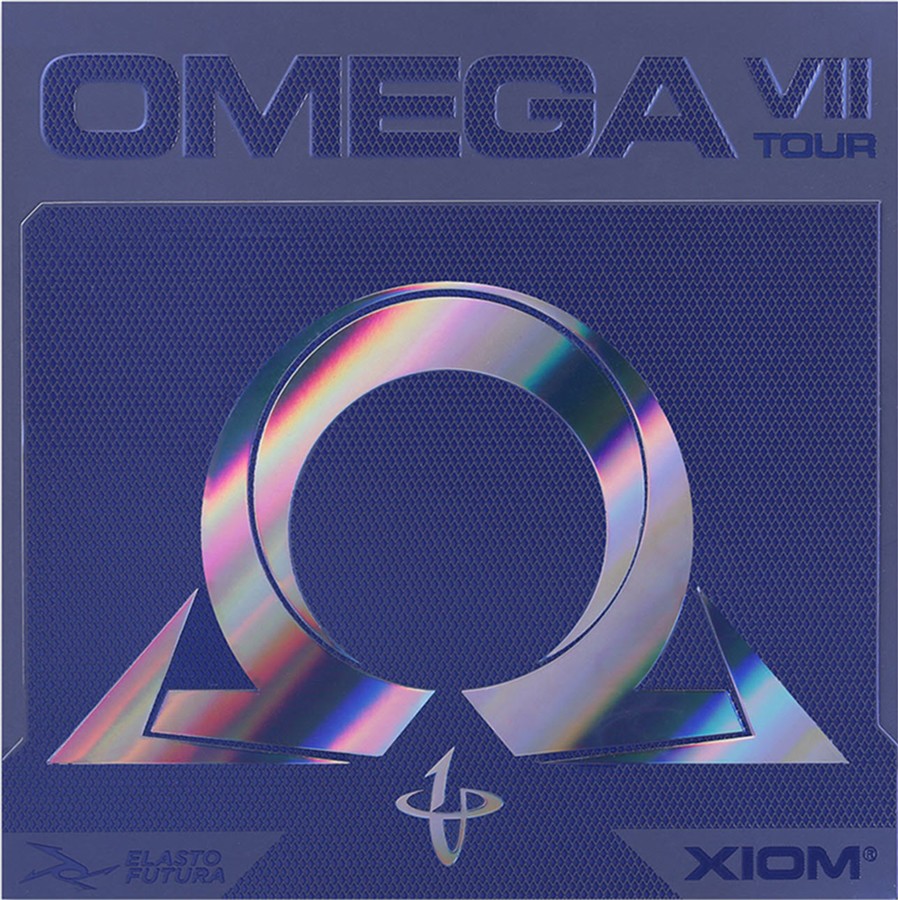
Pros
- Extreme speed — among the fastest ESN tension rubbers on the market
- Outstanding spin production on loops, serves, and third-ball attacks
- Excellent performance at mid and far distances from the table
- Strong grip despite non-tacky topsheet surface
- Multiple gears — can produce slow controlled shots or explosive finishers
- Improved connectivity with the modern poly ball
- Rated 9.33/10 across 39 community reviews on TableTennis-Reference
- Durable topsheet with sustained tension over time
Cons
- Strictly for advanced players — intermediate players will struggle
- No catapult effect at slow swing speeds — passive shots go flat
- Blocking fast, spinny incoming balls requires significant adaptation
- Heavy uncut weight adds noticeable mass to the setup
- Short game and touch play require excellent feel to execute
- Low dwell time leaves little margin for timing errors
The Omega VII Tour sits at the top of the Omega VII lineup, the fastest, hardest, most offensive sheet in the family. It’s aimed at high-level competitive players: a firm 55-degree ESN sponge under a dynamic, grippy topsheet that pours out speed and spin when you swing all the way through. Community scores back it up, including a 9.33 out of 10 average across 39 reviews on TableTennis-Reference and a 4.4 out of 5 on PingPongMaster. Hugo Calderano runs it, which tells you the ceiling. Casual players and anyone still building fundamentals should pass. This is a performance tool that trades technical mastery for elite attacking power.
Performance
Speed defines this sheet. Megaspin, TableTennis-Reference, and PingPongMaster all put it at or near the top of the category, and TableTennis-Reference members scored it 9.67 out of 10 for speed. It runs on multiple gears: soft touch shots stay slow and controlled, but apply full force and the ball detonates off the blade with what one reviewer called ‘monster speed.’ The 4.5 out of 5 catapult score on PingPongMaster captures that explosion when you engage it right.
Spin keeps pace. Several sources put it near Dignics 05 levels at full execution, and one reviewer noted that ‘rotation is much more than the swing,’ meaning you get more spin back than the effort you put in. Serves, open-up loops, and third-ball attacks come off with devastating rotation. The grippy topsheet, rated 4.5 out of 5 for grip without Chinese tackiness, gives a firm, secure contact that lets you shape the ball hard.
Control is where the user base narrows. Dwell time is short, rated 3.5 out of 5, so the ball releases fast and you have to bring the right stroke at the right instant. Passive or weak contact gives back flat, low-quality balls that opponents put away. Blocking fast, heavy incoming topspin is the hardest part, and new users need a real adjustment window before their passive blocks settle. Once adapted, experienced players say the stable throw and direct trajectory make decisions easier in high-speed rallies.
Distance is where the Tour separates itself. Reviewers report no drop in power or speed when you step back, which suits counter-looping exchanges and defensive counterattacks from deep. Plenty of rubbers bleed energy at range; this one holds. For long, fierce rally sequences it stays consistent and powerful wherever you stand.
What Reviewers Agree (and Disagree) On
Across Megaspin, Revspin, TableTennis-Reference, and PingPongMaster the read is consistent: a serious advanced-player sheet with elite speed and spin that demands technical commitment. Almost everyone agrees intermediates should steer clear and that passive play gets punished on contact. Controllability is the dividing line. Some experienced players find it more manageable than expected once adapted, citing better touch than the harder Omega VII Asia and fewer over-errors in practice. Others, mostly those coming off softer rubbers, describe a steep curve and a razor-thin margin. The Tenergy and Dignics comparisons split too: some peg it as a Tenergy 80Hard equivalent in the German tension category, others say it trails Dignics 05 in pure spin ceiling but beats it on outright speed. The picture is a sheet with a high ceiling that pays back time spent on technique.
Who Should Buy It
This is for advanced attackers who live on aggressive forehand looping, third-ball attacks, and counter-topspin exchanges at mid and far range. Regional competitive level and above, with solid technical foundations, consistent full-swing habits, and patience for a demanding sheet. It also suits players stepping up from softer, more forgiving rubbers who are ready to unlock elite speed and spin. Forehand is its home, though a confident backhand attacker can use its sharp response. Skip it if you’re a beginner, an intermediate still building stroke consistency, or a player who leans on passive control and touch as your main game. Anyone competing close to the table with short, compact backhand exchanges will struggle to rein in the speed there too.
FAQ
How hard is the Xiom Omega VII Tour sponge?
The sponge is 55 degrees on the ESN scale, one of the firmest in the German tension category. The topsheet is medium-soft, which takes some of the edge off the sponge and grips without tackiness.
How does the Omega VII Tour compare to the Omega VII Asia?
The Tour has better control and touch than the Asia while matching or beating it on outright power. Some reviews give the Asia a higher raw speed ceiling, but the Tour’s extra gears and more manageable short game make it the more practical choice for competition.
Is the Xiom Omega VII Tour good for beginners?
No. Independent sources agree across the board that it’s wrong for beginners and intermediate players. Compressing the sponge properly takes excellent technique and timing, and passive or weak shots give back flat, ineffective balls.
Can the Omega VII Tour be used on the backhand?
It’s built for the forehand and rated as a forehand sheet. A confident backhand attacker with refined technique can use its sharp response there, but the high speed makes backhand blocking and passive play hard to manage.
How does the Omega VII Tour perform with the modern poly ball?
Reviewers report better connectivity with the poly ball than older Omega generations had. The high spin generation and firm sponge match the poly ball’s lower natural spin, so you can load heavy topspin even on the harder celluloid-free ball.
What is the weight of the Xiom Omega VII Tour?
About 74 grams uncut, heavier than many alternatives including DHS Hurricane 3. If overall racket weight matters to you, factor it in when picking thickness and blade.
Sourced From
This review synthesizes opinions from 4 independent community sources:
- Megaspin (ecommerce)
- TableTennisReference (forum)
- PingPongMaster (forum)
- Revspin (forum)