Donic Waldner Dotec Carbon Blade Review: Control Meets Carbon Speed
Pros
- Cork handle eliminates sweat-related grip issues and absorbs vibration effectively
- Exceptional control-to-speed ratio for a carbon blade
- 7-ply Dotec construction provides lively but dampened feedback
- Lightweight at around 85g, improving racket maneuverability
- Suitable for both intermediate and advanced loop-oriented players
- Available in versions for right and left handers
Cons
- Cork-to-wood joint reported to crack on multiple units within weeks of use
- Lighter weight means less outright power for aggressive flat-hitting styles
- Ergonomic handle shape may disadvantage certain serve techniques
- May feel underpowered compared to faster modern carbon blades
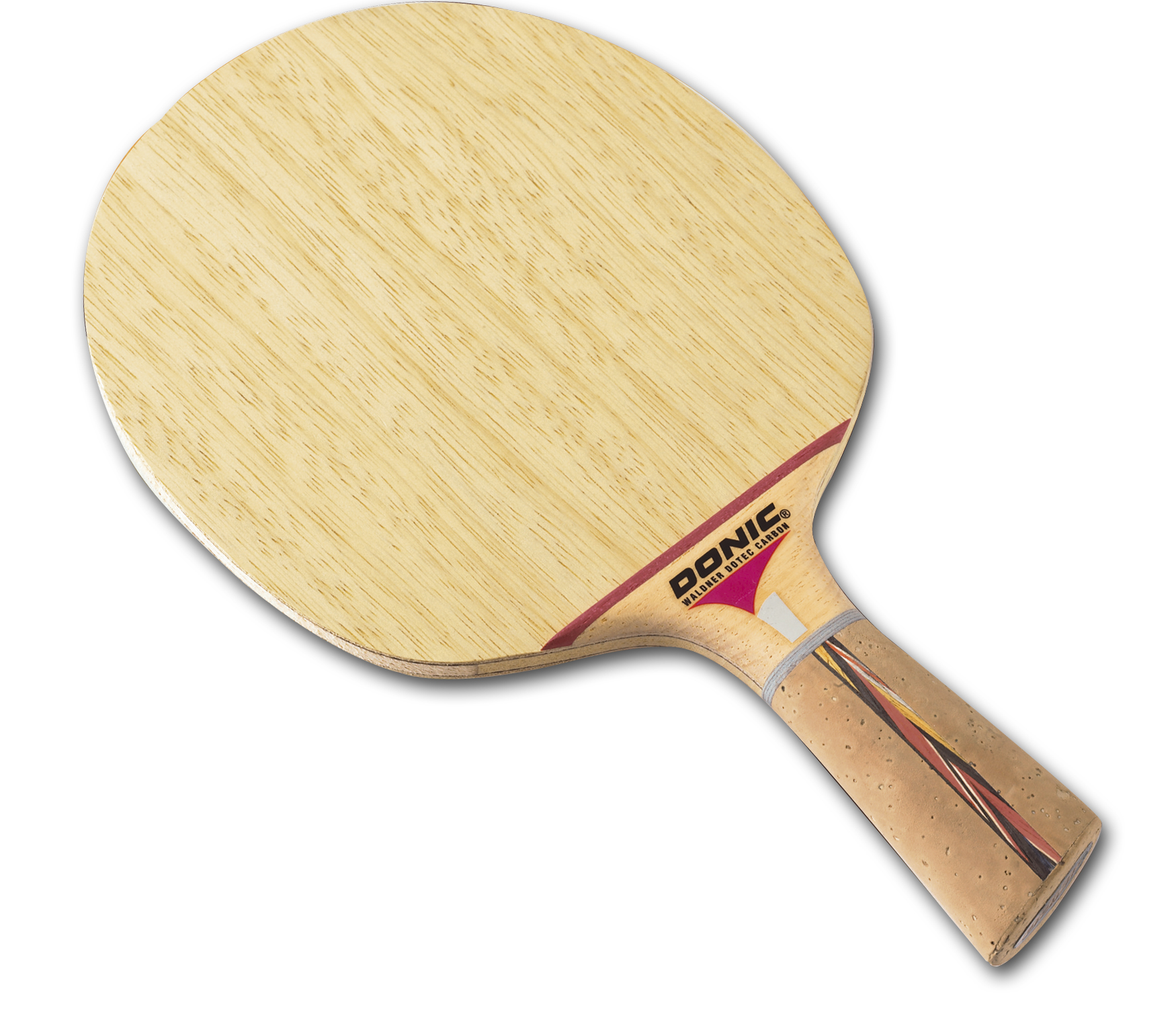
Two features set the Donic Waldner Dotec Carbon apart from the rest of the brand’s lineup. The first is Donic’s Dotec technology, an air-cushion Balsa core that softens ball contact without bleeding off speed, sitting alongside the carbon layers. The second is the handle, an ergonomic grip carved entirely from natural cork. Named after Jan-Ove Waldner, the blade lands in the OFF class but plays more forgiving than its construction suggests. If you have fought a slippery handle or wanted a carbon blade that does not punish off-center hits, it answers both complaints in one frame.
Performance
In play the Waldner Dotec Carbon hits like an OFF blade with a medium-stiff character. The 7-ply build — outer and middle plies of Limba around a 4mm Dotec Balsa core with two carbon layers — launches the ball with authority on full topspins and smashes, yet lets you take pace off and redirect soft balls without a fight. Reviewers rank its control-to-speed ratio among the best they have played in a carbon blade.
The carbon layers add speed and flatten the ball’s trajectory next to a pure-wood blade, while the Balsa air-cushion core and cork handle absorb the harsh feedback that stiff carbon builds usually throw back at you. One long-term user reported no vibration at all in play, crediting the cork handle’s natural dampening. At around 85 grams the blade undercuts most comparable carbon designs, which speeds up racket movement but costs you mass-based power on impact. You feel that gap most in aggressive flat-hitting exchanges.
The handle deserves its own paragraph. The shape parks your thumb so the forehand angle closes slightly and the backhand angle opens slightly. Most reviewers adapted inside a session or two and found the forehand loop more natural afterward. The flip side: the grip boxes in unconventional serve mechanics. Mount medium-soft rubbers like Rakza 7 Soft, Butterfly Rozena, or Donic Acuda Blue P2 and the blade does its best work in controlled looping and mid-distance rallying. Prefer faster tensors and you can drive it into real offensive territory without losing feedback.
What Reviewers Agree (and Disagree) On
Across Revspin, Reddit, and Megaspin, reviewers line up behind the cork handle and the unusually strong control-to-speed ratio for a carbon design. They also agree the blade sits at OFF rather than OFF+, which keeps it more approachable than outright power blades. Durability is where the agreement breaks down. Some users have played it for multiple seasons without trouble; others — including one reviewer who burned through three blades in a row — cracked the cork-to-wood joint inside a month. Weight divides them too: lighter players read the 85g figure as an asset for arm speed, while those used to heavier blades feel the loss of penetrating power in pressure exchanges.
Who Should Buy It
The Waldner Dotec Carbon fits intermediate players moving into carbon without giving up control, and advanced players whose game runs on consistent topspin rather than flat power. Sweaty hands are its sweet spot — the cork handle beats plastic and wood grips in wet conditions. It also suits mid-distance loopers, players who want vibration-dampened feedback for touch shots, and anyone stepping up speed from a softer all-round blade. Flat hitters and players who demand top-tier OFF+ pace should look at faster blades.
FAQ
What speed class is the Donic Waldner Dotec Carbon?
Donic rates it OFF, at the faster end of the intermediate carbon category. It stops short of OFF+ or OFF++, which keeps it more forgiving for players who are not yet chasing maximum pace.
How many plies does the Waldner Dotec Carbon have?
It is a 7-ply blade composed of two outer Limba plies, two inner Limba plies, two carbon layers, and a central Dotec Balsa air-cushion core.
Is the cork handle prone to cracking?
Some users have seen cracks form where the cork handle meets the wooden blade body, and it shows up more under heavy daily use. The non-carbon Waldner Dotec models draw fewer joint complaints, likely because they flex more.
What rubbers pair well with this blade?
Medium-soft tensors and control-oriented Chinese rubbers suit the blade’s feel. Players report good results with Rakza 7 Soft, Butterfly Rozena, Donic Acuda Blue P2, and the Xiom Vega series.
Is this blade suitable for beginners?
It works for advanced beginners and intermediates who want more speed than an all-round blade gives. True beginners will struggle with even this blade’s pace until their strokes settle.
Does the handle suit both right and left handers?
Yes. Donic makes the Dotec handle in right- and left-handed versions, so southpaws get the same ergonomic cork grip without compromise.
Sourced From
This review synthesizes opinions from 3 independent community sources: