Butterfly Primorac Review: The Classic 5-Ply All-Wood Control Blade That Still Earns Its Place
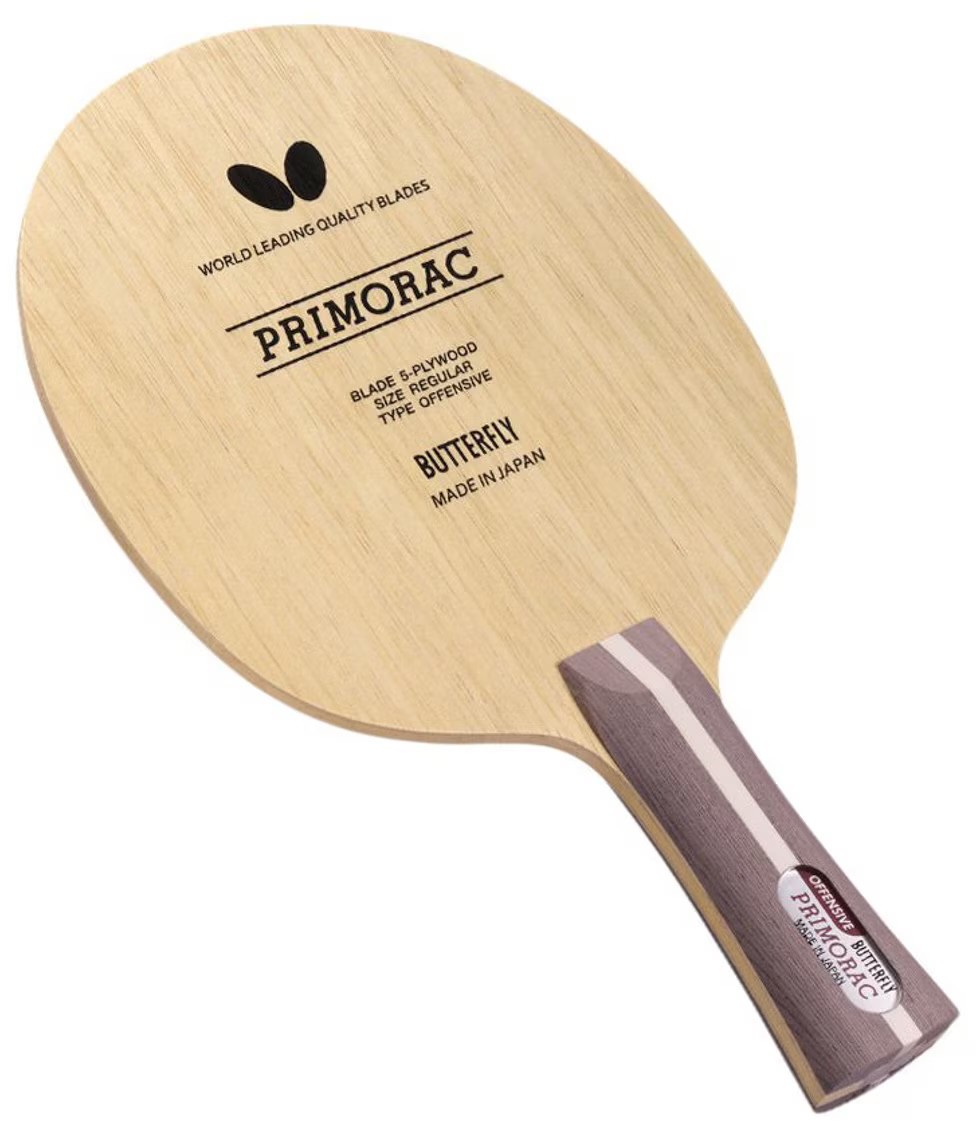
Pros
- Excellent control and a long, satisfying dwell that rewards spin and placement
- Classic, clean all-wood feel from a Limba-Limba-Ayous-Limba-Limba build
- Butterfly build quality and durability owners report lasting five years and more
- Forgiving and easy to play, ideal as a first serious or control-first blade
- Pairs with European tensors, pips and tacky Chinese rubbers alike
- Suits developing loopers, classic all-round players and even defenders
Cons
- Limited top-end speed, which many players outgrow as their level rises
- Can feel underpowered with the modern plastic ball compared to faster OFF blades
- Needs to be sealed to prevent wood chips when changing rubbers
- Frequently confused with the much faster, less controllable Primorac Carbon
Named for Croatian star Zoran Primorac, this is one of the most recognizable all-wood blades in the sport and a staple recommendation for players moving from a pre-made bat to a first serious custom setup. It is a 5-ply all-wood blade with a Limba-Limba-Ayous-Limba-Limba construction, classified by Butterfly as OFF-, though in practice many players read it closer to ALL+. This review pulls from three independent real-world sources: years of user reviews aggregated on Revspin, ongoing discussion in Reddit’s r/tabletennis community, and a large body of verified buyer reviews from the retailer Megaspin. The picture is strikingly consistent — a control-first, beautifully built all-wood classic whose one real trade-off is speed.
Performance
Control is the Primorac’s defining quality. Across all three sources, players describe long dwell, a clean classic all-wood feel, and a forgiving, predictable response that makes spin and placement easy. The 5-ply Limba-Limba-Ayous-Limba-Limba build sits around 5.5 to 6.0mm thick and weighs roughly 83 to 90g depending on the example, with both flared and straight handles on offer.
The Revspin reviews fill in the rest. One long-term owner praised its excellent control and beautiful feel, and went back to it even after trying a carbon blade because the Primorac matched the speed with more control. Another called it a very well built 5-ply all-wood blade that is perfect for new, intermediate and advanced players who favour control over speed, putting its speed at something like ALL+ or OFF- that can go faster with fast tensor rubbers. A third used it for five years with little to no complaints, finding it works best with Tenergy 05 but plays well with almost any European tensor, and noting it even suits defenders.
Speed is the big debate. Many Megaspin buyers find it too slow next to other OFF blades — one scored it 7 out of 10 for speed against 9 out of 10 for control, and several flag it as underpowered with the modern plastic ball. A minority push back hard. One Revspin reviewer testing a Made-in-Japan example called it nearly stiff, fast enough and very controlled, with plenty of speed to finish the point, and insisted it is not a slow blade at all. The honest read is that the Primorac makes its pace from your technique and the right rubbers, not from the blade alone — which is precisely why it gets recommended as a developmental and control blade rather than a pure speed weapon. On Reddit, players keep pairing it with affordable tensors like Rozena, Donic Acuda S1 and the Tibhar EL series, and coaches keep suggesting it for low-intermediate players building a first custom racket.
What Reviewers Agree (and Disagree) On
The consensus across Revspin, Reddit and Megaspin is striking: a high-control, high-quality, classic all-wood blade with a beautiful feel, broad rubber compatibility and excellent durability, good from beginner to professional. The only real disagreement is speed. The majority, especially Megaspin buyers and improving Revspin owners, find it on the slow side and expect players to outgrow its pace, the plastic ball making that worse. A vocal minority — Made-in-Japan owners and fast-tensor users — argue it has plenty of speed to finish points and that calling it slow is wrong. A second warning comes up loudly on both Revspin and Reddit: do not confuse the all-wood Primorac with the much faster Primorac Carbon. Several players regret buying the carbon version because it gives up the control the wood one is loved for.
Who Should Buy It
Buy the Primorac if you are a developing intermediate attacker or a control-first all-rounder building your first serious custom setup and you value feel, dwell and spin over raw speed. It forgives enough to learn proper looping and short-game technique on, lasts for years, and pairs with almost any rubber — European tensors like Rozena and Acuda, pips, tacky Chinese sheets. It also suits classic all-round players and even defenders who want a clean wood feel. Look elsewhere, or budget for a faster OFF blade, if you are an advanced attacker who needs real top-end power, especially with the modern plastic ball, or if you specifically want the carbon model’s speed. And before you buy, double-check you are getting the all-wood Primorac and not the Primorac Carbon, because they play nothing alike.
FAQ
Is the Butterfly Primorac good for beginners?
Yes. It is one of the most-recommended first serious blades for players moving up from a pre-made bat. The control, forgiving feel and durability make proper technique easy to learn, and it pairs well with affordable rubbers like Rozena.
Is the Primorac all wood or does it have carbon?
The standard Primorac is a 5-ply all-wood blade with a Limba-Limba-Ayous-Limba-Limba construction. There is a separate, much faster blade called the Primorac Carbon — a different product entirely. For the classic control blade, buy the all-wood version.
Is the Primorac too slow for the modern plastic ball?
Opinions split. Many find it on the slow side against other OFF blades and outgrow its pace as they improve, while fast-tensor users and Made-in-Japan owners say it has more than enough speed to finish points. With this blade, speed comes mostly from your rubbers and your technique.
What rubbers pair well with the Primorac?
It is very versatile. Owners report good results with European tensors such as Tenergy 05, Rozena, Donic Acuda S1 and the Tibhar EL series, while others successfully use pips or tacky Chinese rubbers. Faster tensors add pace, while softer rubbers lean into its control.
Do I need to seal the Primorac blade?
It is a good idea. Some owners note the soft outer Limba can chip when removing rubbers, so sealing the surface helps protect the wood and extend the blade’s already excellent durability.