Butterfly Primorac vs Donic Waldner Allplay: Which Should You Buy?
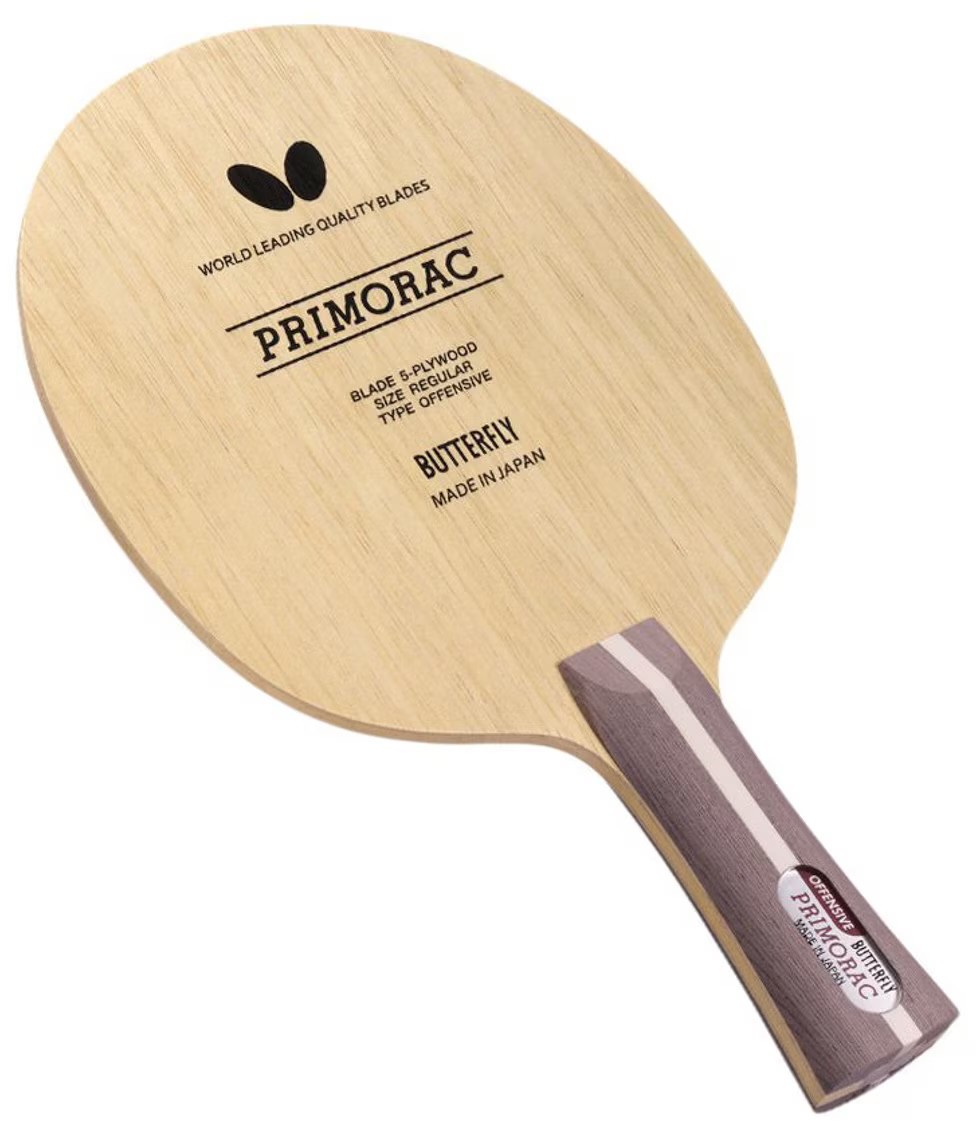
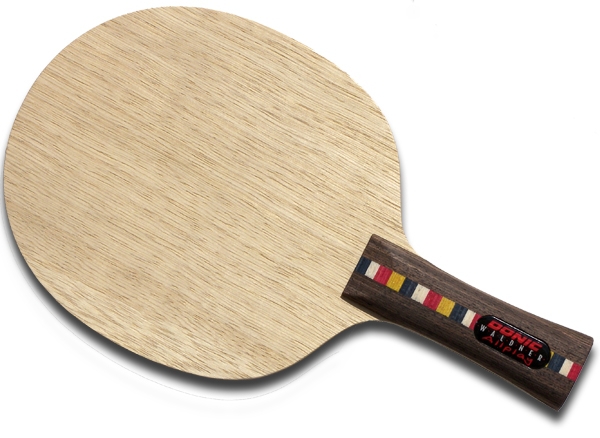
| Butterfly Primorac | Donic Waldner Allplay | |
|---|---|---|
| Our rating | 8.3/10 | 8.2/10 |
| feel | medium, classic all-wood, long dwell and high control | Soft and forgiving with good dwell time, slight stiffness at sweet spot |
| handle | FL/ST | FL (flared), classic dark-brown wood |
| plies | 5W (all wood) — Limba/Limba/Ayous/Limba/Limba | 5-ply all wood (Limba-Ayous-Ayous-Ayous-Limba) |
| speed | OFF- | ALL |
| thickness_mm | 6 | 5.4-5.6 mm |
| weight_g | 85 | approx 85-87 g |
We may earn a commission from links on this page. Learn more.
The Short Answer
Both blades are built for the same job — teach control and touch before speed — and both land within a tenth of a rating point of each other overall, 8.3 for the Primorac against 8.2 for the Waldner Allplay. But the axis data shows they are not identical twins. The Waldner Allplay pulls ahead on control (9.0 vs 8.8) and consistency (9.2 vs 8.4), while the Primorac is the stiffer, marginally faster blade of the two.
Where the Numbers Actually Diverge
The consistency gap is the biggest real signal here: 9.2 for the Waldner Allplay against 8.4 for the Primorac, a 0.8-point difference. Unlike some of the more suspicious swings in this product family, this one is backed up by the Waldner’s own review data — Revspin, the TableTennis11 Blog and TableTennisDaily forum threads all describe it as rock-solid on blocking with direct ball feedback, which is exactly what a high consistency score should predict. If your game leans on blocking and steady rally play rather than free-swinging loops, that 0.8-point edge is worth taking seriously.
Stiffness moves the other direction: the Primorac is 0.6 stiffer (4.4 vs 3.8), which lines up with its OFF- speed classification against the Waldner’s slower ALL rating. Hardness also favors the Waldner slightly (5.4 vs 4.9). None of these differences are dramatic on their own, but stacked together they describe two blades sitting on either side of the same soft-control category: the Primorac a touch livelier and stiffer, the Waldner Allplay a touch softer and more forgiving.
Where They’re Basically Tied
Speed is close enough to ignore as a deciding factor — 7.6 for the Primorac against 7.3 for the Waldner, a 0.3-point gap. Control is even closer, 8.8 versus 9.0, just 0.2 apart. If you are choosing based on raw speed or outright control ceiling, neither number should move you; the practical differences live in stiffness, consistency and the physical build described below.
Setup and Compatibility
Both blades share a 5-ply all-wood construction using Limba veneers, but the layups differ: the Primorac runs Limba-Limba-Ayous-Limba-Limba at a flat 6mm, while the Waldner Allplay runs Limba-Ayous-Ayous-Ayous-Limba at a slightly thinner 5.4 to 5.6mm. Both are compatible with a wide range of rubbers — the Waldner’s own pros list specifically calls out pimples and tacky rubbers working well on it, mirroring the Primorac’s claim of pairing with tensors, pips and tacky Chinese sheets alike. Handle-wise, the Primorac offers FL and ST, while the Waldner Allplay is FL only, in a classic dark-brown wood finish.
One real weakness shows up only in the Waldner Allplay’s own cons: a narrower sweet spot and smaller playing surface that increases edge-ball risk, plus limited power on forehand loops unless paired with a fast, non-tacky rubber. The Primorac’s cons focus instead on outgrowing its top-end speed as your level rises. These are different failure modes — the Waldner risks mis-hits near the edges, the Primorac risks feeling slow once you’re ready to attack.
Should You Switch
If you already own a Primorac and are drawn to the Waldner Allplay for its higher consistency score, know what you are trading: a smaller, less forgiving sweet spot and a small step down in speed and stiffness, in exchange for measurably better blocking consistency and control per its own review base. That is a real trade for a defender or a block-heavy all-rounder, but not an obvious upgrade for a developing attacker.
Going the other way, from the Waldner Allplay to the Primorac, the case is about outgrowing the Waldner’s specific limitations: more forehand loop power without needing a fast non-tacky rubber to compensate, a slightly larger and more forgiving sweet spot, and a bit more stiffness for players ready to swing harder. Butterfly’s own bestFor guidance backs this up, placing the Primorac at developing intermediate attackers and control-first all-rounders building a first serious custom setup, while Donic pitches the Waldner Allplay at beginners and intermediates prioritizing control and consistency over speed, plus value-conscious buyers wanting an affordable all-wood option.
Bottom Line
Pick the Waldner Allplay if blocking consistency and price are your priorities and you can live with a smaller sweet spot. Pick the Primorac if you want a slightly stiffer, more attack-capable platform to grow into as your forehand loop develops. Neither is a wrong answer at this price and performance tier — this is a preference call, not an upgrade path.
Frequently asked questions
Is the Donic Waldner Allplay more consistent than the Butterfly Primorac?
Yes, by a real margin. Revspin's aggregated consistency score is 9.2 for the Waldner Allplay against 8.4 for the Primorac, a 0.8-point gap that lines up with the Waldner's own reputation for rock-solid blocking feedback.
Which blade has the bigger sweet spot?
The Primorac. The Waldner Allplay's own cons list specifically flags a narrower sweet spot and smaller playing surface that raises edge-ball risk, a tradeoff not mentioned for the Primorac.
Are these two blades roughly the same speed?
Close enough not to matter. The Primorac rates 7.6 and the Waldner Allplay 7.3 on Revspin's speed axis, a 0.3-point gap that will not be noticeable in a real rally.