Butterfly Primorac vs Tibhar Stratus Power Wood: Which Should You Buy?
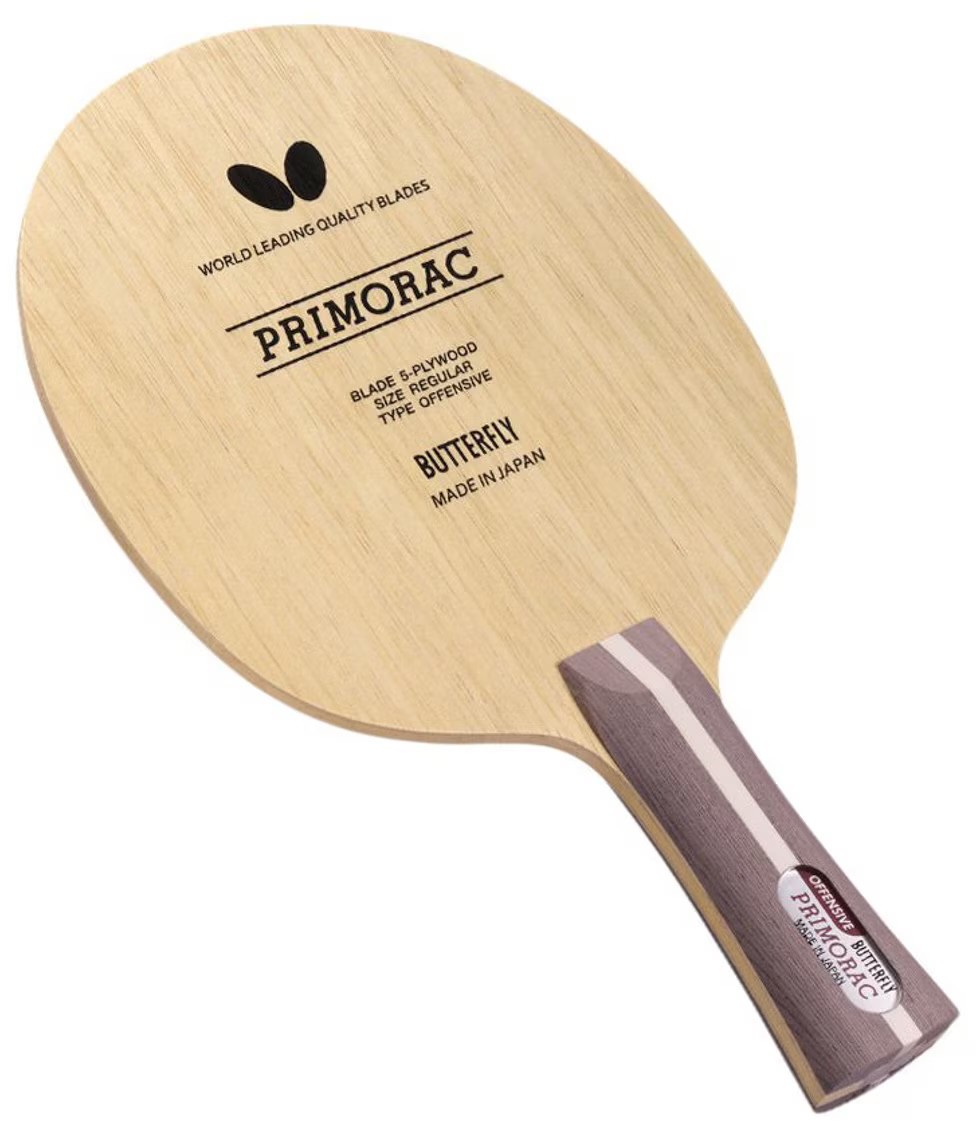
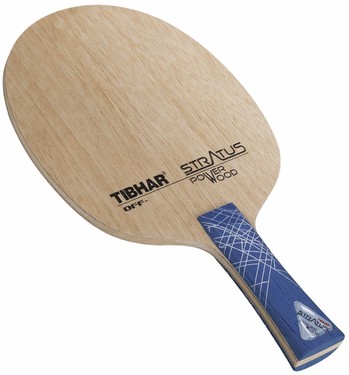
| Butterfly Primorac | Tibhar Stratus Power Wood | |
|---|---|---|
| Our rating | 8.3/10 | 9.0/10 |
| Feel | medium, classic all-wood, long dwell and high control | Elastic with long dwell time, lively yet controlled, larger-than-average head and big sweet spot |
| Handle | FL/ST | FL / ST / AN |
| Plies | 5W (all wood) — Limba/Limba/Ayous/Limba/Limba | 5-ply all wood (Limba-Limba-Ayous-Limba-Limba) |
| Speed | OFF- | OFF- |
| Sponge thickness | 6 mm | 6.2 mm |
| Weight | 85 g | 90 g |
We may earn a commission from links on this page. Learn more.
The Short Answer
This is the one pairing in this batch where the numbers actually move a lot. The Tibhar Stratus Power Wood rates 9.0 overall against the Primorac’s 8.3, and the axis data explains why: it is 1.3 points faster (8.9 vs 7.6), 1.8 points heavier by feel (8.2 vs 6.4 on the weight axis), 0.5 points more controlled, and 0.7 points more consistent. Across six axes, every single one favors the Stratus Power Wood. If you are trying to decide which blade is objectively the stronger all-around performer per aggregated user data, it is not close.
The Paradox Worth Knowing About
Here is the detail that only axis-level data can surface: both blades carry the exact same manufacturer speed classification, OFF-, and per the spec sheet they even share an identical five-ply wood layup, Limba-Limba-Ayous-Limba-Limba. Two blades with the same printed speed category and the same wood recipe should play similarly. They do not — real aggregated user speed ratings put 1.3 points between them, the largest speed gap in this entire product family. That gap has to come from somewhere other than the wood species, and the spec sheet points to it: the Stratus Power Wood runs slightly thicker (6.2mm vs 6mm) and heavier (90g vs 85g), with a larger-than-average head and bigger sweet spot per its own pros list. The lesson for anyone shopping by printed OFF-/ALL/ALL+ ratings alone: those labels compress a lot of real variation, and the Stratus Power Wood is proof a blade can wear the same speed label as a rival and still play meaningfully faster.
Where the Data Says They Actually Differ
Speed is the headline, but weight matters just as much in practice. An 8.2 versus 6.4 on the weight axis is a real, feelable difference in swing weight and plow-through, not a rounding gap. Combined with the larger head and sweet spot Tibhar builds into the Stratus Power Wood, this is a blade that rewards committing to full strokes rather than delicate touch shots. Control also favors the Stratus Power Wood (9.3 vs 8.8), which is notable because more speed usually costs control — this blade appears to buck that tradeoff, at least per its aggregated review base across Reddit r/tabletennis, the Tabletennis11 Blog and Megaspin.
Where the Gap Is Real But Smaller
Consistency (9.1 vs 8.4) and hardness (5.4 vs 4.9) both favor the Stratus Power Wood by around half a point to 0.7 — real, but not dramatic. These are second-order differences you would notice over weeks of play, not shots you would immediately feel.
Fit and a Genuine Warning
The two blades’ own bestFor and cons data point at different players, and one line deserves special attention. The Primorac’s own bestFor description explicitly includes “classic all-round players and even defenders” among its ideal users. The Stratus Power Wood’s own cons list says the opposite in different words: it “plays faster than its OFF- rating suggests, so not ideal for control-first defenders.” That is not a subtle distinction — if you chop, block, or play a classic all-round defensive game, the product data itself is telling you the Stratus Power Wood is the wrong tool, regardless of its higher overall rating. Ratings measure average satisfaction across all buyers, not fit for your specific style.
Tibhar’s own bestFor guidance targets the Stratus Power Wood at beginner-to-intermediate two-winged loopers wanting a forgiving, spin-friendly, all-wood blade with real attacking speed at what its reviewers repeatedly call an unbeatable price. The Primorac is pitched instead at developing intermediate attackers and control-first all-rounders building a first serious custom setup — a narrower, more control-first lane.
Should You Switch
If you are a two-winged looper currently on the Primorac and finding it underpowered — which is literally listed in the Primorac’s own cons as something players outgrow — the Stratus Power Wood is a legitimate upgrade path backed by real speed, control and consistency gains across the board. If you are a defender, chopper, or play primarily a control-first, close-to-table game, stay on the Primorac; the Stratus Power Wood’s own review data says it will not suit that style.
Bottom Line
The Stratus Power Wood is the faster, heavier, higher-rated blade almost across the board, and it earns that with a bigger head and sweet spot rather than a different wood recipe. But higher-rated does not mean universally better — its own cons rule out exactly the defensive, control-first players the Primorac is built for.
Frequently asked questions
Why is the Tibhar Stratus Power Wood so much faster if it has the same OFF- speed rating as the Primorac?
Both carry the same printed OFF- classification and even the same five-ply wood layup, but real aggregated user ratings show a 1.3-point speed gap, the biggest in this product line. The difference likely comes from the Stratus Power Wood's slightly thicker build, extra weight, and larger head and sweet spot rather than the wood species itself.
Is the Tibhar Stratus Power Wood good for defensive or chopping players?
No, according to its own listed cons, which specifically flag that it plays faster than its OFF- rating suggests and is not ideal for control-first defenders. The Primorac's bestFor description explicitly includes defenders as a good fit, making it the better choice for that style.
Which blade is heavier, the Primorac or the Stratus Power Wood?
The Stratus Power Wood, both on paper (90g vs 85g) and on the aggregated weight-feel axis, where it scores 8.2 against the Primorac's 6.4, a 1.8-point gap that is one of the largest differences between any two products in this comparison set.
Is the Stratus Power Wood really the better blade overall?
By aggregated rating, yes — 9.0 versus 8.3, with every one of the six shared axes favoring it. But its own cons rule out control-first defensive players, so 'better overall' does not mean 'better for you' if your game is built around blocking and chopping.