Sanwei V5 Pro vs Yasaka Ma Lin Carbon: Which Should You Buy?
| Sanwei V5 Pro | Yasaka Ma Lin Carbon | |
|---|---|---|
| Our rating | 8.5/10 | 8.4/10 |
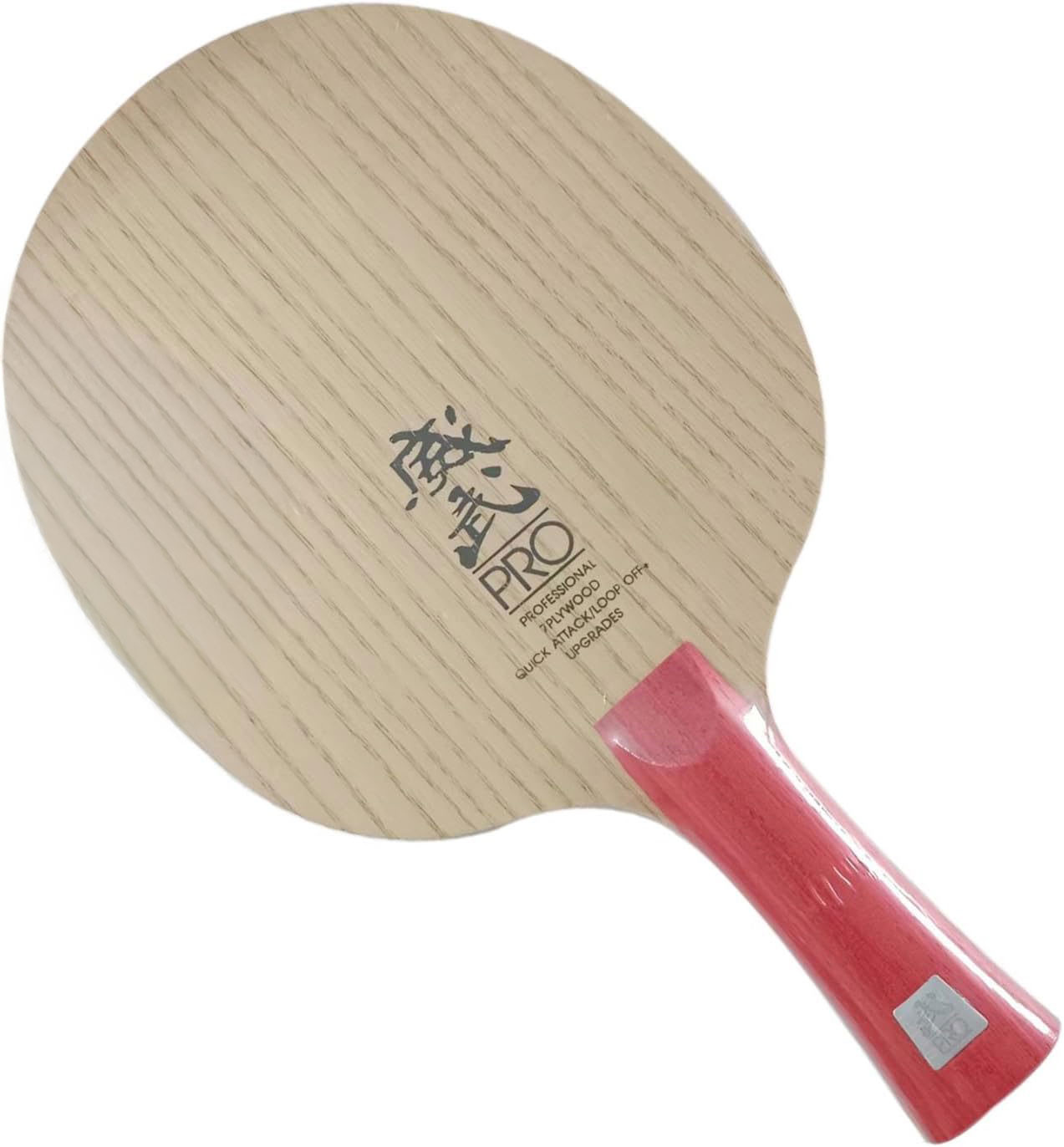
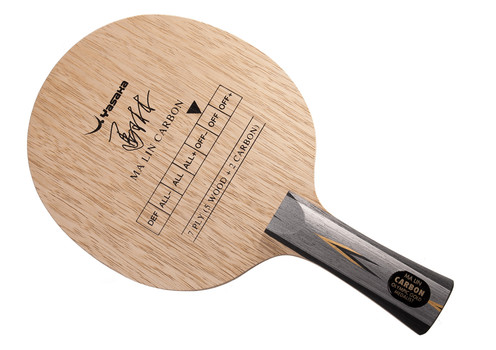
| feel | hard, fast, crisp all-wood with strong vibration and a high-pitched ping | medium-hard carbon, controllable, excellent value |
| handle | FL/ST | FL |
| plies | 7W (all wood) — ash outer plies over an ayous core | 5 ply wood + 2 ply Carbon (limba/ayous with a carbon layer) |
| speed | OFF | OFF- |
| thickness_mm | 6.3 | 6 |
| weight_g | 90 | 88 |
We may earn a commission from links on this page. Learn more.
The Sanwei V5 Pro is the more direct attacking blade. Its 7-ply all-wood build delivers a fast, crisp, high-pitched pace with strong vibration, but it punishes imprecise strokes and rewards solid technique. The Yasaka Ma Lin Carbon takes a calmer route: an inner carbon layer gives a large sweet spot, very forgiving short play and blocking, plus a stiff carbon kick that climbs on hard impact.
Both are excellent value and neither is truly fast at light contact, so you bring the power either way. Choose the V5 Pro if you want all-wood feel with more bite and feedback. Choose the Ma Lin Carbon if you want carbon forgiveness, easy forehand-to-backhand transitions and a controllable, blocker-friendly base.
All-round attackers and penholders who want margin and easy control lean Yasaka; players who prefer hard all-wood feel and a more aggressive ping lean Sanwei.
FAQ
Does the Ma Lin Carbon feel like a typical fast carbon blade?
No. It uses inner carbon for control rather than raw speed, so it is forgiving and not fast at light impact. You must drive the ball with a full stroke to unlock its pace.
Which has the bigger sweet spot?
Both are forgiving, but the Ma Lin Carbon is noted for an especially large sweet spot and easy blocking. The V5 Pro also has a large sweet spot for an all-wood offensive blade.
Is weight consistent?
Both can vary copy to copy. The Ma Lin Carbon has been reported anywhere from around 81 to 91 grams, and the V5 Pro also shows some weight and ply variance between units.