Nittaku Fastarc C-1 vs Yasaka Mark V: Which Should You Buy?
| Nittaku Fastarc C-1 | Yasaka Mark V | |
|---|---|---|
| Our rating | 8.4/10 | 8.0/10 |
| best_side | backhand or allround | both |
| control | high | 9.5 |
| speed | 15.25 (Nittaku scale) | 8.4 |
| spin | 12.25 (Nittaku scale) | 8.5 |
| sponge_hardness | 45 degrees | medium (around 43 degrees ESN) |
| type | inverted / tensor | inverted |
| weight_uncut_g | approx 47 g (157 x 150 mm sheet) | 47 |
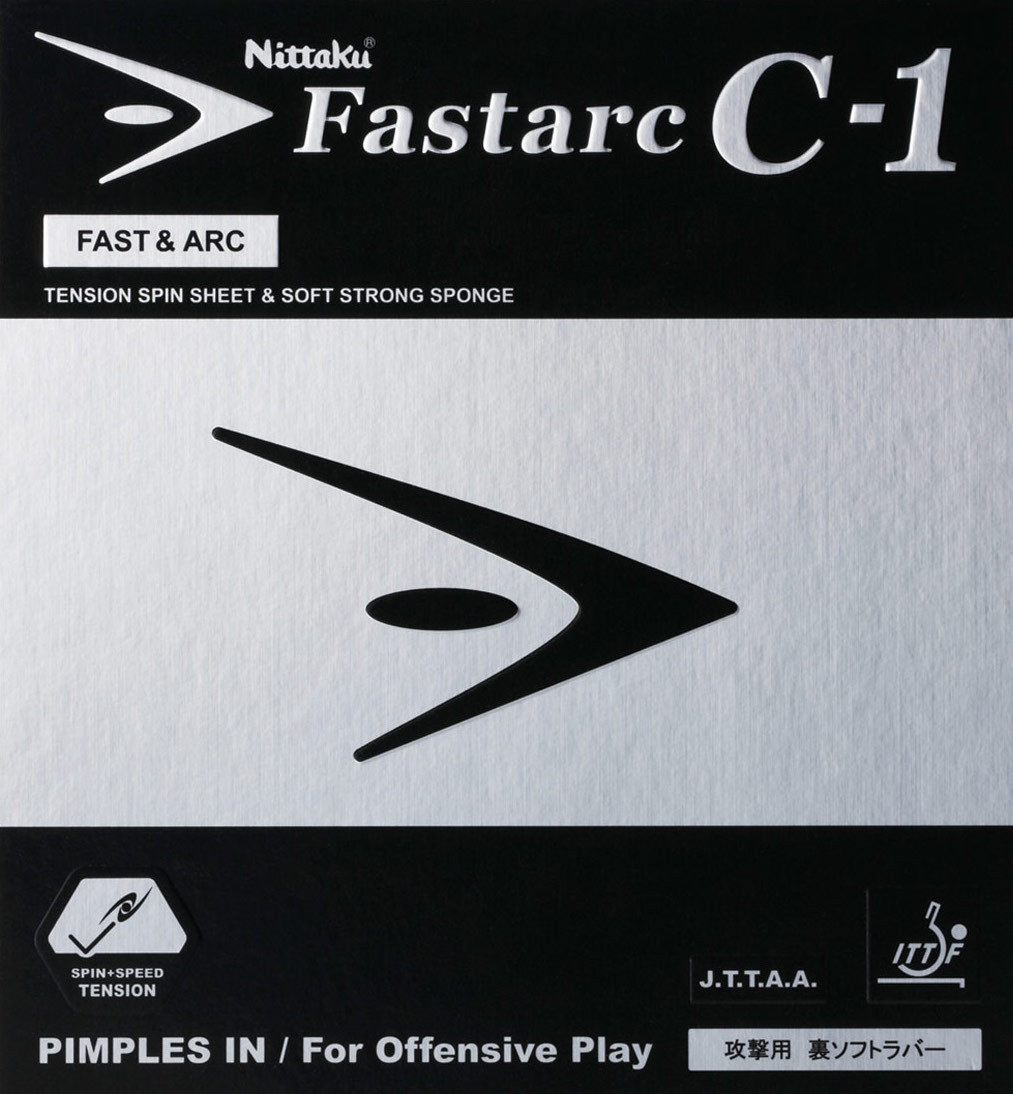
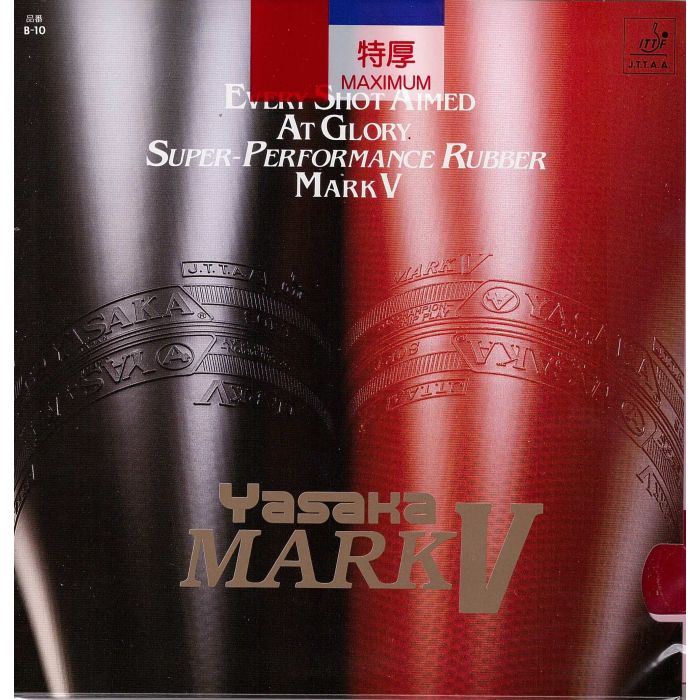
We may earn a commission from links on this page. Learn more.
A Modern Tensor Against a Rubber Built for a Ball That No Longer Exists
Yasaka Mark V is not a fair, apples-to-apples opponent for Nittaku Fastarc C-1, and its own review says why: Mark V performs noticeably worse with modern plastic balls because it was designed and tuned around celluloid. Nearly every axis where C-1 pulls ahead, speed by a full point (9.0 vs 8.0), spin by 0.9 (9.1 vs 8.2), and throw by a full point (5.4 vs 4.4), has to be read through that lens. Some of Mark V’s gap is genuinely C-1 being a more modern, capable rubber. Some of it is Mark V being scored against equipment it was never built for.
Control: The Surprising Result
Here is the number that will surprise anyone who thinks of Mark V as the control rubber: on this data, C-1 actually controls better, 9.2 to 8.7, a 0.5-point gap. Mark V’s own review does claim class-leading control near or at a perfect 10 from some reviewers, so there is clearly a split between subjective reviewer praise and the aggregated score here. The likely explanation, again, is the ball. Mark V’s flat, low-throw trajectory and famously low spin sensitivity were built around celluloid’s different bounce and spin characteristics; with modern plastic balls, some of that legendary control edge does not translate as cleanly, which is consistent with why the con list flags a flat trajectory that does not bite the ball on loops.
Where Mark V Actually Wins: Tackiness and Durability
Mark V is not without real advantages. Tackiness runs 2.6 versus C-1’s 2.0, a genuine 0.6-point edge, and durability is essentially a wash with Mark V slightly ahead, 8.7 to 8.4. That durability lean fits Mark V’s decades-long reputation as a non-tensor sheet that simply does not degrade the way modern speed-glue-era tensors do; it is famous for lasting through years of casual play, not months.
The Spin-Insensitivity Trade
Mark V’s low spin sensitivity is a genuinely useful, non-obvious property, and its review calls it out directly: it makes returns against varied incoming spin easy because the rubber does not react violently to spin it did not generate. That is real value for a certain kind of player, someone who struggles reading serves, or an older or returning player who wants predictability over ceiling. C-1, by contrast, needs active strokes and rewards technical looping; it will not hand you that same forgiveness on serve return.
Should You Switch?
If you are currently a Mark V player because you like its control reputation and forgiving feel, moving to C-1 is not a small upgrade, it is a different rubber category, requiring more active technique to unlock its spin and control advantages. You would gain real speed, spin, and throw headroom, and, per this data, actually gain a bit of control too, but you would lose the flat, predictable, spin-insensitive character that many long-time Mark V players specifically prefer. Going the other way, from C-1 to Mark V, makes sense only if you are deliberately chasing that classic feel, want maximum durability from a non-tensor sheet, or are training with celluloid-era habits, not as a performance upgrade.
Who Each One Fits
Mark V fits beginners building technique, value-focused allrounders, and returning players who prize feel, consistency, and a long-lasting, forgiving rubber over raw tensor speed, its own bestFor description says exactly that. C-1 fits intermediate-to-advanced offensive players who loop heavily and want premium tensor spin with a forgiving arc. These are rubbers from different eras of the sport serving different priorities; the axis gaps here are real, but so is the caveat that Mark V was never built for the ball it is now being scored against.
Frequently asked questions
Is Mark V really the best control rubber, as its reputation suggests?
The data here says it is close but not ahead, Mark V scores 8.7 on control versus C-1's 9.2. Some of that may reflect Mark V being tuned for celluloid balls rather than the modern plastic ball.
Does Mark V work with today's plastic balls?
Not as well as with celluloid. Its own review states it performs noticeably worse with modern plastic balls, an important caveat for any speed or spin comparison against a modern rubber like C-1.
Which rubber lasts longer?
They are close, with Mark V very slightly ahead, 8.7 vs 8.4. Mark V is a non-tensor sheet and is famous for extremely long usable life.
Should I switch from Mark V to Fastarc C-1?
Only if you want more speed, spin, and throw and are ready to use more active strokes. You will give up Mark V's low spin sensitivity and predictable, forgiving feel on serve returns.