Loki RXTON 1 vs Yinhe Big Dipper: Which Should You Buy?
| Loki RXTON 1 | Yinhe Big Dipper | |
|---|---|---|
| Our rating | 8.0/10 | 8.4/10 |
| Best side | Both wings | Forehand |
| Control | very high | high |
| Speed | low to medium | medium (offensive) |
| Spin | high | extreme |
| Sponge hardness | medium (around 38-39 degrees Chinese scale, roughly 50-52 ESN) | 38/39/40 degrees (provincial-style blue sponge; 39 measures roughly 51 ESN) |
| Type | tacky inverted (budget) | hybrid tacky (blue sponge) |
| Uncut weight | 64 g | 68 g |
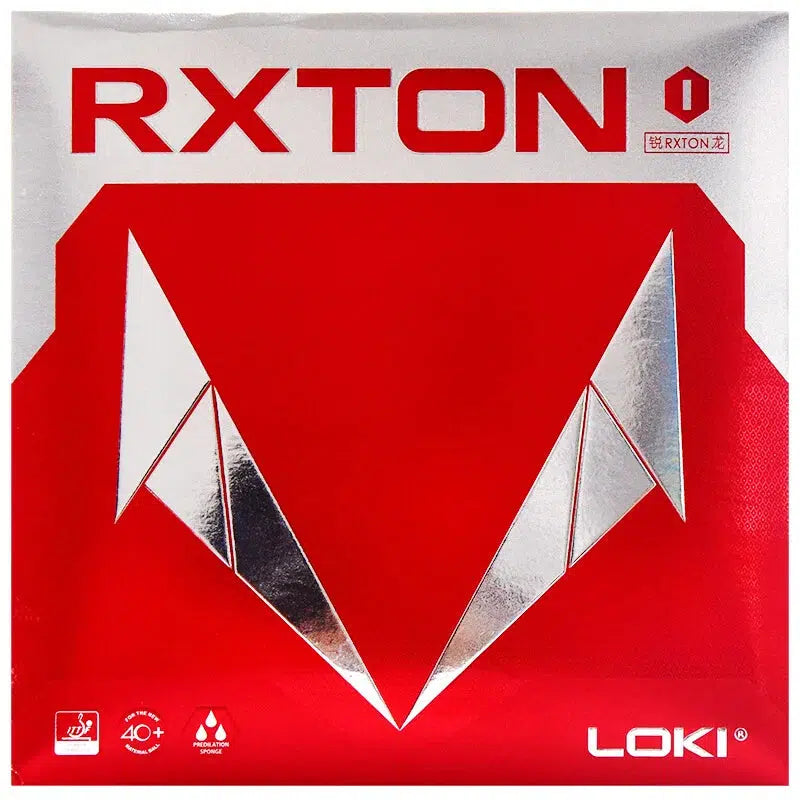
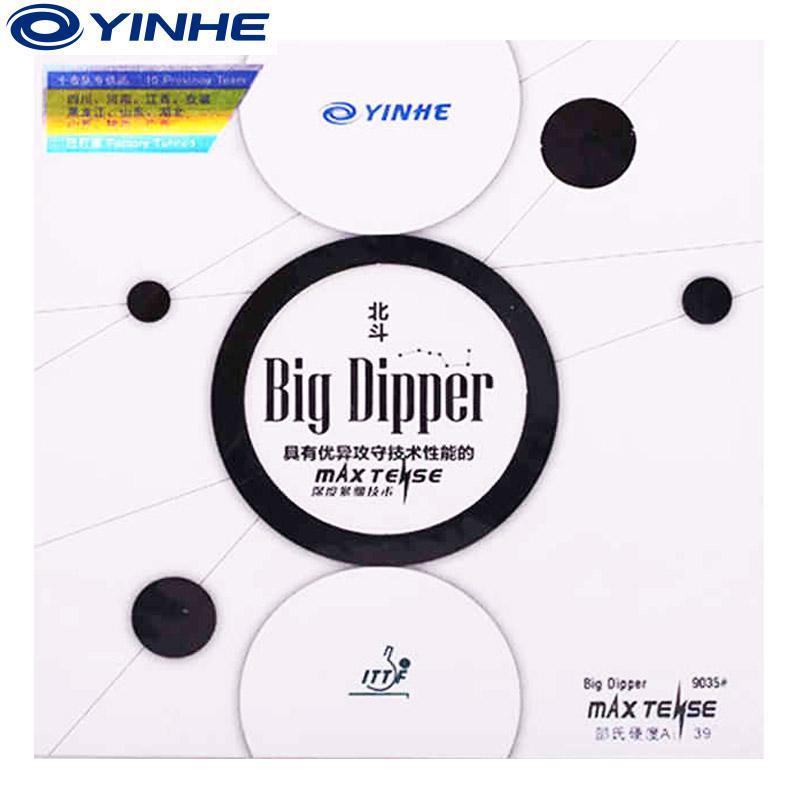
We may earn a commission from links on this page. Learn more.
The short answer
Yinhe Big Dipper is a genuine step up in performance from Loki RXTON 1 across nearly every axis except control, where the two are effectively tied. Big Dipper is built and marketed as a budget alternative to Hurricane 3 Neo — a modern porous blue-sponge Chinese rubber for spin-first attackers — while RXTON 1 is a pure beginner control sheet. If you’ve outgrown a control rubber and want real forehand spin without paying tensor prices, Big Dipper is the clear upgrade; if you’re still building basic technique, RXTON 1’s gentler learning curve may serve you better in the short term.
What the axis numbers say
Speed: Big Dipper leads by 2.6 points (8.6 vs 6.0), the largest gap in this comparison. Big Dipper’s own review copy warns it is “slow and demanding at lower power” and “rewards hard active hitting” — meaning this speed advantage only shows up when you swing with real commitment, not on soft, passive strokes.
Spin: a 1.4-point gap in Big Dipper’s favor (8.9 vs 7.5). Reviewers describe Big Dipper as delivering “exceptional spin on serves, brushed loops and pushes,” with its national version described as approaching “a boosted blue sponge Hurricane 3” — a meaningful reference point if you’re chasing that specific Chinese-rubber spin profile.
Control: essentially a dead heat, just 0.1 points apart (8.5 for RXTON 1, 8.6 for Big Dipper). This is worth calling out explicitly because Big Dipper is marketed as an attacking rubber and RXTON 1 as a control rubber, yet the aggregated axis scores land almost identically — Big Dipper’s “outstanding stability and almost no ball slippage” appears to hold up even against a rubber built specifically for control.
Tackiness: Big Dipper is tackier by 1.6 points (5.1 vs 3.5). This connects directly to Big Dipper’s spin generation — its “modern porous blue sponge with high control for a Chinese rubber” pairs tack with sponge design in a way RXTON 1’s milder tack does not replicate.
Durability: Big Dipper leads by 2.5 points (7.5 vs 5). Combined with Big Dipper being offered in 38, 39, and 40-degree hardness options, this gives serious players more room to fine-tune their setup than RXTON 1’s single hardness offering.
Where these numbers come from
RXTON 1’s review trail runs through Revspin, a TableTennisDaily forum thread on Loki’s rubber lineup, and r/tabletennis. Big Dipper is covered by a dedicated Racket Insight review, an active r/tabletennis search thread, and a Tabletennis11 blog post that directly frames the rubber as a Hurricane 3 alternative — worth reading if you’re specifically comparing it against Chinese national-team rubber.
Is it worth switching
Moving from RXTON 1 to Big Dipper makes sense once you’re consistently generating your own spin rather than relying on incoming ball pace, since Big Dipper’s own cons note it is “not beginner friendly and weak for flat hitting on softer versions” — this is not a rubber that rewards passive play, and jumping to it too early can feel like a step backward before it clicks. Budget in some adjustment time for the stiffer sponge, which reviewers say “needs break in time and may benefit from boosting.”
Going from Big Dipper to RXTON 1 only really makes sense if you specifically need a lighter, gentler forehand or backhand option — for example while recovering technique after injury, or if you’re coaching a beginner and want a cheap, safe first rubber. Big Dipper’s near-identical control score means you’re not gaining control by downgrading, only losing spin and speed.
Who each rubber actually fits
RXTON 1 fits beginners and returning players who value control and placement over raw speed and want a cheap, replaceable option. Big Dipper fits intermediate to advanced spin-oriented attackers who want Chinese-style tacky spin on the forehand at a budget price, provided they’re willing to commit to full, active strokes or pair the rubber with a faster blade to unlock its speed — some quality control variance between sheets is also worth knowing about going in, per its own review notes.
Frequently asked questions
Is Yinhe Big Dipper a good Hurricane 3 alternative?
Reviewers frame it that way directly -- one blog review specifically compares Big Dipper's national version to a boosted blue sponge Hurricane 3, and it offers similar tacky spin at a fraction of the price.
Does Loki RXTON 1 have as much control as Yinhe Big Dipper?
Essentially yes -- the control gap is just 0.1 points (8.5 vs 8.6), despite Big Dipper being marketed as an attacking rubber and RXTON 1 as a control-first sheet.
Is Yinhe Big Dipper good for beginners?
No -- its own review notes call it not beginner friendly and weak for flat hitting on softer versions, and it specifically rewards hard, active hitting rather than passive play.
What hardness options does Yinhe Big Dipper come in?
38, 39, and 40 degrees, giving you more ability to tune your setup than RXTON 1, which is offered in a single hardness.