Donic Persson Powerplay vs Nittaku Septear: Which Should You Buy?
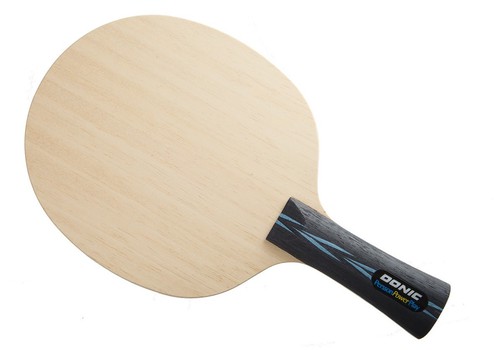
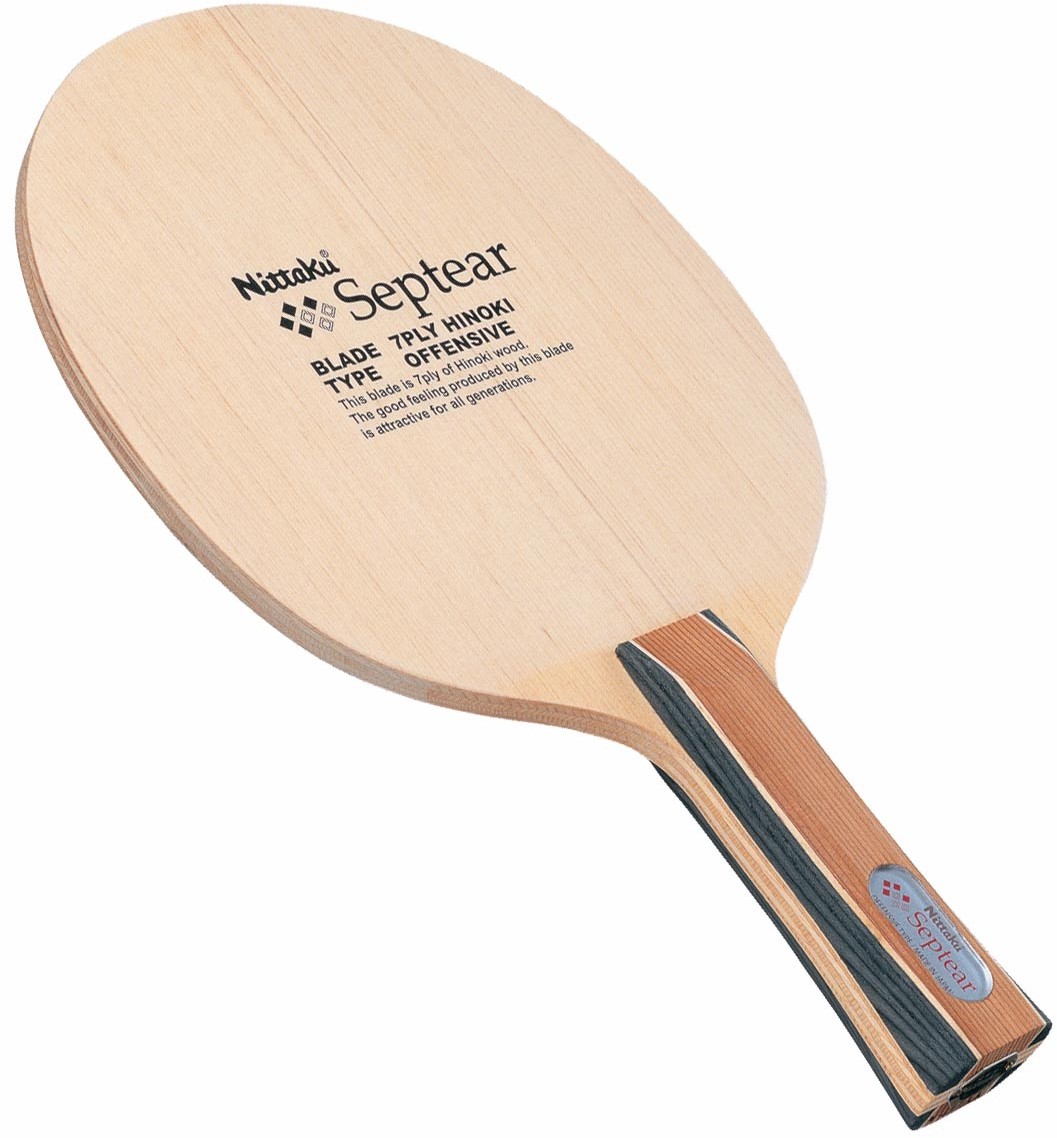
| Donic Persson Powerplay | Nittaku Septear | |
|---|---|---|
| Our rating | 8.2/10 | 8.2/10 |
| feel | Hard outer koto plies with internal foil damping layers; crisp feel with excellent feedback | Soft with high dwell time |
| handle | FL | Straight or Concave (flared) |
| plies | 7-ply all wood | 7-ply all wood (Kiso Hinoki) |
| speed | OFF | ALL+ |
| thickness_mm | 5.9 | 6.7 |
| weight_g | 90 | 85 |
We may earn a commission from links on this page. Learn more.
Persson Powerplay and Nittaku Septear are both all-wood blades but target different play styles. Powerplay is crisp, feedback-rich, and OFF-class offensive. Septear is soft, high-dwell, and explicitly control-focused.
Septear’s Kiso Hinoki wood and large sweet spot excel at loops, blocks, pushes, flicks, and smashes—genuine all-around versatility. Powerplay’s hard koto plies reward committed swings. Septear is heavier (85g) and thicker (6.7mm), amplifying dwell and feel. Powerplay is standard weight (90g) at 5.9mm. Septear demands medium-hard or harder rubbers; Powerplay tolerates wider rubber options. For all-around developing players, Septear excels. For intermediate attackers wanting crisp feedback, Powerplay is better.
FAQ
Why does Septear require hard rubber?
Soft Kiso Hinoki wood lacks stiffness. Soft rubber makes it feel dead. Medium-hard or hard sponges unlock potential.
Which has better short game?
Septear. Its high dwell and wood feel excel at blocks, pushes, and flicks.
Can Powerplay match Septear’s versatility?
No. Septear is genuinely superior for all-around play. Powerplay excels at crisp feedback attacking.
Is Septear good value?
Premium pricing reflects Japanese craftsmanship and Kiso Hinoki wood. Value depends on your prioritization of feel.
Does Septear’s handle fit large hands?
No. It is noted as thin, uncomfortable for players with large hands.