Donic Bluefire M2 vs Victas V>15 Extra: Which Should You Buy?
| Donic Bluefire M2 | Victas V>15 Extra | |
|---|---|---|
| Our rating | 8.4/10 | 8.4/10 |
| best_side | both | forehand |
| control | medium-high | 81 |
| speed | high | 94 |
| spin | high | 88 |
| sponge_hardness | around 42.5 to 45 degrees (medium) | 47.5 degrees |
| type | tensor inverted | inverted |
| weight_uncut_g | 68 | 70 |
We may earn a commission from links on this page. Learn more.
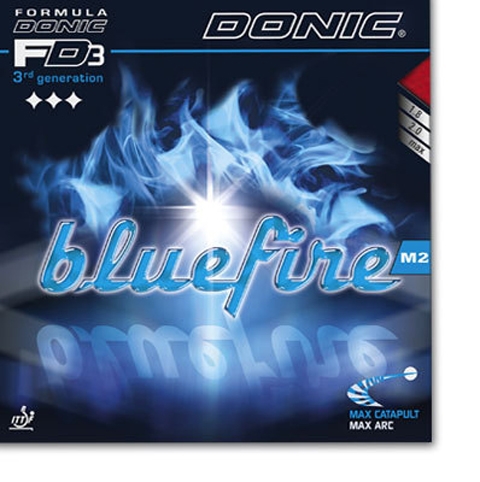
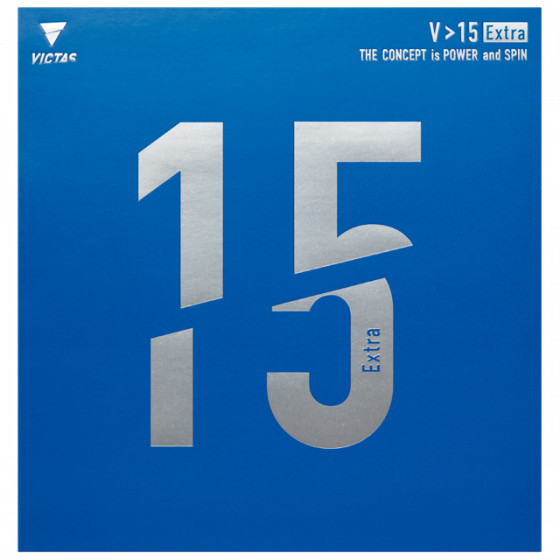
Both are rated 8.4 but pursue different offensive philosophies. The M2 (8.4) is a bouncy, grippy backhand-friendly medium-hardness tensor with high spin and responsive catapult. V>15 Extra (8.4) is a harder German tensor designed for pure forehand topspin speed with unusually low incoming-spin sensitivity, making it ideal for early-ball attacks. M2 excels on both wings and responds to boosting; V>15 Extra is forehand specialist with three-gear performance and strong serve game. M2 handles short serves and passive blocks reasonably well; V>15 Extra demands precise technique and struggles with backhand blocking consistency. M2 is lighter (68g) with better versatility; V>15 Extra is heavier and penalizes technique errors. Pick M2 for all-around play and backhand work; pick V>15 Extra for pure aggressive forehand looping and early-ball attacking.
FAQ
Which rubber is better for aggressive forehand play?
Victas V>15 Extra is optimized for forehand topspin speed with unusually low sensitivity to incoming spin, making it ideal for aggressive early-ball attacks. M2 is more all-round.
Can V>15 Extra be used on backhand?
It can, but backhand blocking can be inconsistent and requires precise angles due to the hard sponge. M2 is much more naturally suited to backhand play.
Which rubber is more forgiving on bad technique?
M2 is more forgiving with better error margins. V>15 Extra is demanding on technique and errors are amplified by its hard sponge.