Donic Bluefire M2 vs Donic Bluefire M3: Which Should You Buy?
| Donic Bluefire M2 | Donic Bluefire M3 | |
|---|---|---|
| Our rating | 8.4/10 | 8.3/10 |
| best_side | both | backhand |
| control | medium-high | High |
| speed | high | Medium-high (ALL+ to OFF-) |
| spin | high | Very high |
| sponge_hardness | around 42.5 to 45 degrees (medium) | 40 degrees (ESN), approximately 33-34 degrees Shore A |
| type | tensor inverted | inverted |
| weight_uncut_g | 68 | 47 |
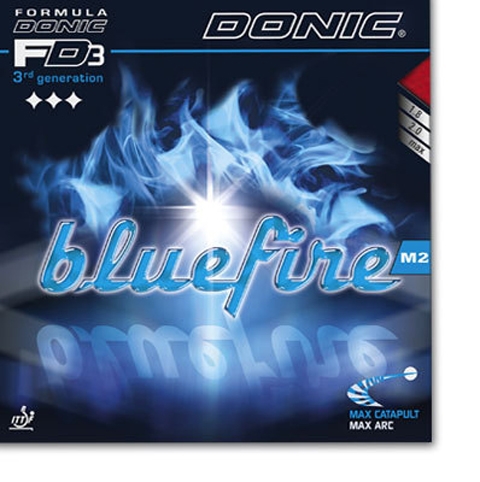
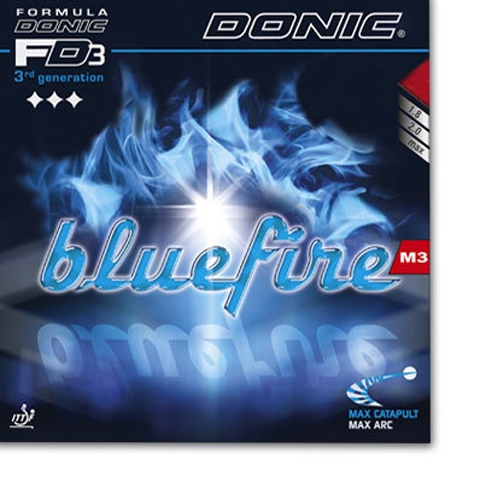
We may earn a commission from links on this page. Learn more.
Donic Bluefire M2 and M3 represent the mid and soft tiers of the Bluefire range. M2 is a balanced, spinny, fast tensor optimized for backhand use. Excellent performance on flicks, loops, blocks, and sidespin, combined with strong catapult and boosting response, make it a lower-cost alternative to premium Japanese rubbers. Bouncy character on slow touches is a drawback.
M3 is the softest and most control-oriented option, emphasizing forgiveness and loop-friendly dwell. Long dwell time and forgiving contact suit spin-first games and backhand development. Below-average topsheet durability and incompatibility with flat hitting are limitations.
FAQ
Which is faster?
M2 with higher speed rating. M3 is medium-high, notably softer.
Which is more forgiving?
M3 far more forgiving. M2’s bounciness punishes slow, passive touches.
Which suits backhand better?
Both are backhand-oriented. M2 suits loopers close-to-mid distance. M3 suits spin-first games.
Can M2 be boosted?
Yes. It responds well to paraffin oil boosting, increasing speed and durability.
Which is more durable?
M2 has longer topsheet life than M3, though both fade below average after heavy use.