DHS Hurricane 301 vs Donic Epox Control: Which Should You Buy?
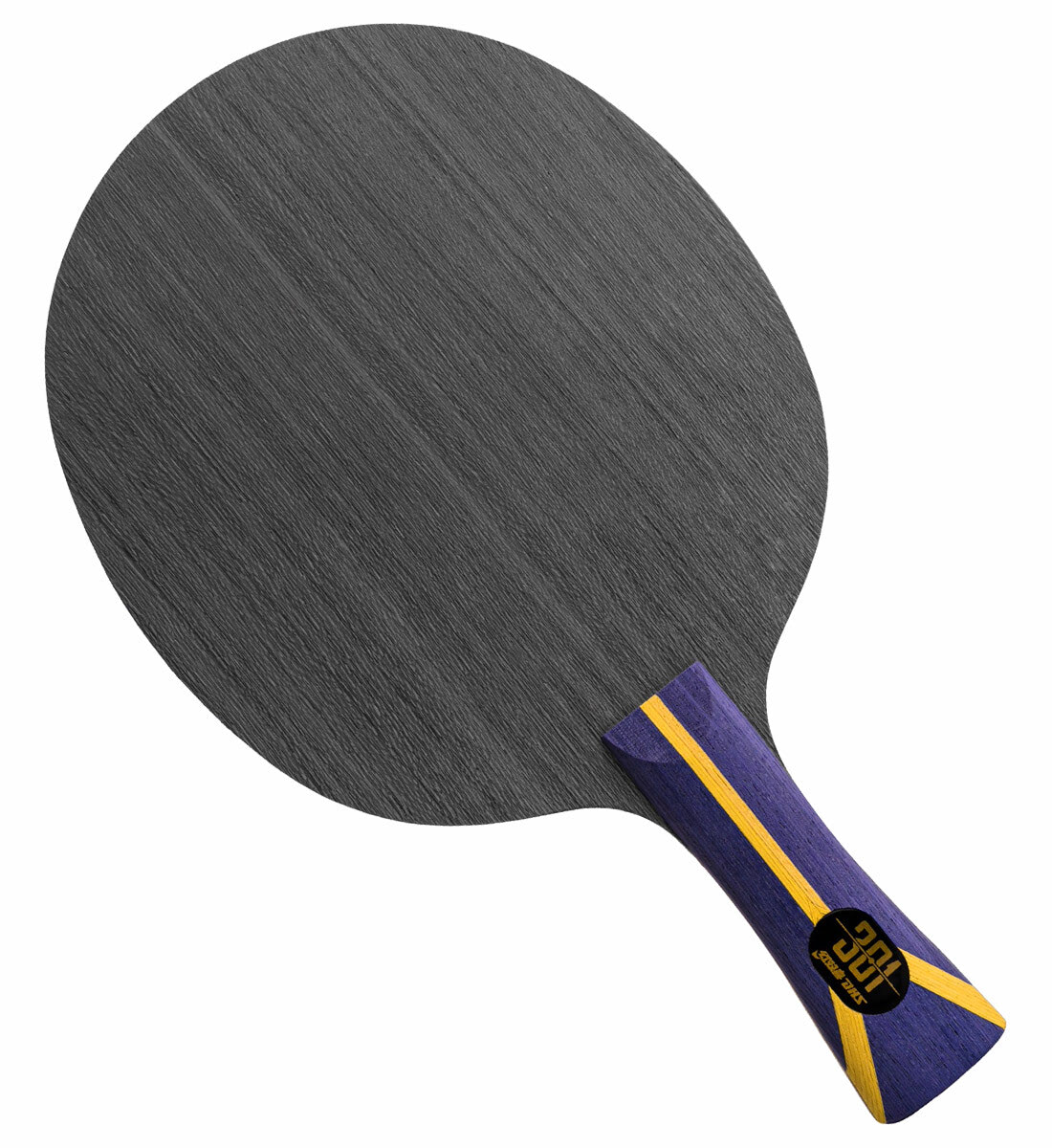
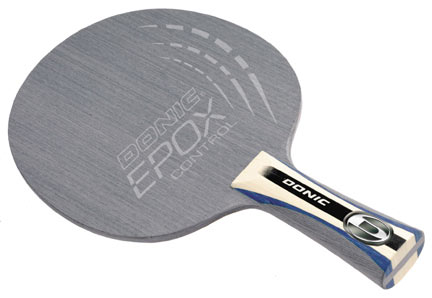
| DHS Hurricane 301 | Donic Epox Control | |
|---|---|---|
| Our rating | 8.6/10 | 7.8/10 |
| feel | medium-hard, crisp, direct inner arylate-carbon with deep dwell on power shots | Low vibration, elastic, soft touch |
| handle | FL | Flared / Anatomic / Straight |
| plies | 5W+2 Aramid-Carbon (Koto outer, Ayous middle and core, inner Arylate-Carbon) | 5-ply all wood |
| speed | OFF | ALL+ |
| thickness_mm | 5.8 | 5.1 |
| weight_g | 90 | 80-90 |
We may earn a commission from links on this page. Learn more.
The DHS Hurricane 301 is fundamentally an offensive blade that rewards power looping and topspin. Its deep dwell time and crispness make it excellent for forehand-dominant players who want to attack close to the table. The wide gear range means it stays controllable on touch yet reaches OFF speed on power loops, backed by exceptional value at roughly one-third the price of premium inner-ALC blades.
The Donic Epox Control is designed for all-round learners. Its epoxy bonding minimizes vibration and creates a large sweet spot that forgives off-center hits. Speed class ALL means it will feel sluggish for attackers but provides unmatched consistency for placement play and short-game development.
FAQ
Which is best for a beginner?
Epox Control. Its forgiving sweet spot, low vibration, and light weight suit long practice sessions for players still building technique.
Which generates more spin?
Hurricane 301. Its long dwell time and hard Koto top excel at spin against backspin. Epox Control trades spin for control.
Will I outgrow these blades?
Likely both. Epox Control restricts offensive players quickly. Hurricane 301 works longer if you loop heavily, but lacks the power of stiffer 301X or 301T variants.