DHS Hurricane 3-NEO vs Loki RXTON 1: Which Should You Buy?
| DHS Hurricane 3-NEO | Loki RXTON 1 | |
|---|---|---|
| Our rating | 8.5/10 | 8.0/10 |
| Best side | Forehand | Both wings |
| Control | medium-high | very high |
| Speed | offensive (medium passive, high when fully engaged) | low to medium |
| Spin | extreme | high |
| Sponge hardness (different scales) | 39-41 degrees (DHS scale), also offered in 37 and 38 | medium (around 38-39 degrees Chinese scale, roughly 50-52 ESN) |
| Type | tacky inverted (NEO internal energy sponge) | tacky inverted (budget) |
| Uncut weight | 70 g | 64 g |
A row marked “different scales” puts two rating systems in one line. Those cells are not a single score you can subtract.
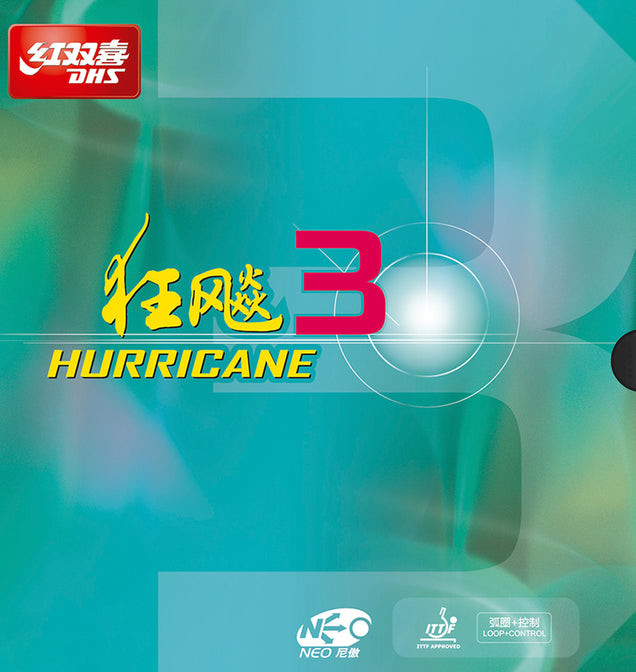
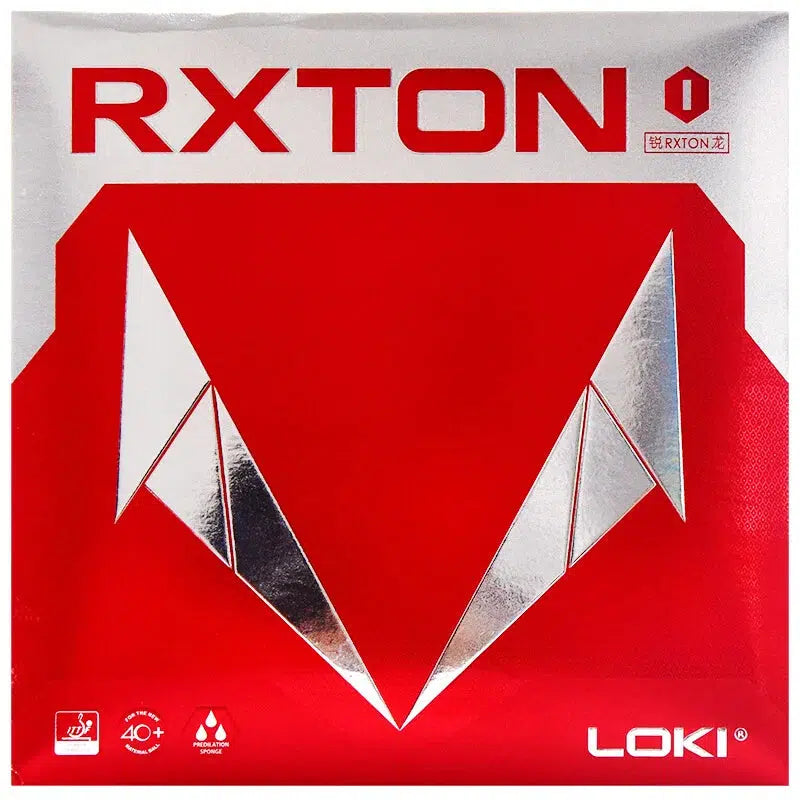
We may earn a commission from links on this page. Learn more.
The gap that defines this pair: budget rubber vs. premium spin rubber
DHS Hurricane 3-NEO and Loki RXTON 1 are both tacky inverted rubbers, but that’s close to where the resemblance ends. Speed favors Hurricane 3-NEO by 2.4 points (8.4 vs 6.0), the single largest speed gap anywhere in this data set. Spin favors it by 1.8 points (9.3 vs 7.5). Tackiness favors it by 4.6 points (8.1 vs 3.5). Durability favors it by 2.5 points (7.5 vs 5.0). Every one of these is a large, court-relevant gap, not a rounding error. This is not two similar rubbers with a stylistic quirk between them; it’s a premium spin-and-power sheet against a budget control rubber built for a completely different price point — Loki RXTON 1 retails around 15 dollars a sheet.
The one axis that actually favors the budget rubber, barely
Control is the sole axis where the direction narrows, and even then it still favors Hurricane 3-NEO: 8.7 against RXTON 1’s 8.5, a 0.2-point gap. So there is no axis where the Loki genuinely outscores the Hurricane — its real selling point, per its own pros list, is that its control is “very high” in absolute terms and makes “the table easy to hit and hard to miss,” which matters enormously for a beginner even if Hurricane 3-NEO edges it numerically. Reviewers describe RXTON 1’s topsheet and sponge as higher quality “than most budget Chinese rivals,” which is the honest comparison class it belongs to — not against a premium sheet like Hurricane 3-NEO.
What the spin gap means on the table
A 1.8-point spin gap (9.3 vs 7.5) is large enough to change what shots are available to you. Hurricane 3-NEO’s own pros describe “class-leading spin, rated 9.3 by hundreds of community reviewers” and a “uniquely strong first-attack loop.” RXTON 1 offers “good, usable spin for serves, receives and rallies” — solid for its price bracket, but its bestFor language explicitly frames it as “a beginner or control option rather than a competitive sheet.” That’s not our framing; that’s the rubber’s own reviewer consensus.
Weight and hardness scale differently, not just numerically
Hurricane 3-NEO weighs about 70 grams uncut against roughly 64 grams for RXTON 1, and comes in five documented hardness grades from 37 to 41 degrees, letting a player tune the sheet to their swing speed. RXTON 1 sits around 38 to 39 degrees on the Chinese scale, roughly 50 to 52 ESN, with no such grade options mentioned. The lighter weight and single hardness option reinforce RXTON 1’s identity as a simpler, one-size product rather than a tunable performance rubber.
Should you switch?
If you’re a beginner or returning player on RXTON 1 and wondering whether Hurricane 3-NEO is worth the jump: only once you’ve built a genuine forehand loop stroke. Hurricane 3-NEO’s own cons are blunt about this — “low passive speed, you must hit hard to unlock pace” and “heavy and unforgiving if your technique is not perfect.” Jumping straight from a beginner control rubber to a rubber that reviewers flag as demanding will likely hurt your consistency before it helps your spin. If you’re already an intermediate-to-advanced player still on RXTON 1 out of habit or budget, the 1.8-point spin gap and 2.4-point speed gap represent a real ceiling you’re leaving on the table.
Going the other way — from Hurricane 3-NEO to RXTON 1 — makes sense mainly as a cheap backhand or training-rubber swap, not as a primary forehand replacement; you would be giving up meaningful spin, speed, and durability for a rubber whose own bestFor description targets beginners and coaches “kitting out juniors on a budget.”
Bottom line
Loki RXTON 1 is not a worse Hurricane 3-NEO — it’s a different product tier entirely, and the axis data (2.4 speed, 1.8 spin, 4.6 tackiness, 2.5 durability) confirms it decisively. Its value proposition is price and beginner-friendliness, documented directly in its own reviews, not raw performance parity.
Frequently asked questions
Is Loki RXTON 1 a good rubber for beginners?
Yes -- its own bestFor description targets beginners and returning players building a first inexpensive custom racket, and reviewers note it is light, easy to handle, and cheap enough to replace monthly without financial worry.
How much more spin does Hurricane 3-NEO generate than Loki RXTON 1?
1.8 points on the aggregated axis scale (9.3 vs 7.5). Hurricane 3-NEO is independently described as having class-leading spin rated 9.3 by hundreds of community reviewers, while RXTON 1 offers good, usable spin appropriate to its budget tier.
Should an advanced player use Loki RXTON 1?
Its own reviewer consensus says no -- it is treated mostly as a beginner or control option rather than a competitive sheet. Advanced players will find Hurricane 3-NEO's speed, spin, and tackiness advantages, all 1.8 points or larger, more suited to a competitive game.
Does Hurricane 3-NEO need boosting to perform well?
Often, yes. Its documented cons note it often needs boosting to reach its ceiling, alongside low passive speed that requires hitting hard to unlock pace -- a maintenance and technique commitment that RXTON 1, as a simpler budget rubber, does not ask for.