DHS Gold Arc 5 vs Donic Bluefire M3: Which Should You Buy?
| DHS Gold Arc 5 | Donic Bluefire M3 | |
|---|---|---|
| Our rating | 8.0/10 | 8.3/10 |
| best_side | backhand | backhand |
| control | very high | High |
| speed | ALL-OFF | Medium-high (ALL+ to OFF-) |
| spin | high | Very high |
| sponge_hardness | 42.5 deg | 40 degrees (ESN), approximately 33-34 degrees Shore A |
| type | inverted | inverted |
| weight_uncut_g | 71 | 47 |
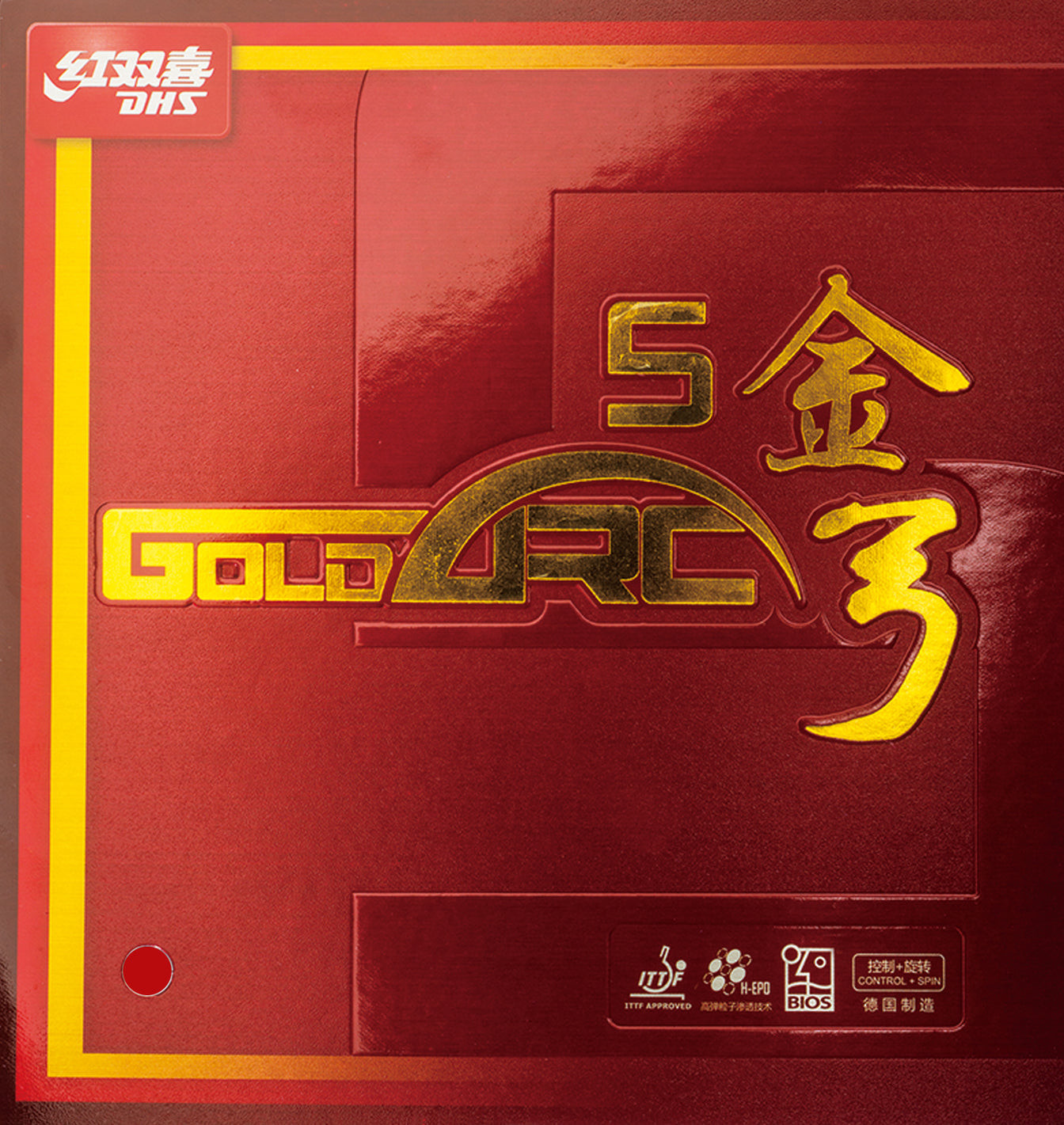
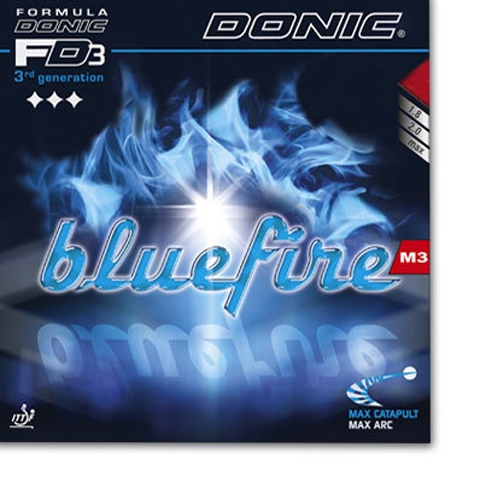
We may earn a commission from links on this page. Learn more.
DHS Gold Arc 5 is a stable, predictable non-tensor ALL-OFF backhand with excellent blocking control and outstanding durability, ideal for intermediate to advanced mechanics-focused players. Donic Bluefire M3 is the softest and most control-oriented M-range rubber with exceptional topspin generation, long dwell time and forgiveness, suited for intermediate to advanced spin-first loopers.
Gold Arc 5 is for consistent, durable, predictable backhand control; Bluefire M3 is for intermediate to advanced players wanting forgiving, loop-friendly backhand tensor, best paired with stiff or faster OFF-class blades.
FAQ
Which rubber is better for topspin?
Bluefire M3 offers exceptional topspin generation with long dwell; Arc 5 generates good spin but lower output.
Which is more forgiving?
Bluefire M3 is very forgiving saving off-center and mishit shots; Arc 5 is stable but less forgiving.
Is M3 suitable for flat hitters?
No. M3 is not suited for flat hitters or smash-oriented players; Arc 5 is more versatile.
Durability comparison?
Arc 5 has excellent durability; M3 topsheet durability is below average, fading within months under heavy use.
Which suits beginners better?
M3 is more beginner-friendly for loopers; Arc 5 is intermediate-friendly non-tensor.