Butterfly Timo Boll Spirit vs Nittaku Septear: Which Should You Buy?
| Butterfly Timo Boll Spirit | Nittaku Septear | |
|---|---|---|
| Our rating | 9.0/10 | 8.2/10 |
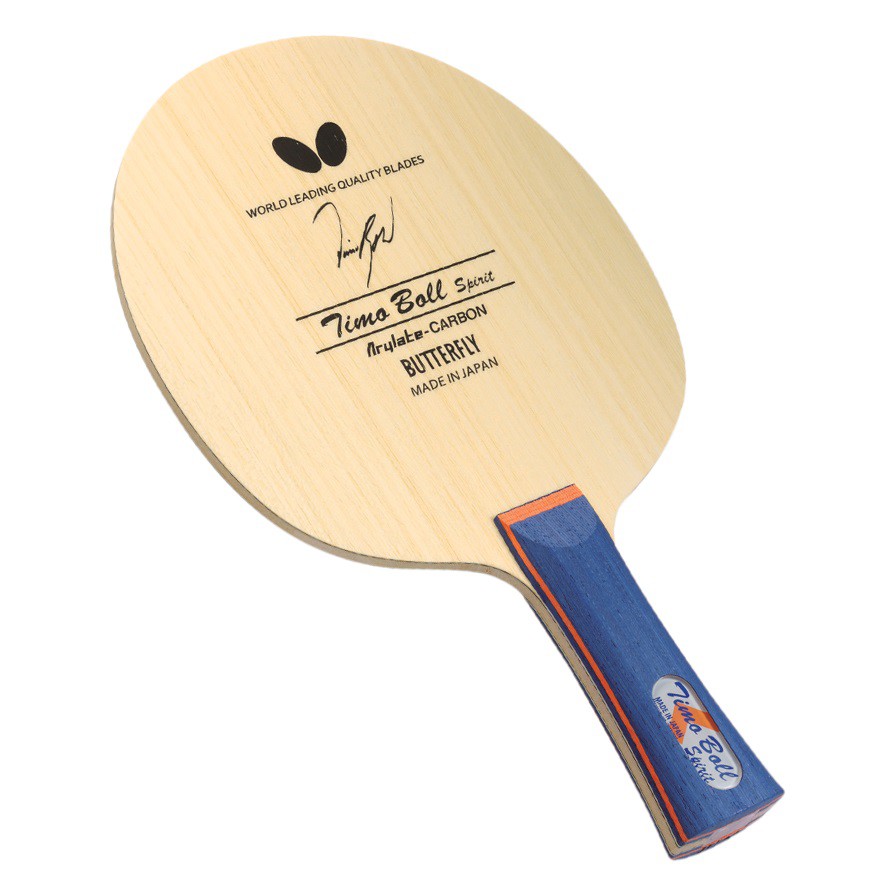
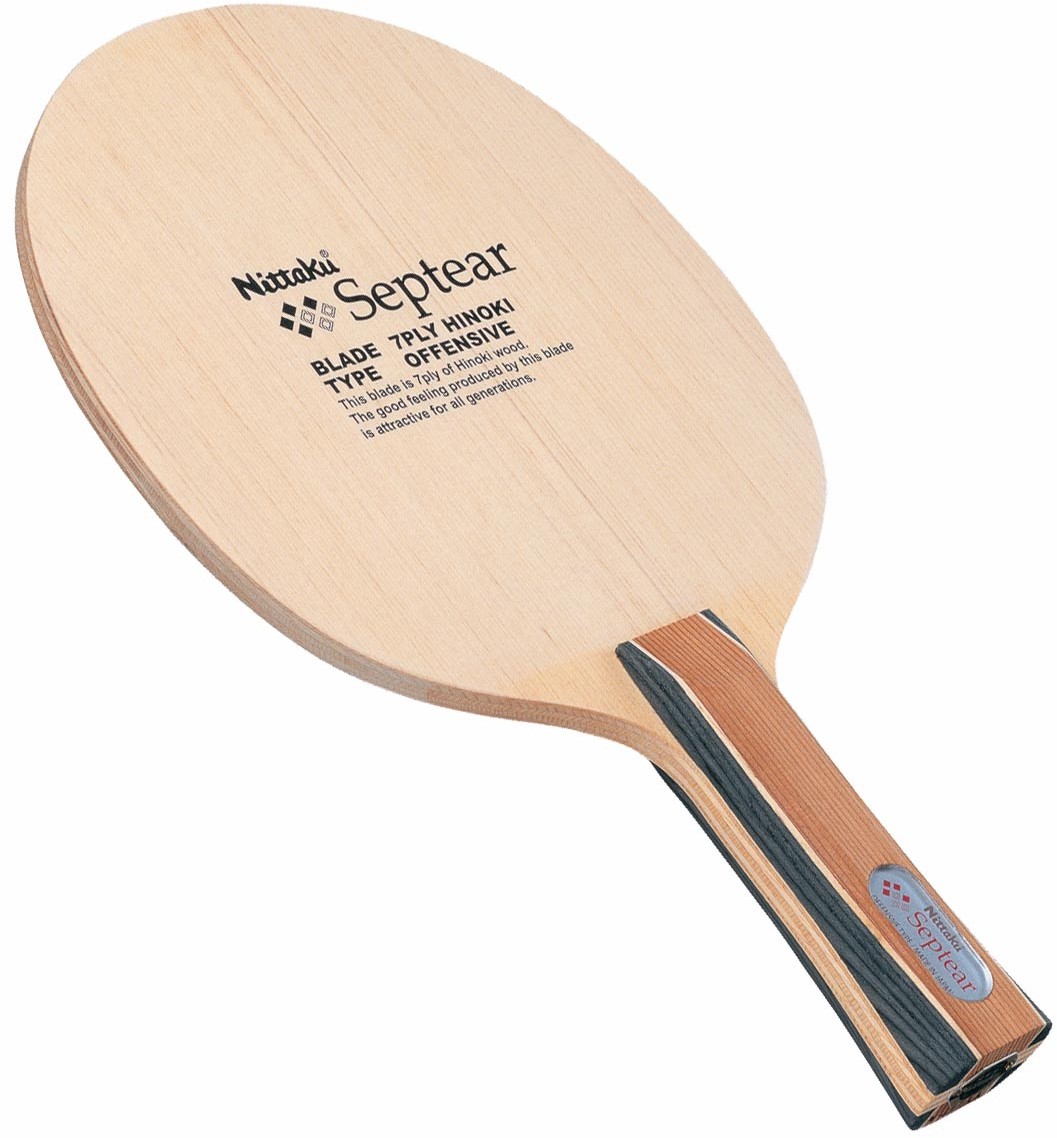
| feel | Medium and offensive with notable flex and long dwell, crisp but forgiving for a carbon blade | Soft with high dwell time |
| handle | FL / ST / AN | Straight or Concave (flared) |
| plies | 5 wood plies plus 2 arylate-carbon outer layers (5W and 2 ALC) | 7-ply all wood (Kiso Hinoki) |
| speed | OFF | ALL+ |
| thickness_mm | 5.7 | 6.7 |
| weight_g | 87 | 85 |
We may earn a commission from links on this page. Learn more.
The Butterfly Timo Boll Spirit targets intermediate-to-advanced attackers who want speed and versatility, combining arylate-carbon pace with a forgiving touch. It loops powerfully and blocks consistently, making it suitable for players with active strokes across all distances.
The Nittaku Septear prioritizes precision and control through hinoki wood and high dwell time, best suited to developing and intermediate all-round players who favor touch over pace. It performs better at short-to-mid range and requires pairing with medium-hard rubbers to avoid softness issues.
Choose Spirit if you want speed and offensive potential; choose Septear if you prioritize placement accuracy and a softer, more forgiving feel for technique building.
FAQ
Which is faster?
Spirit reaches OFF pace with carbon reinforcement; Septear is ALL+ all-wood, noticeably slower but more predictable.
Better for beginners?
Septear is more forgiving for developing players. Spirit demands active technique but rewards with speed.
How do they feel different?
Spirit is crisp and medium-hard; Septear is soft and dwell-rich, favoring spin generation over pace.
Rubber pairing advice?
Spirit works with any quality rubber; Septear needs medium-hard or harder rubbers to prevent excessive softness.