Butterfly Primorac vs Yinhe T-11+: Which Should You Buy?
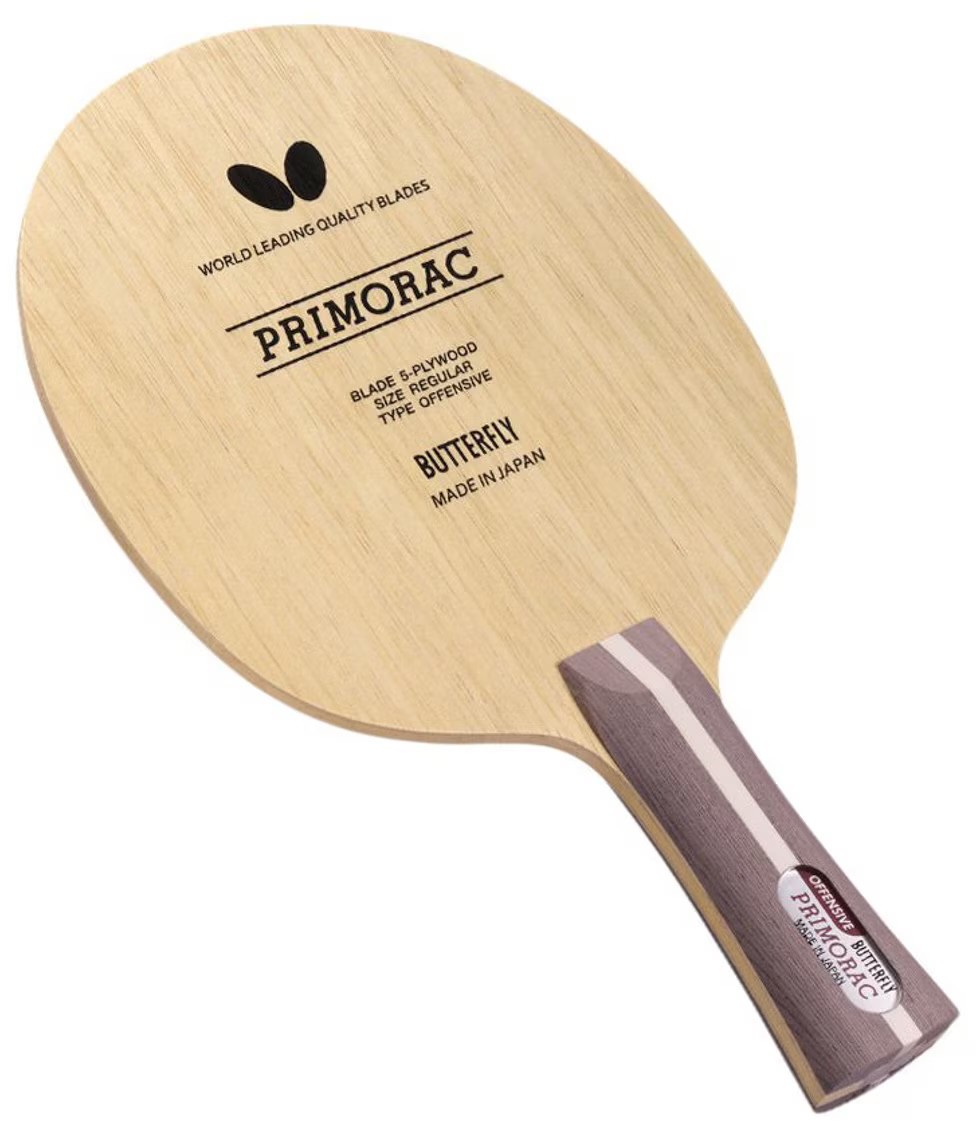
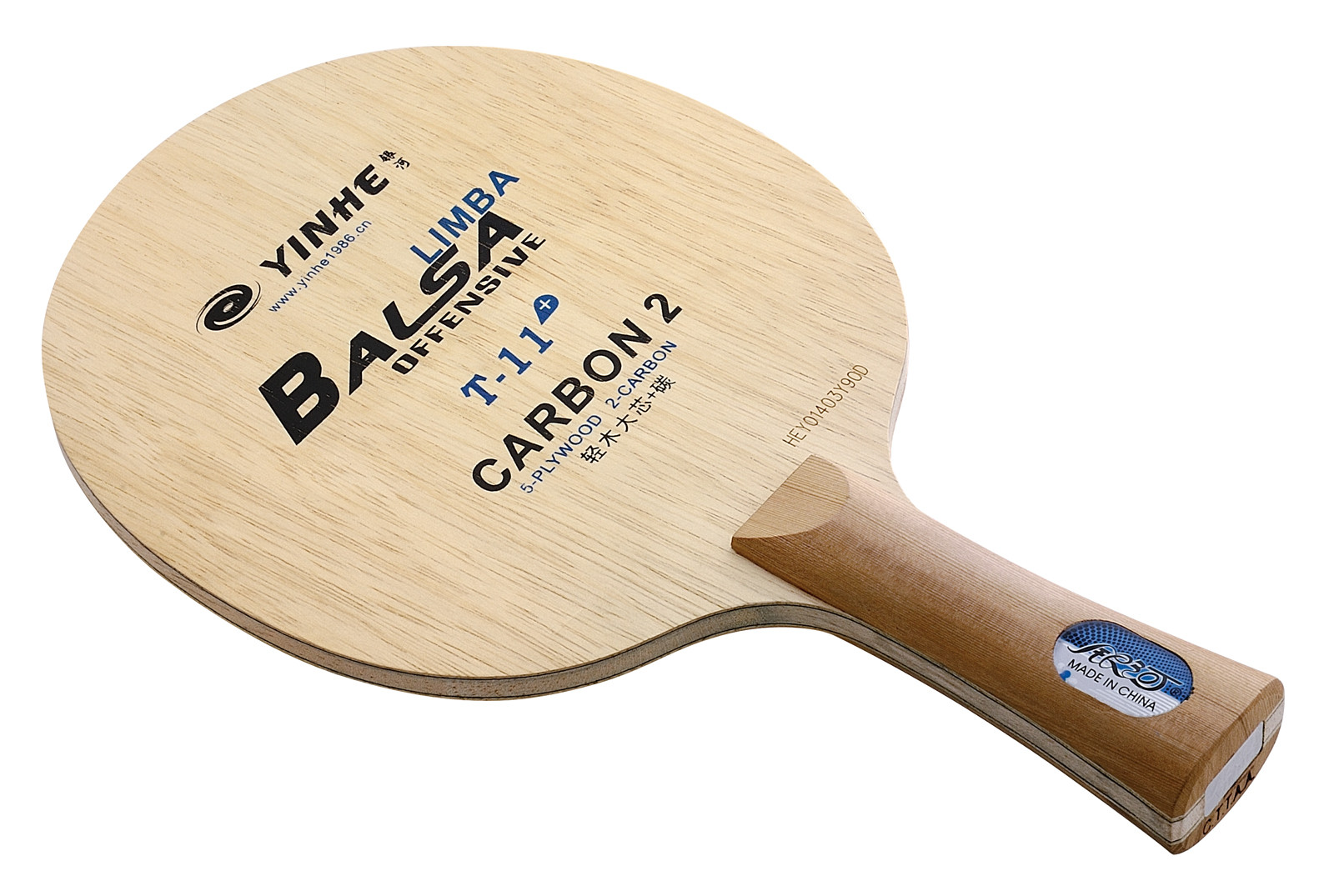
| Butterfly Primorac | Yinhe T-11+ | |
|---|---|---|
| Our rating | 8.3/10 | 7.8/10 |
| feel | medium, classic all-wood, long dwell and high control | very light, stiff but soft balsa core with a carbon ping |
| handle | FL/ST | FL |
| plies | 5W (all wood) — Limba/Limba/Ayous/Limba/Limba | 5W+2 Carbon with balsa core (two thin wood outers, one carbon layer per side, around a thick balsa middle ply) |
| speed | OFF- | OFF- |
| thickness_mm | 6 | 6.5 |
| weight_g | 85 | 78 |
We may earn a commission from links on this page. Learn more.
Both sit at OFF-, but they feel nothing alike. The Primorac is a soft all-wood blade with long dwell and high control that rewards spin and placement. The T-11+ is a featherlight balsa-carbon blade with a stiff carbon ping, built for fast hitting, flicking and blocking rather than dwell.
Go with the Primorac if you are a developing looper or all-rounder who values feel, dwell and spin and wants a durable keeper. Go with the T-11+ if you are a flat hitter, pips-out or combination player, blocker, or power loop driver who wants speed in a very light package.
The key contrast is looping: the Primorac is built for it, while heavy topspin looping is the T-11+‘s clear weakness. The T-11+ also has a fragile surface that must be sealed and is not beginner friendly; pair it with soft to medium rubbers. The Primorac needs sealing too but is far more forgiving overall.
FAQ
Which is better for spin and looping?
The Primorac, which rewards spin and placement with long dwell. Heavy topspin looping is the T-11+‘s clear weakness.
Which is lighter and faster off the bounce?
The T-11+ at around 78g is exceptionally light and quick, with a stiff carbon ping. The Primorac at around 85g leans on dwell rather than raw speed.
Which suits a developing player better?
The Primorac is forgiving and easy to play. The T-11+ is not beginner friendly and needs concentration in the short game with fast rubbers.