Butterfly Innerforce ZLC vs Tibhar Samsonov Force Pro Black Edition: Which Should You Buy?
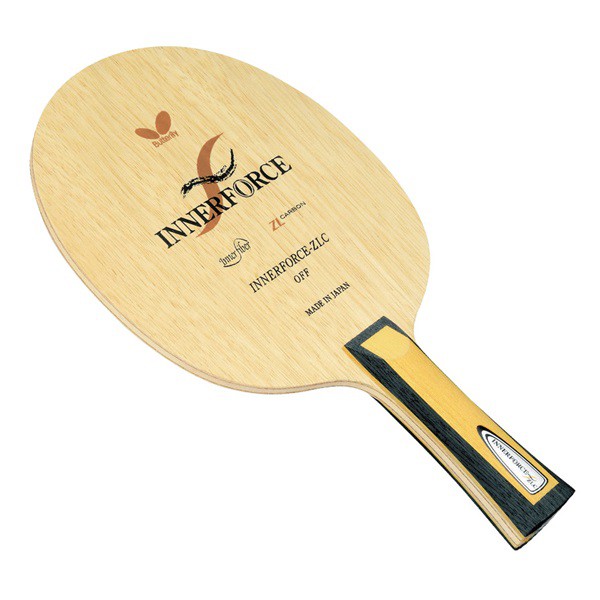
| Butterfly Innerforce ZLC | Tibhar Samsonov Force Pro Black Edition | |
|---|---|---|
| Our rating | 8.5/10 | 8.2/10 |
| feel | Soft-medium; woody feel with ZLC carbon layers near the core | mild hard, uniform vibration, linear rebound |
| handle | AN / FL / ST | FL / ST |
| plies | 5 wood + 2 ZLC carbon (inner ZLC construction) | 7-ply all wood (limba-ayous-ayous-ayous-ayous-ayous-limba) |
| speed | OFF | OFF- |
| thickness_mm | 5.7 | 6.6-6.7mm |
| weight_g | 84 | 83-90g (avg ~87g) |
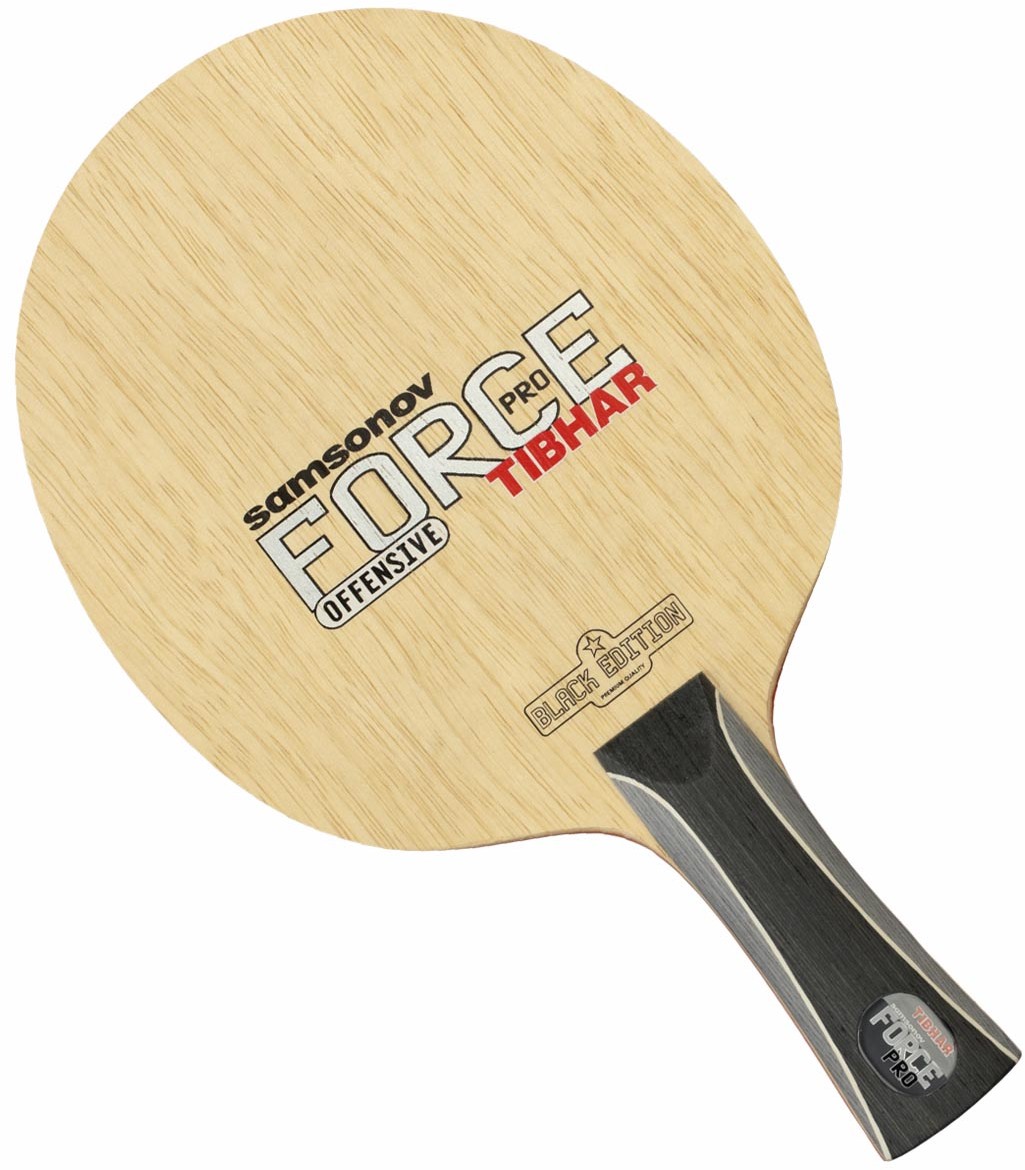
Tibhar Samsonov Force Pro Black Edition
Check price on AmazonRead the full Tibhar Samsonov Force Pro Black Edition review →
We may earn a commission from links on this page. Learn more.
The Innerforce ZLC offers rare woody carbon feel, high dwell, and spin-first balance for advanced loopers. The Tibhar Samsonov Force Pro Black Edition is a 7-ply all-wood value champion: linear, predictable rebound, forgiving on off-center contact, and genuinely versatile across loops, hits, and blocks.
Choose the ZLC if you’re advanced, want discontinued-market rarity, and build your game around heavy topspin from close to mid-distance. Pick Force Pro if you’re intermediate to advanced, seek allround control with good forgiveness, value linearity and consistency, and don’t need carbon pace. The ZLC is specialist; Force Pro is flexible.
FAQ
Which is better for blocking and hitting?
Force Pro: its linear, predictable rebound suits blocks and flat hits equally. ZLC, topspin-optimized, can feel sluggish on defensive strokes.
How heavy is Force Pro versus ZLC?
Force Pro averages 87g, slightly heavier than ZLC at 84g. This head-heavy balance requires arm conditioning but builds power.
Which dwell time is better?
ZLC’s dwell is exceptional and reward-rich. Force Pro’s dwell is decent but sacrifices some spin generation versus softer blades.
What about value?
Force Pro is excellent value: widely available, fairly priced, versatile. ZLC is discontinued premium. If budget is concern, Force Pro wins.