Friendship 729 Battle II vs Donic Bluestorm Pro AM: Which Should You Buy?
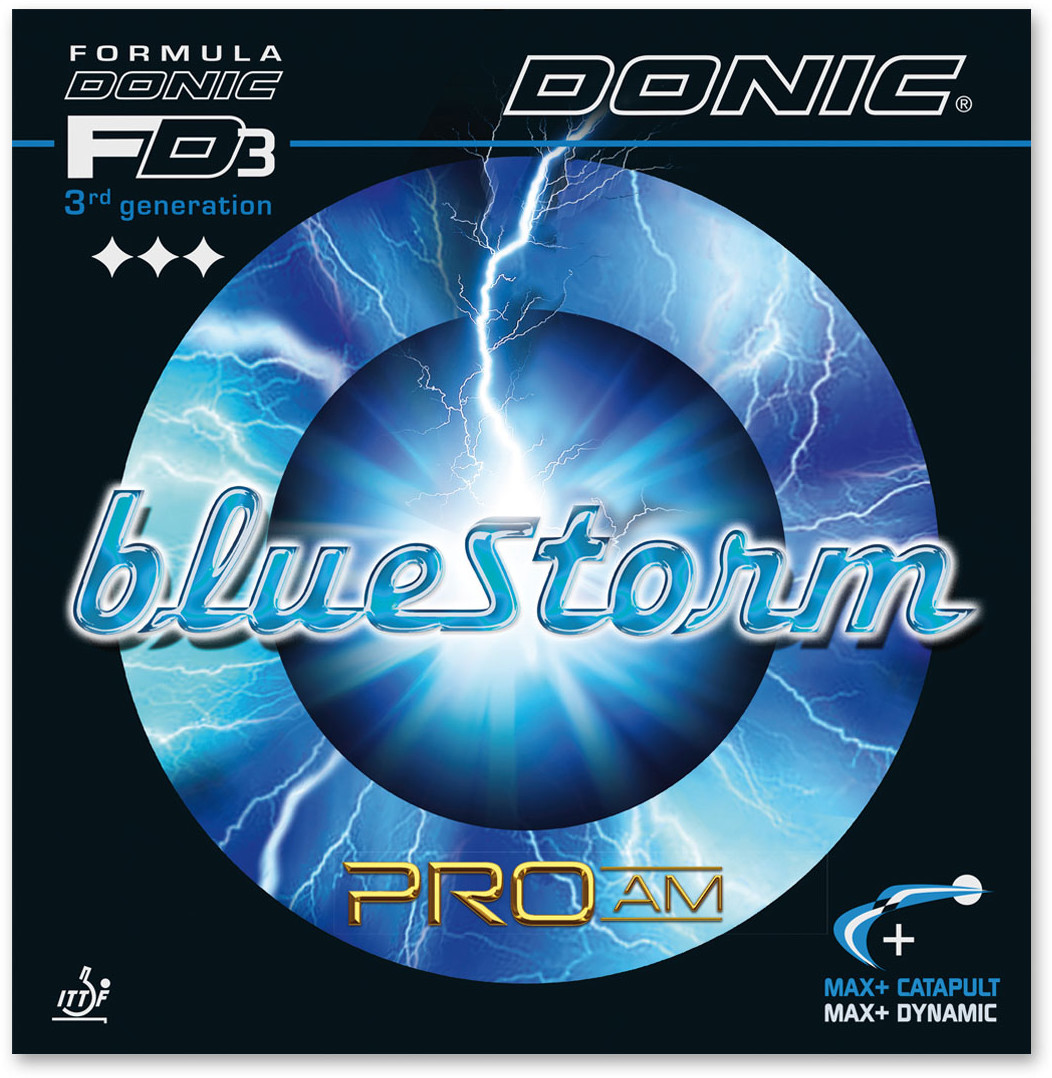
| Friendship 729 Battle II | Donic Bluestorm Pro AM | |
|---|---|---|
| Our rating | 8.5/10 | 8.4/10 |
| best_side | FH | backhand / all-round forehand |
| control | 8 | 9.2 |
| speed | 8 | 9.1 |
| spin | 9 | 9.4 |
| sponge_hardness | hard | 47.5 degrees |
| type | tacky | inverted |
| weight_uncut_g | 68 | 50 |

We may earn a commission from links on this page. Learn more.
Battle II exploits maximum spin from a small motion, ideal for Chinese-style looping and serving near the table. It’s significantly cheaper and teaches proper technique through high feedback. Bluestorm Pro AM offers more versatility: it accelerates better in mid-distance rallies, handles both forehand and backhand cleanly, and performs across loops, blocks, and short play without technique-specific demands.
Battle II suits forehand attackers committed to spin-dominant play. Bluestorm Pro AM suits intermediate-advanced players who want a single rubber delivering genuine all-around performance without the learning curve of hard Chinese tacky rubbers.
FAQ
Which has better short game?
Bluestorm Pro AM excels at flicks, pushes, and blocks. Battle II’s extreme tackiness makes short play consistent but less varied—it’s built for power strokes.
Can Battle II work on backhand?
Rarely. Bluestorm Pro AM is explicitly designed for backhand or all-round forehand use; it’s lighter and more forgiving than Battle II.
Which is faster at distance?
Bluestorm Pro AM. Battle II weakens far from the table; Bluestorm Pro AM maintains speed and control from mid to long distance.
Price difference?
Battle II is roughly half the price or less. Bluestorm Pro AM costs more but offers longer durability and broader playability.