World Cup Day 1: Old Faces, New Faces, and Kuai Man's Close Call
1
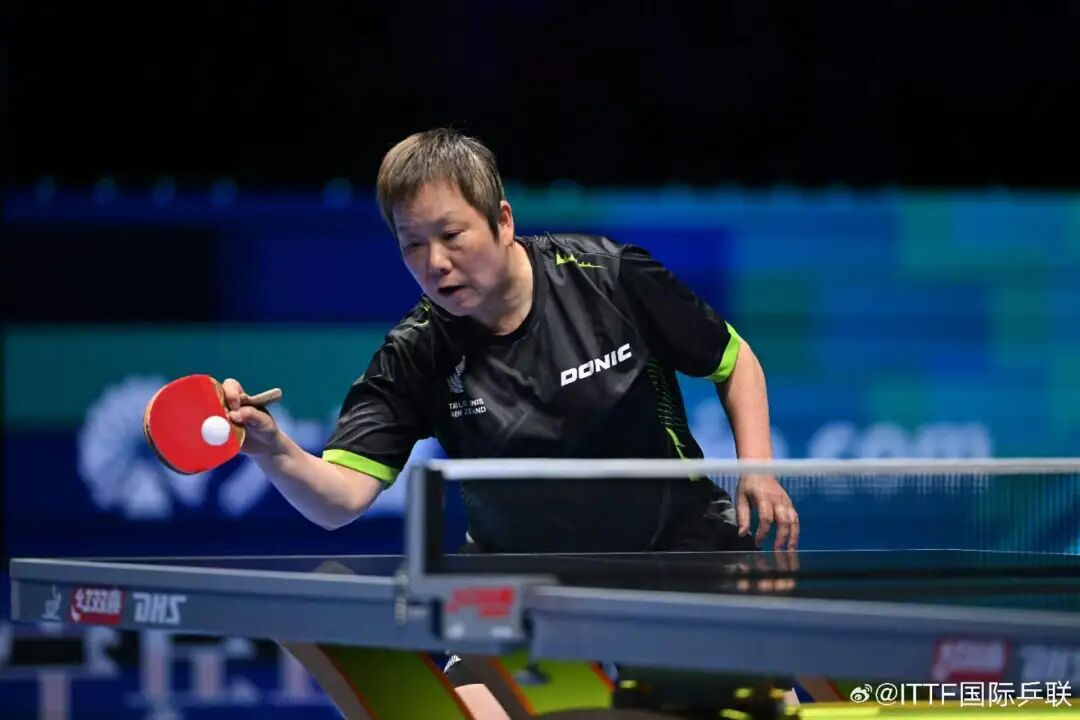
Li Chunli, a 64-year-old Chinese-New Zealand veteran, continues to set new records as the oldest competitor at the Table Tennis World Cup.
She reached the women’s singles semifinals at this year’s Oceania Championships and thus qualified directly for the Macao World Cup. When she joined the Chinese national team in 1981, I wasn’t even born yet. Later, in 1987, she moved to New Zealand as a coach and continued competing.
Photo credit: ITTF
The Japanese-style penhold grip is a rare sight these days. She has Moristo SP short pips on the forehand. Her style now can’t be called aggressive — it’s more about leverage and deflection, using the opponent’s speed against them.
2
Fu Yu, the 47-year-old Portuguese player, may be younger than Li Chunli, but she’s a veteran in her own right. Her style is from the nineties — high-toss serve, push-on-the-left, attack-on-the-right. In the years before 2025, she mainly used Hurricane King 2.
Yesterday in women’s singles round one she lost 0–3 to Wang Manyu, which was expected. But Wang Manyu still got caught by several high-toss serves. This time Fu Yu’s blade is the Yasaka Cyber Cell Power.
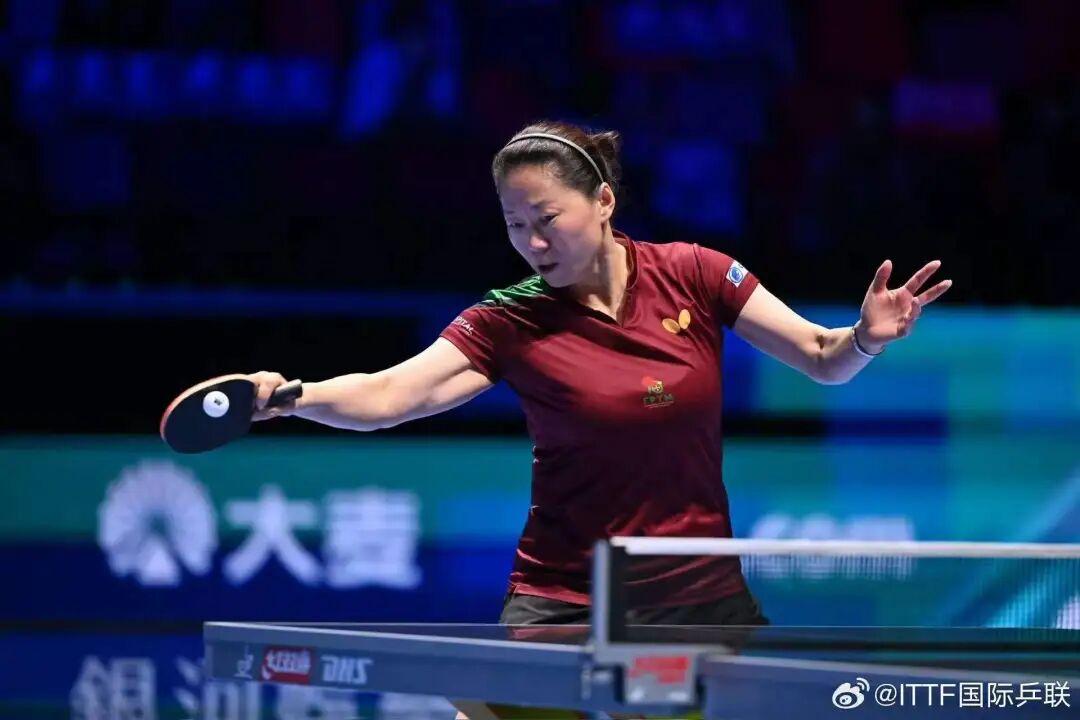
Photo credit: ITTF
At last month’s Singapore Smash, in women’s singles 1/32, she used the Cyber Cell Power to edge out Australia’s Chi Minhyeong 3–2, winning the deciding game 12–10. She apparently thought that if this opponent gave her so much trouble, she should switch things up — so in the round of 16 she switched straight to the N301. Result: lost 0–3 to Winter. Ultimately, it comes down to level…
3
Kawakami Ryusei — Japan All National Championships junior men’s singles champion — lost 1–3 to Zhou Qihao.
Zhou Qihao: Double Fish Project Z, NEO Blue Hurricane 3, D09c
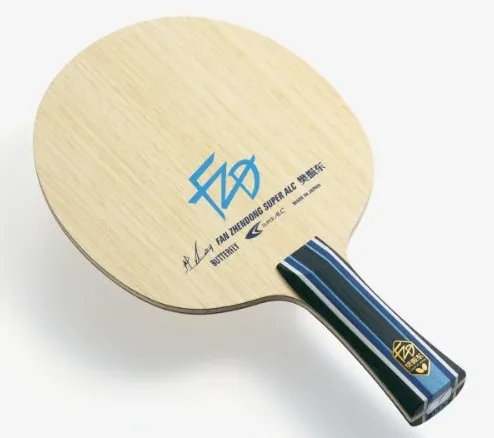
Kawakami Ryusei: outer carbon SALC special order, ZYRE-03 on both sides
I couldn’t quite make out whether the handle on his blade was the Fan (A) or Fan (SA) version. However, at the Junior World Championships men’s singles semifinal on November 30 last year, Kawakami Ryusei beat Wen Ruibo 4–3 — at that time the blade was confirmed as the Fan Zhendong SALC handle. According to Butterfly’s materials, he’s now using an outer carbon SALC special order.
His experience and adjustment ability don’t match Zhou Qihao, but his game has real character. He clearly fits the technical trends of the new era. His flip-loop is extremely explosive — compact, tight, fluid, and the transitions are extremely fast. It’s all speed-first looping style. Japan is increasingly trending this way: spin doesn’t matter, power doesn’t matter, speed is everything.
4
Kuai Man won 3–2 over Charlotte Lutz. Watching this match left me a bit confused — I’d expected the gap between them to be like a senior provincial team coach playing me.
Kuai Man: gold-label Viscaria, NEO Blue Hurricane 3, D09c
Lutz: Tibhar Alexis, K3 or K3 Pro on both sides
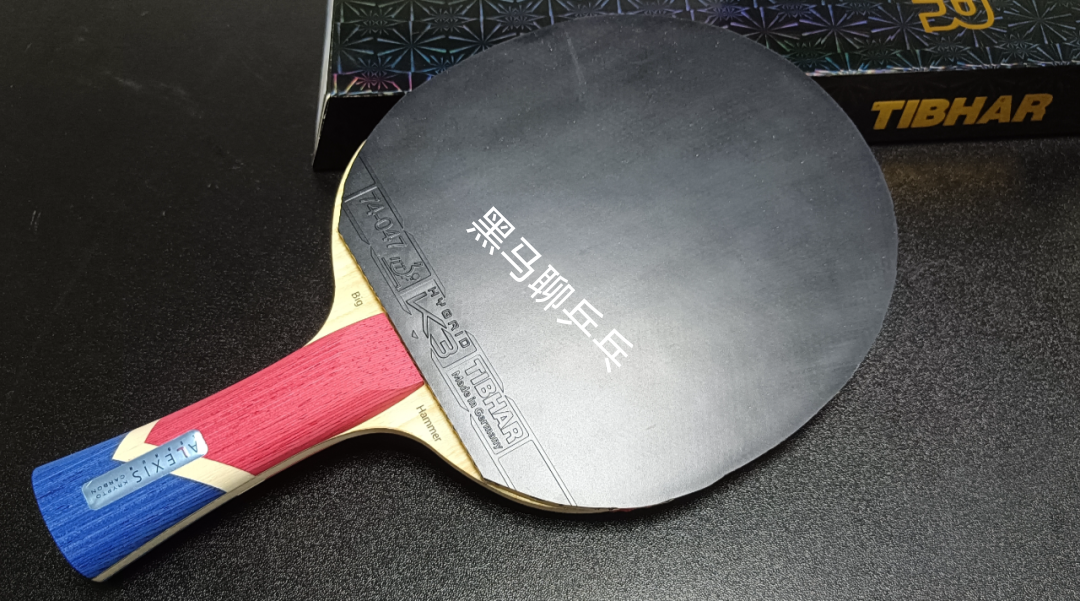
Lutz can serve with her forehand, but mostly uses her backhand serve. The placement and spin variation out of her serve is quite rich.
Kuai Man cruised through the first two games. Then for the next two games, things got murky. Lutz just kept pushing long first, then when Kuai Man lifted with a slow loop, Lutz accelerated and drove hard. This one trick took Kuai Man two games to figure out. Either raise the quality of your loop against the pushed ball, or deliberately add more spin. Without figuring it out, she dropped two games, and even in the decider, she didn’t seem to have it sorted.
The Tibhar Alexis green fiber carbon blade is used by quite a few Tibhar players — besides the obvious Alexis, there’s also Croatia’s Pucar and India’s Thakkar (ST grip, 85g).