What Blade and Rubber Should Beginners Use to Win the First Three Balls?
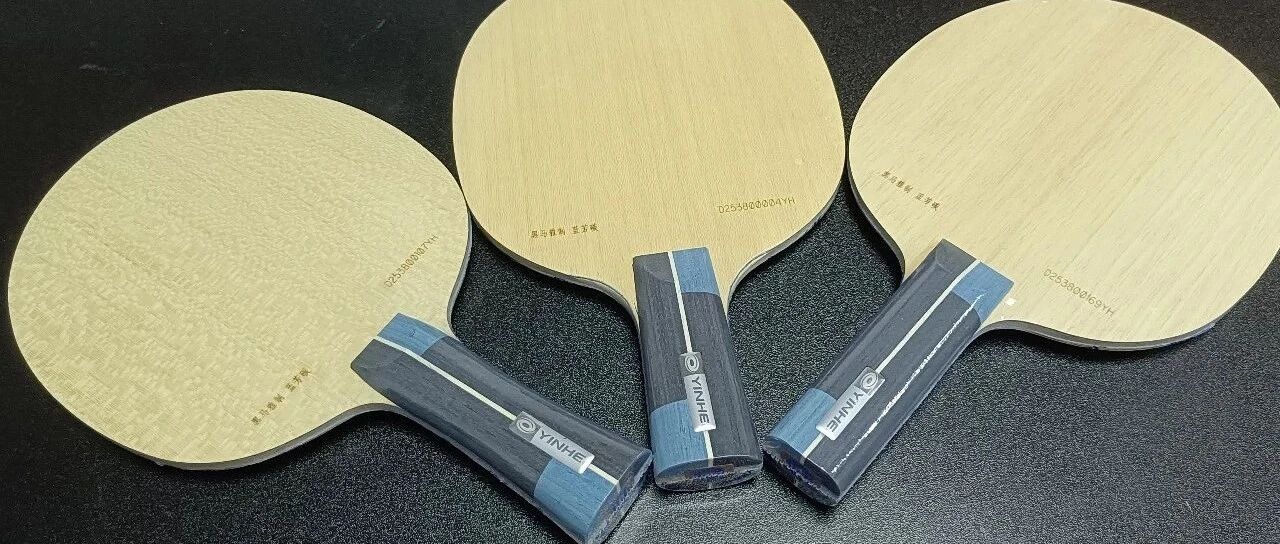
I was honestly shocked this question came from my core fan group: what blade and rubber should a beginner use to play the first three balls well and stop getting destroyed on serve receives?
Look, at heart I’m a technique-first guy. Then another player chimed in: what blade and rubber would help improve my backhand serve receive? So you two share the same problem — you’re trying to solve a technical problem with an equipment answer. That’s looking in the wrong place.
But let’s be real — is it possible that equipment could help, even if not completely solve the issue?
Self-Awareness
First, as a beginner, you have to accept: I am a beginner, and getting eaten alive on serve receive is completely normal. At that point, head over to the technique column and find the articles on how to receive serve better.
From a technical standpoint, there are many reasons serve receive breaks down. Aside from your opponent having a genuinely nasty serve (or heavy obscurement), one big factor is lack of match experience against strangers. If you mostly play with the same familiar people, you’ll have a much harder time when you face an unfamiliar opponent. Step one: give yourself more opportunities to play against people you’ve never faced before. Build that habit of playing strangers regularly.
Step two: commit to your read. A lot of the time you can actually distinguish the spin — topspin versus backspin — but you still second-guess yourself. You’re afraid to make a mistake, so instead of driving or looping the topspin ball, you default to a push. That hesitant mindset will get you killed. If you have a coach or a more advanced hitting partner, tell them which type of serve gives you trouble, then have them feed that exact serve so you can work through it specifically.
Step three: when it’s not your turn to play, watch how the server is serving, and watch how the receiver is handling it. This is surprisingly effective. You’ll improve faster than you think.
Equipment Choices
The lower your level, the more you should prioritize control in your blade and rubber selection. For beginners and novices especially, moderate elasticity is the goal. If you can’t control the ball, you’ll be more susceptible to spin, not less.
From a serve-receive and control standpoint, tacky rubbers should be your first consideration. Yes, tacky rubbers do grip spin, but at low levels, grippy Euro rubbers are even harder to control. At least with a tacky rubber, if you add a bit of force, you can still bite the ball.
If your goal is to better handle opponents’ loop drives — to borrow force without getting grabbed by the spin — that’s a different consideration from serve receive.
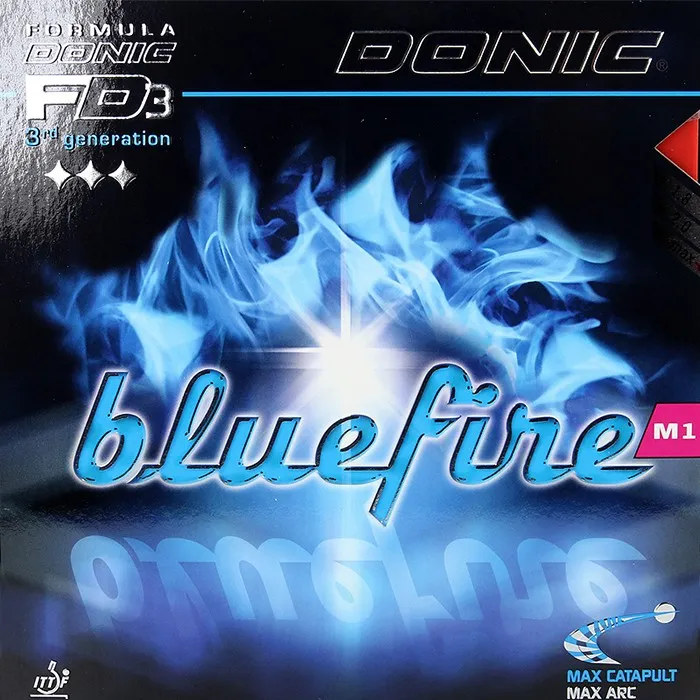
If you’re using a grippy Euro rubber for serve receive, the main thing to check is whether it has enough bite. You need that grip to control the ball. Mid-to-high-end options like T05fx, Bluefire M1, Bluefire M2, or Nittaku C1 are all worth considering. Something like an F1 will probably give you fits trying to hold the ball.
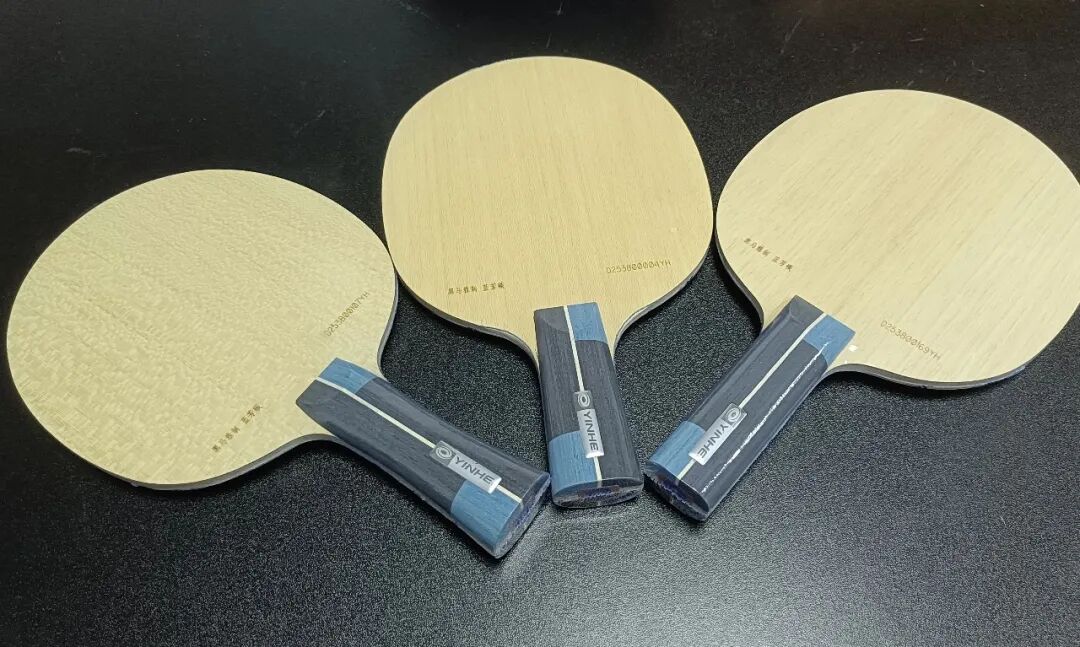
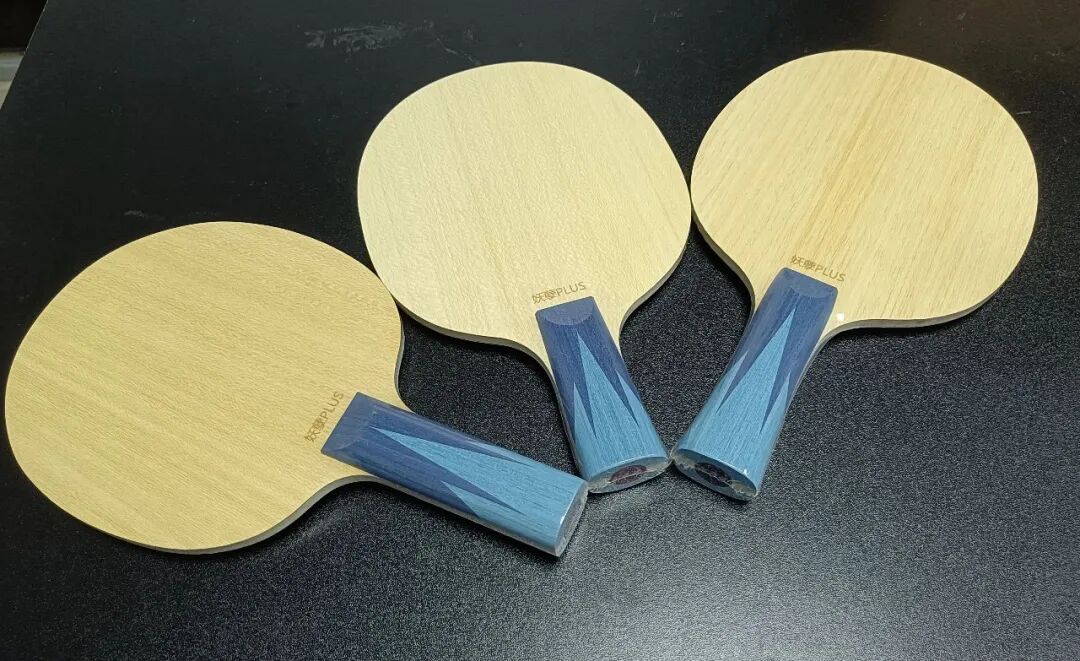
On the blade side, you also want something that holds the ball well. For beginners, a pure 5-ply wood blade is excellent — easy to control, grabs the ball on receive. For intermediate players, whether you go inner or outer carbon, prioritize blades that aren’t too fast and have solid dwell time. Among softer outer carbon blades, options like Fan Zhendong ALC, Lin Gaoyuan ALC, Zhou Qihao 90, or the Hema Yazhi ALC are solid choices.
Blades that naturally feel comfortable on the backhand side tend to be easier to receive with overall. Many of these are outer arylate-carbon blades — the outer fiber placement makes it easier to pop the ball over the net. They also generally have a more centered blade balance, which gives you better feel in the hand. Many inner carbon blades, in contrast, are designed to maximize attacking power by lengthening the blade face and pushing the balance toward the head.
In the end, even I have moments where my serve receive breaks down. But the two most effective remedies are always the same: keep playing against new opponents regularly, and observe how other players serve and receive — then think about it. Becoming a technique-first player sometimes turns out to be the equipment answer too.