Wen Ruibo's Loss, Wang Chuqin's Win, and a Problem Shared by China's Young Men
1
There’s a video on Bilibili titled “Lin Yun-ju: Is This Really the Level of the World Cup?” It’s a highlight reel of Lin Yun-ju beating Wen Ruibo 4–1 in the men’s singles round of 16.
On the surface, Wen Ruibo lost because he was outclassed by Lin Yun-ju. And honestly, the surface reading is the accurate one.
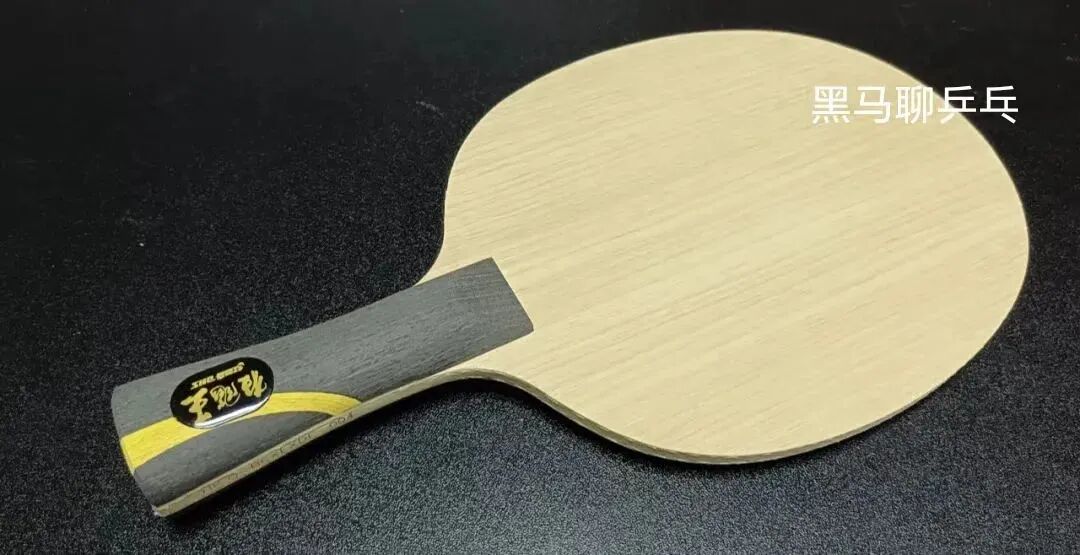
Lin Yun-ju: Super Viscaria, forehand ZYRE-03, backhand Dignics 05 Wen Ruibo: STIGA Luma carbon, forehand NEO Blue Hurricane, backhand DNA Hybrid 55
At the Chongqing Champions Cup men’s singles final earlier this month, Wen Ruibo lost 1–4 to Felix Lebrun. Overall, Felix was more aggressive; Wen was well-rounded, but not sharp enough in the first three shots and tended to retreat into a mid-table game — his comfort zone, but one where he initiates later than Felix.
Today’s loss to Lin Yun-ju came down to the same thing. The gap in ability shows up in two ways: first, your opponent attacks earlier than you do — for some reason, China’s young male players generally lack effective scoring weapons in the opening exchanges. They also tend to play without full intensity, perhaps because so many of them lean toward a backhand-dominant system. Second, the quality of Wen’s shots simply isn’t as heavy or dangerous as Lin Yun-ju’s.
Watching China’s men these days often feels like watching plain water — technically sound, sure, but nowhere near as aggressive or sharp as the foreign F6 players in those opening exchanges. There’s a “hothouse flower” quality to them — too polished, too refined. That raw passion, fire, fighting spirit you see from Felix, Moregard, or Hugo Calderano? You barely see it in China’s young men. Wang Chuqin is about the only exception.
2
Finally, a match that looked like a proper men’s World Cup bout. Wang Chuqin beat Felix Lebrun 4–2 to reach the men’s singles quarterfinals.
Felix had a big lead in the second game; had he closed it out, he would have gone up 2–0 and put Wang in a very tough spot. But Wang has solid mental resilience these days, and a few lucky breaks helped. Once the score was tied at one game apiece, the whole dynamic shifted.
Looking at the first two games, I keep coming back to the same common problem among China’s men: we’re too focused on tactical soundness and not aggressive enough technically. On this front, Felix (and Alex Lebrun), Harimoto Tomokazu, Jang Woojin — they all outdo us.
Felix’s game plan is simple: get your bat on the ball early, stay at the table. If he can’t read a serve, he just chops it back hard. If there’s a short-ball exchange, he fights like mad to attack first. His backhand has also become extremely solid — he can even drive straight at your forehand, the result of massive repetition drilling his reflexes.
In the fourth game, Wang simplified things — mostly pushing long, targeting Felix’s middle position. Tangling with short balls the way he had been, and getting beat to the punch, wasn’t working.
In the sixth game, Wang led 3–0 and was muttering to himself on the court. And yes, that’s something I genuinely respect about him. I’ve had reservations about his serve at times, but his fighting spirit is real — even if the occasional outburst isn’t exactly refined. What matters is that he feels ashamed when he loses, and he truly wants to win. Competitive sports need that kind of fire to unlock a player’s full potential.
We’re seeing far too many hothouse flowers out there right now.